


'/%3E%3Cpath%20fill='%23b2b2b2'%20d='M241%20382q0%2016%2017%2026%2017%2011%2042%2011t42-11q16-11%2017-26V269H241'/%3E%3Cpath%20fill='%239f7e00'%20d='M241%20379q0%2014%208%2023%209%209%2021%209%2014%200%2021-9%209-9%209-23V269h-59'/%3E%3Cpath%20d='M241%20339v-70h59v110q0%2014-9%2023l-6%205v-68h-15v72q-8%200-14-4v-68zm59%2040c0%2022%2015%2032%2029%2032%2021%200%2030-18%2030-32v-40h-59'/%3E%3Cpath%20fill='%239f7e00'%20d='M266%20277v5h2v12h-3v-5h2v-5h-9v5h2v5h-4v9h3v18h-5v10h34v-10h-5v-18h3v-9h-4v-5h2v-5h-9v5h2v5h-3v-12h2v-5zm42%20101q0%2010%206%2017%206%206%2015%207%2010-1%2016-7%206-7%206-17v-29h-43'/%3E%3Ccircle%20fill='%230044ad'%20cx='329.5'%20cy='372'%20r='6'/%3E%3Cellipse%20fill='%230044ad'%20cx='300'%20cy='340'%20rx='16'%20ry='21'/%3E%3C/svg%3E)

'/%3E%3C/g%3E%3Cuse%20href='%23c'%20transform='matrix(-1%200%200%201%20720%200)'/%3E%3C/svg%3E)


'%3E%3Cpath%20stroke='%23000'%20stroke-width='4'%20d='m-35-37-13%2020m5%203%2013-20m5%203-13%2020m63%2042%206-9m1-2%206-9m5%203-6%209m-1%202-6%209m5%203%206-9m1-2%206-9m-96%200%2013%2020m5-3-6-9m-1-2-6-9m5-3%2013%2020m63-42-6-9m-1-2-6-9m5-3%2013%2020m5-3-6-9m-1-2-6-9'/%3E%3Ccircle%20r='24'%20fill='%23cd2e3a'/%3E%3Cpath%20fill='%230047a0'%20d='M0%200a12%2012%200%201%201%2020%2013%2024%2024%200%201%201-40-26A12%2012%200%201%200%200%200'/%3E%3C/g%3E%3C/svg%3E)


Résumer cet article :
UGREEN, I mostly knew for its cables, chargers, and various accessories. And for some time now for its NAS, of course. I recently tested the NASync DXP4800 Pro, a machine that quite surprised me, especially because UGOS Pro has made significant progress in a very short time.
But what I discovered at the IFA in Berlin goes much further. I attended the UGREEN conference, notably in the presence of its founder and CEO, as well as representatives from ARM and various connected home specialists. I was obviously expecting new chargers, a few more powerful NAS, maybe some new accessories. All of that was indeed on the agenda.

Then UGREEN started talking about AIoT. And there, of course, my ears perked up.
Because the manufacturer obviously doesn’t want to just store our files or charge our smartphones anymore. It now wants to become the brain of the home with HomeAgent, a rather astonishing machine that combines NAS, video surveillance, home automation, and local artificial intelligence.
When you have been following home automation for over twenty years, it’s hard to remain indifferent to this proposition. Because on paper, UGREEN is getting very close to that famous “smart home” that has been promised to us for years… and that we are still somewhat waiting for.
UGREEN now sees much further than just accessories
A few figures give an idea of the progress made. During its conference, UGREEN stated that its products are now used by more than 300 million people worldwide.
Charging remains one of its major businesses, with an expected growth of more than 50% in the first half of 2026. But storage is progressing even faster: +85% during the same period according to UGREEN.
This doesn’t surprise me much after testing the UGREEN NASync DXP4800 Pro. UGREEN arrived late to a market already well occupied by Synology, QNAP, and a few others, but the manufacturer didn’t do things halfway. The hardware is generous, and UGOS Pro is evolving at an impressive speed.
This experience gained with NAS serves today as the basis for a significantly more ambitious project.
UGREEN starts from a common observation in home automation. We accumulate sensors, cameras, bulbs, plugs, locks, thermostats, and other connected devices. They generate a huge amount of information. But we always have to spend a lot of time explaining to them what to do.
HomeAgent would like to take care of that part.
HomeAgent combines NAS, NVR, home automation, and local AI
The UGREEN HomeAgent HA100 looks like a small NAS at first glance. This is quite logical since it is indeed one.
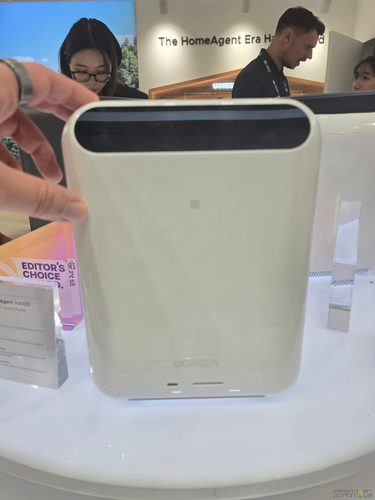
There are three SATA slots. Two are for standard NAS storage, the third is reserved for video surveillance. An M.2 NVMe slot accommodates AI models. The whole system runs on UGOS Pro, the system I had already discovered during my test of the DXP4800 Pro.

Except that UGREEN now adds a whole connected home part to it.
The HA100 uses a RK3588 paired with 16 GB of LPDDR5 and offers an AI processing power advertised at 26 TOPS. It also has a 2.5 Gb/s Ethernet port and four PoE ports.
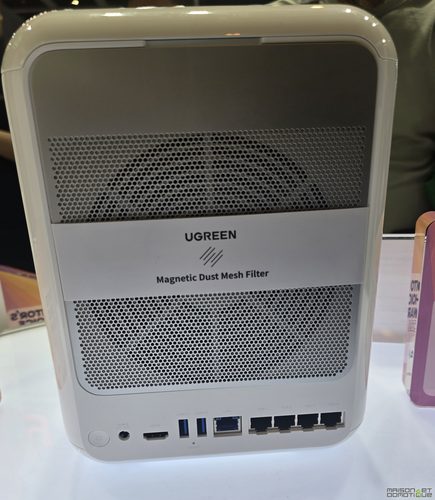
These four ports are far from trivial. You can directly connect surveillance cameras to the HomeAgent and power them via the network cable. No need for an additional PoE switch.
UGREEN is also preparing a HA100 Pro, and there we go significantly upscale: 32 GB of memory, 128 GB system NVMe SSD, 10 Gb/s network, and above all 205 TOPS for artificial intelligence.

But what interests me the most is not the technical sheet.
The HA100 mostly works around predefined automations. The HA100 Pro should go further by understanding the context and more complex requests. It will even be possible to verbally ask it to create home automation rules. And that changes quite a bit.
A home that finally understands what we want to do
Let’s take a very simple example.
Today, even with a system as powerful as Home Assistant, a good part of our automations still looks like this: if someone is present, there are less than 100 lux, and it is after 6 PM, then turn on that lamp.
It’s very practical. I personally use this kind of automation all over my home.
But let’s be honest: it’s not really intelligence. It’s a succession of conditions that we have programmed ourselves.
UGREEN imagines something else. You could simply say:
“I’m going to bed.”
The system would then understand what this phrase implies in your home. Turning off certain lights, closing the shutters, checking the doors, adjusting the heating, possibly modifying the behavior of the cameras…
Another example that really resonated with me:
“What happened at home this afternoon?”
HomeAgent can fetch the events recorded by the cameras, analyze them, and give you a summary.
We’re finally starting to move away from the traditional “if this, then that”.
And for someone who has been tinkering with home automation for years, this is probably the most exciting part of the presentation.
And above all, everything happens at home
However, there is a fairly obvious problem with an AI capable of knowing our habits: it will know a lot about us.
When we are present. When we leave for work. When the children come home. Who rings the doorbell. What happens in the living room. At what time we go to sleep.
Personally, I have no desire for all this information to be constantly sent to remote servers. UGREEN seems to have had exactly the same thought. The motto presented in Berlin was very clear: local storage, local computing, local AI.

Photos, videos, and data are thus stored at your home, while the AI processing is done directly by HomeAgent. Some functions can even continue to work if the internet goes down. This is a philosophy that I like much more.
Ever since I started with home automation, I have always preferred systems capable of continuing to manage the home when the internet box is unplugged. Over the years, we have seen Fibaro, Jeedom, and now Home Assistant. The internet should add possibilities, not become the necessary condition for turning on a light.
Now there remains a big unknown: support for third-party equipment. UGREEN announces support for Matter and ONVIF, which is already good news. Devices will still need to be tested and integrated by UGREEN, with an official compatibility list.
I will be particularly attentive to this point during any potential tests. Because a home automation brain becomes much less interesting if it can only communicate with a handful of devices.
HomeAgent should not just obey
The other interesting idea concerns how the AI uses the information produced by the home.
With SynCare cameras, HomeAgent will be able to recognize people, animals, vehicles, or packages and then analyze recorded events. Up to this point, nothing totally new.

The difference appears when you want to retrieve something. No need to scroll through two hours of video to know when the delivery person came. You could simply ask:
“When did the delivery person come today?”
Or why not:
“Show me when the dog was in the garden.”
HomeAgent then searches for the corresponding sequences.
This is typically the kind of function that seems almost obvious once you’ve seen it… but can completely change how we use video surveillance.
UGREEN has indeed pushed the idea in a direction I did not expect at all.
What if the cameras also served to keep good memories?
During the conference, Samuel Chang, the founder of UGREEN, shared a little personal anecdote. After spending a good time with family, he realized that he hadn’t taken any photos. This gave him a pretty simple idea: we often have several cameras recording our home all day, but we generally only look at their images when something bad has happened. A break-in. An accident. A missing package. Why not also use these images to relive the good moments?

HomeAgent should be able to spot certain scenes and automatically create compilations: children playing, animals being silly in the living room, birthdays, family meals… I really like this idea.
Well, it can also be slightly worrying when you realize that a camera is constantly observing what happens in the living room. But this is exactly where local processing becomes important. If all these images physically stay at my home, I don’t see things the same way as if they automatically go to the cloud.
SynCare cameras give eyes to HomeAgent
To feed its AI with information, UGREEN is logically launching its own cameras.
The SynCare ID500 Pro is designed for indoor use. It shoots in 4K thanks to an 8-megapixel sensor, with Starlight color night vision, 8x digital zoom, and Pan & Tilt motorization. It can also detect a baby’s cries and has a physical shutter that covers the lens.

I really appreciate this last detail. An indoor camera with a physical cover immediately inspires much more confidence than a simple “camera off” icon in an app.
For outdoor use, the SynCare OD600 Pro adopts a quite impressive configuration with three cameras: one main 4K module of 8 megapixels and two 5-megapixel PTZ modules, accompanied by a 9x hybrid zoom. It is IP66 certified and can be powered directly via PoE.

Finally, the OD800 Pro uses this triple-camera architecture in a standalone version. It includes a removable 10,000 mAh battery and a 6 W solar panel, with detection that combines PIR and radar.

The interest of these cameras primarily makes sense when connected to the HomeAgent: recognition of people, vehicles, animals, and packages, event summaries, and search in videos using natural language.
UGREEN Gallery: electronic ink makes its way into the home
In the midst of all these announcements, another product really pleased me: UGREEN Gallery. It’s a 13.3-inch digital photo frame. So far, nothing very original, we recently discovered one at SwitchBot.
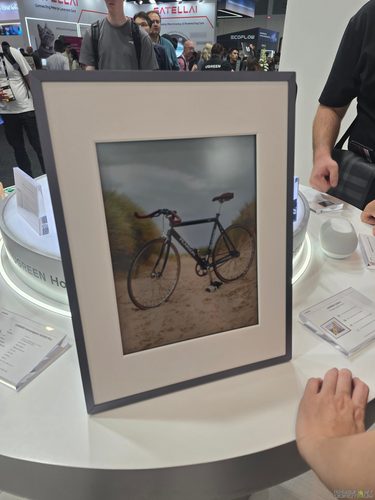
Except that the screen uses E Ink Spectra 6 technology, with a resolution of 1600 x 1200 pixels.
The rendering is therefore much closer to a paper print than to a tablet hanging on the wall. And since electronic ink consumes practically nothing when an image is displayed, UGREEN announces up to six months of autonomy.

The frame can display artworks but can also directly retrieve photos stored on HomeAgent. Again, no need to transfer your entire family photo library to the cloud.
An intelligent speaker is also planned to access Uliya, the UGREEN voice assistant, from different rooms. It includes four MEMS microphones and a 5 W speaker.

We are therefore starting to see a whole ecosystem taking shape around HomeAgent.
The MasterAgent MA100 goes even further
And then UGREEN pulled another machine out of its hat: the MasterAgent MA100. Here, we are seriously changing scale.

UGREEN is working with NVIDIA and using a Jetson Thor T5000 platform, with an announced power of up to 2070 TFLOPS for AI.
The goal is no longer simply to recognize a cat or to find out when a delivery was made. UGREEN talks about an AI capable of analyzing habits, understanding context, and independently identifying an unusual situation.
This is probably where things could become truly interesting in home automation.
Imagine, for example, a home that notices that the electrical consumption is not normal while no one is present. Or that observes that an elderly person has not followed their daily habits. Or that progressively learns how to manage heating, home battery, and solar production without us having to program fifty scenarios.
We are not there yet in our homes. But for once, I felt I saw a fairly credible path to getting there.
UGREEN also plans to open resources to developers so that they can create their own agents. I am very curious to see how far this openness will actually go.
899 dollars: the smart home still has a price
And then inevitably comes the moment when someone displays the price.
The HomeAgent HA100 is announced at 899 dollars at the Super Early Bird rate, during a Kickstarter campaign scheduled for October 27.
And there, enthusiasm does drop a bit.
Especially since you have to add the disks. The guide provided by UGREEN states that at least two disks are necessary for initialization: one for NAS data, the other for video surveillance.
Add a few cameras, possibly speakers, and the Gallery frame, and the installation quickly starts to represent a nice sum.
For Mr. and Mrs. Everybody who want to automate a few lamps and their roller shutters, it will be hard to sell.
For a home automation enthusiast, the equation is already different. HomeAgent can replace several machines: NAS, NVR for cameras, AI server, and home automation controller. You need to compare the price to the whole system, not just to that of a home automation box.
There is, however, one detail that bothers me: 899 dollars corresponds to the Super Early Bird rate with a 50% discount.
If the public price later hovers around 1800 dollars, we are clearly no longer talking about a product intended to democratize the smart home. It will be a high-end machine reserved for enthusiasts or installations with a comfortable budget.
As for the price of the HA100 Pro…

The NASync Ultra gets serious muscle
UGREEN hasn’t forgotten its more traditional NAS. After the DXP4800 Pro that I tested recently, two new machines are coming: the NASync DXP6800 Ultra and DXP8800 Ultra.

The DXP6800 Ultra has six bays and two NVMe slots, with a maximum advertised capacity of 208 TB. Inside, there’s an Intel Core 5 120U with 10 cores, 8 GB of DDR5 expandable up to 96 GB, and particularly generous connectivity: two 10 Gb/s Ethernet ports and two 40 Gb/s Thunderbolt 4 ports.
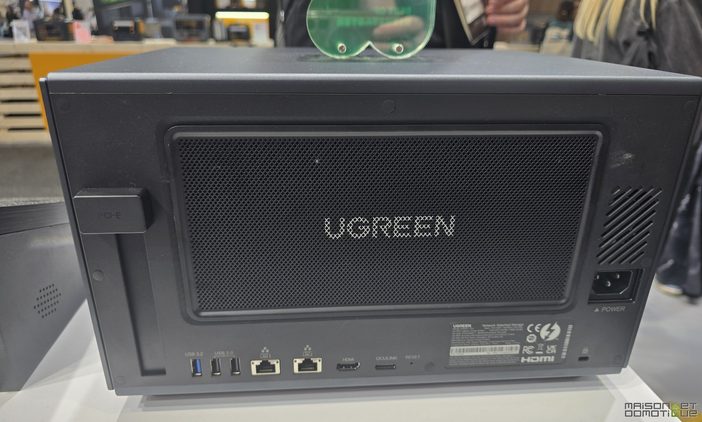
It also features an HDMI 8K 60 Hz output, a PCIe x4 slot, and a 4.0 SD card reader.
The announced price is 1,449.99 dollars.
The DXP8800 Ultra moves up to eight bays and 272 TB maximum, with an Intel Core 7 150U, still accompanied by two 10 GbE ports, two Thunderbolt 4, and two NVMe slots.

You will need to budget 1,779.99 dollars.
These are clearly not NAS intended to back up three vacation photos. Content creators, advanced users, and small businesses are more targeted.
And I find here what I liked about the DXP4800 Pro: UGREEN doesn’t seem to want to artificially constrain the hardware. Fast network, plenty of possible RAM, NVMe, Docker, virtual machines… there is plenty of fun to be had.

External batteries cooled by liquid… because why not?
UGREEN had to talk about recharging. It is still its historical ground. The curiosity of this edition is the MagFlow Pro Magnetic Power Bank 10,000 mAh, compatible with Qi2 25 W.
UGREEN has integrated a CryoPulse liquid cooling system. A micropump circulates liquid to evacuate heat, and a small window even allows you to observe the system in action.

Yes, yes. Water cooling in an external battery! I admit, it made me smile.
UGREEN announces up to 10 °C lower maximum temperature and up to 44% less heat build-up during its own tests. A small screen displays power, remaining battery life, number of cycles, and cooling status.

Announced price: 119.99 €.
A MagFlow Pro 3-in-1 Qi2 25 W station, also actively cooled, will be sold for 139.99 €, while a foldable MagFlow 2-in-1 25 W charger will cost 49.99 €.
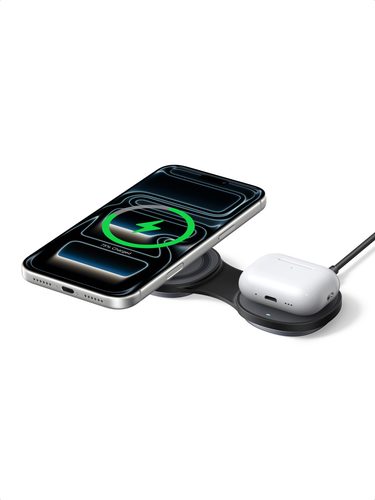
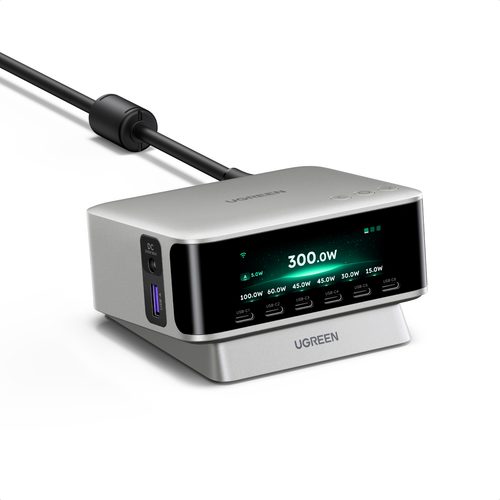
The Nexode Pro range is also evolving with a 160 W charger with four ports, retractable cable, and control screen, sold for 129.99 €. A large desktop model 300 W moves to eight ports for 169.99 €. Both can be monitored via Wi-Fi from an app.
Interesting products, but I have to admit that after the demonstration of HomeAgent, an external battery, even cooled by liquid, seems a bit less spectacular.
Is this finally the smart home I’ve been waiting for twenty years?
That is the question I asked myself walking out of the conference.
It has been over twenty years since I have been playing with home automation. Technologies have changed a lot during this period. I have known quite rudimentary scenarios, then much more advanced home automation boxes, Home Assistant, Matter, voice assistants…
And despite everything, I still spend time explaining to my home what it should do.
If someone arrives here at such a time, with such luminosity, then turn on this. If everyone leaves, check that. If consumption exceeds such a value, turn this off. It works very well. But I am still the one thinking for the house.
With a local AI capable of interpreting what’s happening, cross-referencing the information from the sensors and cameras, and then understanding a request formulated normally, we are starting to change the logic. And this is probably the announcement that struck me most from UGREEN this year.
However, I still have some reservations. We’ll have to see how HomeAgent actually works, how far the compatibility with existing Matter devices goes, and especially what freedom UGREEN will give to advanced users. On this ground, Home Assistant has set the bar very high.
The price could also temper a lot of enthusiasm. 899 dollars on promotion is already not trivial. If the public price then rises to around 1800 dollars, HomeAgent will likely remain a niche product for a while.
But I really want to test it. Because deep down, after all these years, this is exactly what I expect from home automation: to no longer spend my time programming the house to make it seem intelligent. I would like it to really become so. Finally!



Please remain courteous: a hello and a thank you cost nothing! We're here to exchange ideas in a constructive way. Trolls will be deleted.