


Résumer cet article :
You have installed photovoltaic panels. During the day, they produce 2,000 W while the house consumes only 500. The remaining 1,500 W therefore go back to the grid due to a lack of a means to store them. Then 7 PM arrives: the panels produce almost nothing, the kitchen is running, the computers are on, the TV too… and you start buying electricity from the grid again. Admit that the situation is quite frustrating.
A home battery obviously solves the problem. However, adding storage to an existing photovoltaic installation can quickly become complicated: compatibility with the inverter, modification of the wiring, installation of a new hybrid inverter, intervention by a professional… The bill and complexity can rise quickly.
The Zendure SolarFlow 2400 AC+ approaches the problem from a different angle. You place the battery near an electrical outlet, plug in its cable, and that’s about it. No cable between the panels and the battery, no MC4 connector, no need to touch the existing inverter. The SolarFlow 2400 AC+ operates in AC coupling: solar energy is first converted and injected into the home’s electrical grid through your usual system, and then the battery recovers the surplus directly from the 230 V grid.
This architecture is what I wanted to test, because it might be one of the simplest ways to add storage to an existing solar installation. And after use, I can already say it works, and quite well.
Zendure SolarFlow 2400 AC+: the principle explained simply
Before unpacking the battery, it’s better to understand how it works, as that’s where all its interest lies.
Let’s take a house equipped with traditional panels with micro-inverters, or a rooftop installation with a central inverter, like I have at home. Imagine they produce 2,000 W while the house consumes 700 W at that moment. Thus, there is a surplus of 1,300 W.
Without a battery and without a resale contract, these 1,300 W go back to the grid. With the SolarFlow 2400 AC+, an energy meter installed in the panel detects this surplus immediately, and the battery receives an order to charge at about 1,300 W. Electricity then follows a path that may seem strange at first glance: panels → solar inverter → home electrical grid → electrical outlet → SolarFlow 2400 AC+.
A few hours later, the situation reverses: the sun has set, and the house consumes 600 W. The meter detects this consumption, and the SolarFlow returns about 600 W to the home network, through the same outlet. The house uses this energy before turning to the public grid, and the meter trends towards zero. This is AC coupling.

And the battery does not even need to know which panels you are using. It would work just as well with an installation that is several years old, with Enphase or Hoymiles micro-inverters, a Huawei or SMA inverter. Zendure also announces compatibility with existing installations because the SolarFlow operates on the AC side. The principle even works with plug & play panels from another brand: as soon as a photovoltaic production causes an injection into the grid, the meter can detect it and ask the SolarFlow to absorb it.
This is a fundamental difference from batteries that require direct connections from the panels to their MPPT inputs.
Unpacking and discovering the SolarFlow 2400 AC+
The first contact confirms that you are not dealing with a small portable camping battery. The SolarFlow 2400 AC+ is a complete residential storage system, with a surprisingly compact design given its embedded capacity. The casing features the now characteristic dark gray of the SolarFlow range, with a solid and rather discreet construction.

On the sides, there are handles for easier handling.

At the back, a large passive cooling system, which allows the battery to be completely silent.

The advantage of this “+” version is its integration. The previous SolarFlow AC was essentially just a management module to which you had to add at least one AB3000X battery. This one directly includes 2.4 kWh of LiFePO4 cells: a single block is enough to get started.
And 2.4 kWh is no small amount. A house that continuously consumes 300 W could theoretically last about eight hours on this reserve, before losses and safety reserves. At 500 W, you are close to five hours. For the nighttime base consumption of a home, the sizing works quite well.
Zendure announces a bidirectional AC power of up to 2,400 W, but it is configured at 800 W by default – I will come back to this later, because these 2,400 W should not be seen as an invitation to connect such power haphazardly to any outlet.
The battery is IP65 certified and has a self-heating system to operate in cold weather. Zendure boasts a ten-year warranty and up to fifteen years of lifespan. The LiFePO4 chemistry is well-suited for residential storage: good lifespan, decent thermal stability, and thousands of cycles supported.

Safety has not been overlooked either. The BMS monitors electrical and thermal parameters, the ZenGuard system adds a layer of monitoring, and Zendure has even included a condensed aerosol extinction device to contain a potential thermal incident. In other words, even though the principle resembles that of a large battery plugged into an outlet, the technology behind it is much more sophisticated.

An expandable capacity of up to 16.8 kWh
The 2.4 kWh built-in is primarily a good starting point. The SolarFlow 2400 AC+ can accommodate up to five additional AB3000L batteries of 2.88 kWh each, and the capacity evolves in increments: 2.4 kWh with the SolarFlow alone, 5.28 kWh with one AB3000L, 8.16 kWh with two, 11.04 kWh with three, 13.92 kWh with four, and 16.8 kWh with five.
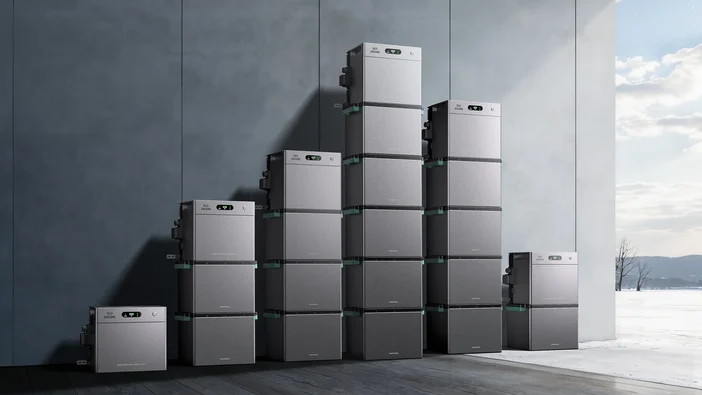
I generally advise against oversizing a solar battery from the start. If your system only produces 2 or 3 kWh of surplus on a nice day, installing 15 kWh of batteries right away doesn’t make much sense: a good portion of the capacity would remain unused. It’s better to start with 2.4 kWh, observe for a few weeks how much energy actually goes to the grid, and then add an extension if the battery regularly hits 100% while the panels continue to inject. It’s more financially rational.


Installation: it doesn’t get much simpler
This is probably the biggest argument for the SolarFlow 2400 AC+.
For the battery itself, the operating procedure fits on a Post-it: you place it, plug it into an outlet, and add it to the Zendure app. The Bluetooth detection is quick, then you just need to enter the Wi-Fi network information and follow the assistant. A few minutes later, the SolarFlow is connected: quite exhilarating when you know the usual complexity of photovoltaic storage.

But be careful not to confuse the physical installation of the battery with intelligent surplus management. Plugged in alone, the battery obviously cannot guess what is coming in or out of the house. To utilize its full potential, it must be provided this information.
The energy meter is the real key to the system
Zendure offers its Smart Meter 3CT-S, installed in the electrical panel. Current clamps measure in real-time the exchanges between the house and the grid, and the system knows whether you are importing or exporting electricity. This detail transforms a large battery into a true energy manager.
Are you producing 1,200 W too much? The SolarFlow charges. Are you consuming 400 W from the grid? It returns 400. Are you turning on an appliance and suddenly jump to 850 W? The battery increases its production. The goal: to keep exchanges with the public grid as close to 0 W as possible.
Good news for those who already have a measurement system: Zendure does not necessarily lock you into its own meter. The HEMS is compatible with several Shelly meters (including the Pro 3EM and 3EM), as well as with EverHome and HomeWizard solutions. For a connected home already equipped, this is a plus. At my place, the system thus communicates with the existing Shelly Pro 3EM for my home automation. This immediately simplifies the installation :)
The meter remains the only part that may require some electrical skills. Installing a Smart Meter in a 230 V panel is nothing like plugging in a socket: if you are not comfortable with an electrical panel, entrust this part to an electrician. Once the meter is installed, however, the rest can almost be forgotten.
HEMS 2.0: multiple batteries can work together
The Zendure app has evolved significantly since the early SolarFlow generations. Its core is now the HEMS (Home Energy Management System, in v2 since June), which centralizes photovoltaic production, batteries, domestic consumption, and the electrical grid to decide where each watt should go.

The HEMS 2.0 can manage up to six Zendure devices in the same installation, which becomes interesting if your energy setup has been developed gradually. You might very well have a SolarFlow directly connected to panels in the garden and a SolarFlow 2400 AC+ situated elsewhere in the house, and both can cooperate.
Example: a first battery connected directly to the panels is full, its surplus begins to be injected into the domestic grid, the meter detects it, and the SolarFlow 2400 AC+, located at the other end of the house and connected only to a 230 V outlet, starts charging immediately. The two devices are not connected by any direct energy cable: they use the house’s electrical grid as a means of transport. It’s rather clever.
Zenki: when the battery starts to think for itself
Zendure takes automation further with Zenki, its energy optimization engine, which no longer just reacts to instantaneous overproduction. The system takes into account consumption habits, weather, battery levels, and tariffs to anticipate needs.
If the weather forecasts a particularly bad day tomorrow, the battery knows that solar production is likely to be low. With a peak/off-peak tariff contract, it can then take advantage of cheaper night electricity to charge, then return this energy when the price rises. In summer, behavior changes: no need to buy electricity at night if a significant solar production is expected a few hours later.
Zendure also offers several simpler strategies for those who prefer to keep control: operation based on the meter, scheduled programming, electricity tariffs, or expert settings. And if all this seems complicated, the automatic mode is designed to avoid spending your evenings analyzing consumption curves: good energy management is one you end up forgetting.
In use: solar surplus almost disappears before your eyes
It is obviously in use that the system becomes interesting. A classic solar installation can produce a lot of energy that the owner never benefits from.
Simple example: the panels produce 1,500 W, and the house consumes 400 W. Without storage, 1,100 W go to the grid; with the SolarFlow, this power is absorbed by the battery. In the evening, with a constant consumption of 350 W and panels that produce nothing anymore, the SolarFlow returns these 350 W. From the meter’s perspective, the house consumes almost nothing from the grid.

Thus, this summer, after a very sunny week, the import from the grid went from 10 kWh to less than 5 kWh with the battery. As can be seen, daytime consumption is almost completely erased during the day, and nighttime consumption is greatly reduced thanks to the SolarFlow battery that reinjects into the house the surplus it has stored during the day. And I have almost no lost exports.
Beware: a battery produces no energy. It moves it through time. And the more this movement replaces grid electricity purchased with solar electricity that would otherwise have been injected for free or at low remuneration, the more interesting it becomes.
An excellent efficiency for an AC-coupled battery
AC coupling has a theoretical drawback: conversions. The electricity produced by the panels is initially in direct current, the photovoltaic inverter converts it into alternating current for the house, then the SolarFlow must reconvert it for storage, and redo the operation in reverse when restituting. Each conversion inevitably results in some losses.
Zendure uses silicon carbide components to limit these losses, and tests conducted around the product are rather encouraging: a global efficiency announced and measured around 93% under certain conditions. This is very good for an AC-coupled system. In reality, this efficiency will depend on the charge and discharge power, temperature, and usage scenario, but even with a few percentage points lost in conversions, the calculation remains largely favorable compared to the alternative: letting the photovoltaic surplus go for free before buying back electricity a few hours later.
Up to 2400 W… but be careful with your electrical installation
The SolarFlow 2400 AC+ can reach 2,400 W for both charging and discharging, a power that theoretically allows compensating for high-consumption devices: ovens, kettles, household appliances, or part of the consumption of a heat pump.

But a significant nuance is necessary here. Zendure configures the product to 800 W by default, and this is not by chance: injecting 2,400 W through an outlet represents more than 10 A. Depending on the circuit, its gauge, other connected devices, and how the installation was done, the constraints change completely. For a permanent installation utilizing high power, I therefore clearly recommend a properly sized and dedicated circuit, with appropriate protections, and validation by a professional if necessary.
It is not the battery that poses a problem; it is the electrical circuit on which you will ask it to operate. And 800 W already covers many needs: a constant consumption of 300 to 600 W represents the ideal range for this type of storage.
A real backup output of 2400 W
Another pleasant surprise: the SolarFlow 2400 AC+ has an off-grid AC output. Be careful to understand its operation: in the event of an EDF blackout, the SolarFlow does not continue to inject into the house sockets. This would be dangerous for technicians working on the grid and contrary to the normal operation of a connected installation.

However, the SolarFlow’s dedicated outlet continues to work and can provide up to 2,400 W. You can directly connect a refrigerator, an Internet box, a computer, some lighting, or other essential equipment. For more advanced use, this output can also power a dedicated backup circuit through an appropriate electrical installation, as we had seen with our source inverter.

So, you gain a rather convincing backup battery function in the process.
Note that the off-grid outlet also serves as an EPS backup power supply. In the event of a network outage, the SolarFlow 2400 AC+ automatically switches to its battery in less than 15 ms. A sufficiently short delay to ensure a UPS-style function and keep many electronic devices running, like an Internet box. I tested by plugging my office corner into it, and the battery manages perfectly in the event of a power outage.
Finally, this outlet can also receive a micro-inverter if desired. It cannot receive solar panels directly, but it is entirely possible to plug a micro-inverter into it, like those found on plug & play solar stations, for example. This can be useful!
And what about Home Assistant?
This is a point that particularly interests us.
Zendure is gradually opening up its ecosystem, and the SolarFlow 2400 AC+ features RS485 connectivity and interesting local integration possibilities. With Home Assistant, you can go much further than with the simple manufacturer app: charge level, absorbed power, returned power, automations based on solar production, anticipation of certain energy-hungry devices, etc.

The advantage of local communication is its responsiveness. Cloud control can introduce several seconds of latency, while a local RS485 or MQTT connection allows much faster regulation. And to hunt down the last watts unnecessarily injected into the grid, a few seconds can make a real difference.

One could imagine Home Assistant deciding to keep 30% of the battery before a very cloudy day is predicted, increasing the charge during significant surplus, or coordinating battery, water heater, charging station, and heat pump. The SolarFlow then becomes a real building block for the smart home.
A battery also interesting without solar panels
A use that is less often considered: the SolarFlow 2400 AC+ can have value even without any photovoltaic panels. With peak/off-peak or dynamic pricing, it can buy energy when the kWh is cheap and return it when it becomes expensive.
The profitability then depends entirely on the pricing differential. A few cents’ difference makes the operation less interesting once losses and battery wear are taken into account. However, with dynamic pricing featuring large gaps, the calculation becomes much more relevant. But the major advantage remains the association with a photovoltaic installation that regularly produces surplus.

How much can you really save?
Beware of overly simple calculations. A 2.4 kWh battery does not mean 2.4 kWh saved every day for 365 days. There needs to be enough surplus to charge it, then enough consumption when the panels are not producing to empty it, not to mention conversion losses, seasons, and weather conditions. In summer, a near-complete cycle every day is feasible. In December, the battery may sometimes wait long for a few solar watts.
Thus, with about 2 to 2.2 kWh actually returned per cycle and an electricity price around €0.25/kWh, a complete cycle represents about €0.55 of avoided electricity. At 300 annual cycles, that amounts to around €165 in savings.
This figure can vary widely. A home with an electric car, heat pump, high nighttime consumption, and multiple kilowatts peak of photovoltaics will utilize the battery much more intensively. Conversely, someone with only 800 W of panels who consumes all their production during the day will have little surplus to store.
The real question is not “how much can this battery save me?”, but rather: how many kWh am I currently injecting into the grid that I could consume later? This is the data that should guide the purchase, and especially the sizing.
A now rather aggressive price
At the time of writing, Zendure lists the SolarFlow 2400 AC+ alone at €1,079 instead of €1,279, with 2.4 kWh of integrated storage. The price changes regularly with promotions, so you should check the price at the time of your purchase.
At about €450/kWh for a complete system (battery, bidirectional electronics, connectivity, HEMS, and backup output), the positioning becomes really interesting. The gradual addition of AB3000L (€719 for the extension battery) primarily allows investing only when the need is demonstrated. A much more relevant approach than buying 10 or 15 kWh outright “just in case”.
A few limits to know
The SolarFlow 2400 AC+ is not perfect. Its main flaw paradoxically stems from its greatest asset: AC coupling multiplies energy conversions. The efficiency remains excellent, but a storage solution directly coupled in DC to the panels could theoretically avoid some losses.
The Smart Meter, or a compatible meter, becomes practically essential to fully benefit from the system. Without real-time measurement, much of the intelligence that makes the SolarFlow’s value is lost.
The app has become extremely comprehensive, perhaps even a little too much. Those who simply want to plug it in and forget may feel lost among the numerous modes, HEMS settings, tariffs, and Zenki strategies.
Finally, the maximum power of 2,400 W imposes that the SolarFlow should not be treated like a simple bedside lamp: to sustainably utilize high powers, the electrical installation must be designed accordingly.
None of this, however, undermines the product’s main strength.
Conclusion: Zendure has found the formula that was missing in solar storage
I have tested many photovoltaic storage solutions over the past few years. Some are very efficient, others very easy to install. Few manage to combine both so well.
The Zendure SolarFlow 2400 AC+ has one essential quality: it adds to an existing photovoltaic installation without nearly touching it. And that changes everything. Your panels stay where they are, your inverter stays in place, and you don’t need to run photovoltaic cables to the battery. You simply plug the SolarFlow into the domestic electrical grid, and the solar surplus already reaches it through your home’s cables.
The idea seems almost too simple upon discovery. Yet it works.
Add to that 2.4 kWh directly integrated, a capacity expandable to 16.8 kWh, 2,400 W bidirectional, excellent efficiency, a backup output, HEMS 2.0, Zenki, compatibility with different energy meters, and options for advanced users: you get one of the most appealing retrofit storage solutions available right now.
It is particularly aimed at homeowners who already have photovoltaic panels and see a portion of their production going back to the grid every day. Because the best solar kWh is not just the one we produce. It’s the one we actually succeed in consuming.



Please remain courteous: a hello and a thank you cost nothing! We're here to exchange ideas in a constructive way. Trolls will be deleted.