


'/%3E%3Cpath%20fill='%23b2b2b2'%20d='M241%20382q0%2016%2017%2026%2017%2011%2042%2011t42-11q16-11%2017-26V269H241'/%3E%3Cpath%20fill='%239f7e00'%20d='M241%20379q0%2014%208%2023%209%209%2021%209%2014%200%2021-9%209-9%209-23V269h-59'/%3E%3Cpath%20d='M241%20339v-70h59v110q0%2014-9%2023l-6%205v-68h-15v72q-8%200-14-4v-68zm59%2040c0%2022%2015%2032%2029%2032%2021%200%2030-18%2030-32v-40h-59'/%3E%3Cpath%20fill='%239f7e00'%20d='M266%20277v5h2v12h-3v-5h2v-5h-9v5h2v5h-4v9h3v18h-5v10h34v-10h-5v-18h3v-9h-4v-5h2v-5h-9v5h2v5h-3v-12h2v-5zm42%20101q0%2010%206%2017%206%206%2015%207%2010-1%2016-7%206-7%206-17v-29h-43'/%3E%3Ccircle%20fill='%230044ad'%20cx='329.5'%20cy='372'%20r='6'/%3E%3Cellipse%20fill='%230044ad'%20cx='300'%20cy='340'%20rx='16'%20ry='21'/%3E%3C/svg%3E)

'/%3E%3C/g%3E%3Cuse%20href='%23c'%20transform='matrix(-1%200%200%201%20720%200)'/%3E%3C/svg%3E)


'%3E%3Cpath%20stroke='%23000'%20stroke-width='4'%20d='m-35-37-13%2020m5%203%2013-20m5%203-13%2020m63%2042%206-9m1-2%206-9m5%203-6%209m-1%202-6%209m5%203%206-9m1-2%206-9m-96%200%2013%2020m5-3-6-9m-1-2-6-9m5-3%2013%2020m63-42-6-9m-1-2-6-9m5-3%2013%2020m5-3-6-9m-1-2-6-9'/%3E%3Ccircle%20r='24'%20fill='%23cd2e3a'/%3E%3Cpath%20fill='%230047a0'%20d='M0%200a12%2012%200%201%201%2020%2013%2024%2024%200%201%201-40-26A12%2012%200%201%200%200%200'/%3E%3C/g%3E%3C/svg%3E)


Résumer cet article :
When the beautiful days arrive, a few minutes on the terrace can sometimes turn the moment into a nightmare. The tiger mosquito has settled in a large part of French territory and is no longer confined to the south of the country. Every summer, it gains new departments and spoils outdoor evenings. In the face of this invasion, solutions abound, at least in appearance. Fumigating spirals, repellent sprays, UV lamps, bracelets, essential oils, or electric diffusers fill the shelves. Most only temporarily limit bites without ever tackling the root of the problem: the population of mosquitoes around your home.
Wiliv has approached the problem differently. Instead of trying to repel mosquitoes once they are already on your terrace, the French manufacturer seeks to attract them to a trap several meters before they find you. The goal is not to protect you for a few hours: it’s to gradually decrease the population around your home throughout the season. On paper, the idea is appealing. However, it was necessary to verify whether this technology was based on something solid or if it was mostly marketing rhetoric.
I therefore installed the Willo at home to see. However, even before discussing the product, one obvious fact emerged: to understand why this trap works, you must first understand how… a mosquito thinks. And this insect is much more sophisticated than one might imagine.
Understanding the mosquito to better trap it
For a long time, I had a rather simple view of the mosquito. It flies randomly, lands on a person, and bites whenever it gets the chance. In reality, it’s much more complex.
To better understand how the Willo works, I spoke with an entomologist specializing in mosquitoes, who works directly on the development of Wiliv’s solutions. This conversation opened my eyes to a whole set of biological mechanisms that explain why some traps work… and why many others fail.
The first point to clarify: not all mosquitoes bite. Only females seek blood: they need it to develop their eggs. Males, on the other hand, feed on nectar.
The second surprise pertains to their way of finding us. Contrary to a common misconception, a mosquito does not “see” a person before coming to bite. It detects them well before, thanks to a succession of very specific biological cues.
The first is carbon dioxide. Each exhale releases CO₂. For us, this variation is imperceptible. For the mosquito, it acts like a beacon. Using receptors on its antennae, it can detect this increase in concentration from several dozen meters away. This is the first signal indicating that a living being is nearby. But CO₂ is not enough.
Once closer, it refines its target. It detects body heat, skin chemical compounds, skin microbiota bacteria, certain perfumes, and even differences related to blood type or metabolism. That is why some individuals seem to be devoured while their dining neighbor barely receives a bite. The mosquito never acts on a single criterion. It gathers multiple pieces of information until it is almost certain it has found prey.

It is this behavior that Wiliv engineers sought to reproduce.
The tiger mosquito does not behave like the mosquitoes we knew
Another discovery: the tiger mosquito is very different from the common mosquito that has accompanied us for decades.
Originating from Southeast Asia, Aedes albopictus established itself in Europe via international transport: used tires and ornamental plants containing small reserves of water.
Unlike classic mosquitoes that can travel several kilometers, the tiger mosquito is a very poor flyer. Most spend their entire lives within a radius of about fifty meters from their birthplace. This detail changes everything: a well-positioned trap can have a real impact on the local population.
Its mode of reproduction is also unique. Most mosquitoes lay directly on water. The tiger mosquito, however, lays its eggs just above the water level, on the walls of a container. When rain raises the level, the eggs become submerged and hatch. They can survive several months without water before that. A simple saucer from a flower pot, a poorly maintained gutter, or a forgotten watering can is enough to create a nursery.
That is also why it favors private gardens. Unlike mosquitoes from wet areas, it prefers small volumes of water created by human activity, where natural predators (frogs, fish, dragonfly larvae) are absent.
Ponds and marshes are often blamed for the invasion of mosquitoes. In many cases, it is our own gardens that offer the best breeding conditions.
Why do mosquitoes always seem to arrive at the wrong moment?
You have probably noticed that mosquitoes appear precisely when you settle down for dinner outside. This is not a coincidence.
The tiger mosquito adjusts its activity to the temperature. In the middle of summer, it avoids the hottest hours and remains hidden in shaded areas. It resumes activity early in the morning after sunrise, then in the late afternoon until dusk.
This point is not trivial. It explains why an effective trap does not necessarily have to run at full power all the time, but should concentrate its action during periods when mosquitoes are looking for prey.
We will see that Wiliv cleverly exploits this behavior through precise programming of CO₂ diffusion.
The Wiliv Willo: a trap that mimics human behavior
After understanding how a mosquito locates its victim, the philosophy of the Willo becomes much clearer. Whereas a repellent seeks to mask your presence or push mosquitoes away once they are there, the Willo does the opposite: it poses as a target more interesting than you.
If the mosquito detects an artificial “human” several meters before reaching your terrace, it is very likely to change its trajectory and end up in the trap instead of on your arm.
To achieve this, Wiliv combines several biological signals that the mosquito uses to identify prey.

The first signal is carbon dioxide. The Willo emits a very low amount of CO₂, calibrated to mimic human breathing: about 200 ml per minute with the regulator properly adjusted. This amount has not been chosen at random: diffusing more would bring virtually no gain in efficiency and would deplete the bottle much faster.
Once attracted by this signal, the mosquito approaches. This is where the second element comes into play: an olfactory lure. This cartridge releases a mixture of odors designed to replicate some compounds naturally found around a human. The aim is to complement the CO₂ signal and recreate the “beam of cues” that the mosquito uses to identify a victim. This combination is, in fact, what explains the good results of this type of trap: CO₂ and olfactory lure together produce an effect greater than the sum of their separate effects.
When the mosquito arrives in front of the unit, it obviously encounters no human. It is sucked in by a fan and trapped in a net where it eventually dehydrates.
The system seems simple. Behind this apparent simplicity lies a lot of research.
A design thought out in every detail
At first glance, one could mistake the Willo for a fan hidden in a nice metallic unit.
Several design choices show that the product was developed around the actual behavior of mosquitoes.
The first surprise concerns the suction front. The mosquito is not directly sucked through a central hole. When it approaches, the airflow presses it against a fiberglass grid. It then glides towards the suction cone before falling into the net. Engineers refer to this as a “slide effect.” This detail also explains why this grid must be kept clean: an accumulation of pollen, dust, or grass clippings gradually reduces capture efficiency. A quick swipe of the hand every two or three days is sufficient.
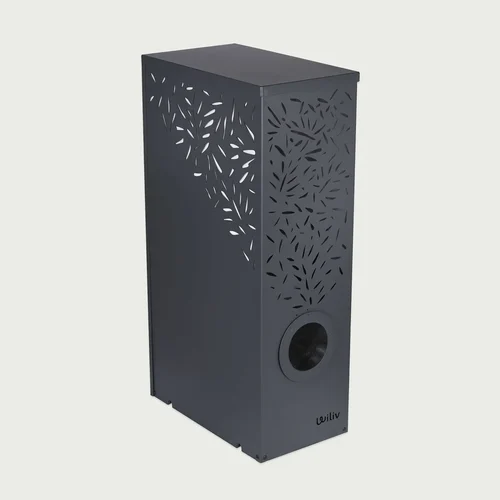
Another interesting choice is the material. Many competing traps are made from plastic. The Willo is made of powder-coated metal. More expensive to manufacture but more resistant to UV, inclement weather, and temperature variations, which is important for a device that remains outside for several months each year. Transparent plastics often become brittle after a few seasons in the sun. Here, this problem disappears.
Wiliv also chose to manufacture in France. The company is based between Toulouse and the Grenoble region; sheet metal work and assembly are done in France. The electronic components remain international (hard to escape today), but the production maintains a genuine local logic.
Unboxing and discovering the Willo
From the moment the box is opened, the Willo inspires confidence.
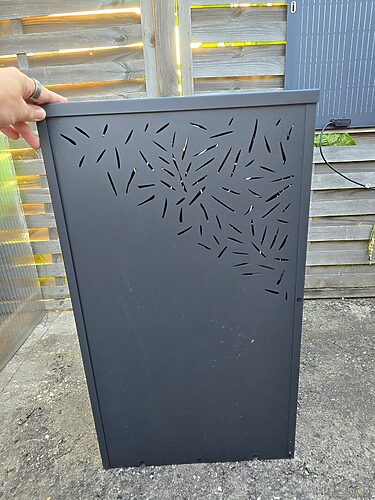
The trap is carefully protected, and the unit is much higher quality than the photos suggest. Matte black finish, sleek lines: it easily blends into a modern garden without drawing attention. It is far from plastic traps that look more like laboratory equipment than terrace appliances. Here it looks very nice. Note that a version with wood cladding also exists, which I find even more beautiful.
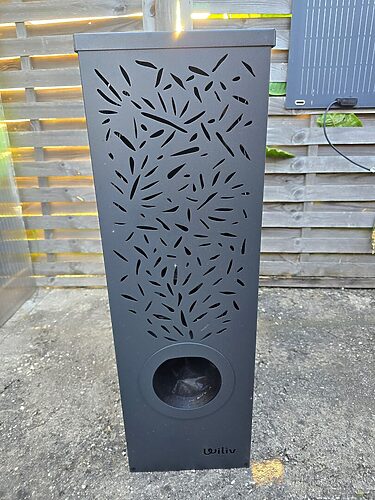
In the box: the unit, the capture net already installed (+1 replacement), an olfactory lure cartridge, the documentation, and the components to connect the CO₂ bottle.
This bottle is likely to surprise some buyers.
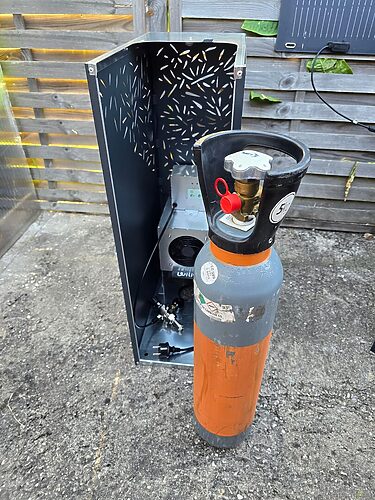
It is not specific to Wiliv. The trap is compatible with standard five-kilogram bottles used for professional beer taps. They can be easily found through specialized distributors, wine merchants, or via the network offered by Wiliv.
Concrete advantage: you are not dependent on a proprietary cartridge.
Installation: placement makes all the difference
One might be tempted to place the Willo right next to the terrace, where mosquitoes become unbearable. This is exactly what should not be done.
This is probably the most important advice I took away from my conversation with the biologist from Wiliv: an attractive trap should never be installed where you want to enjoy your garden.
The reason is simple. The Willo intentionally attracts mosquitoes. If you place it in the middle of your terrace, you will capture some, but you will also attract all the surrounding ones towards the spot where you are located. Some will end up in the net, others will prefer the very real target you represent.
The trap must intercept mosquitoes before they reach you, not in the middle of them.
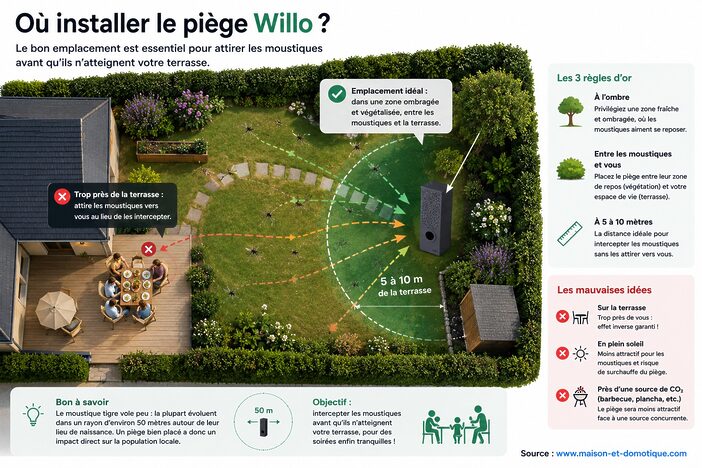
Wiliv recommends installing it between 5 and 10 meters from the terrace, in a cooler, shaded, and vegetated area, where tiger mosquitoes spend most of their day when they are not looking for prey.
At my home, I avoided the most practical location (immediately next to the terrace, with a socket already available) and chose a spot about seven meters away, behind a hedge, in an area that remains damp for a good part of the day. A place where I regularly noticed mosquitoes while gardening.

The connection poses no difficulty. The Willo works on a standard electrical outlet. If no outdoor outlet is available nearby, a suitable extension cord for outdoor use (minimum IP44) is sufficient, ideally hidden along a hedge or wall.

Connecting the CO₂ bottle takes a few minutes. Nothing complicated, but the regulator must be properly adjusted to achieve the recommended flow rate. Once done, you won’t need to return to it.

A technical detail I appreciate: the solenoid valve is normally closed. In case of a power outage or accidental disconnection, the CO₂ diffusion stops immediately. It is impossible to empty a bottle entirely due to a malfunction.
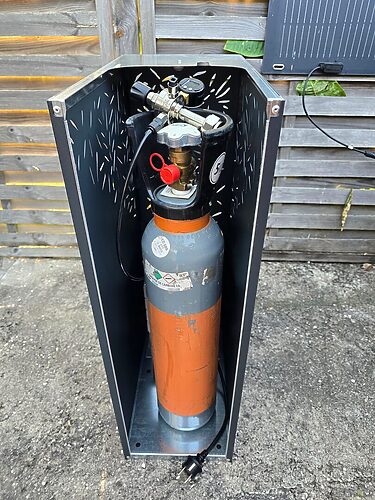
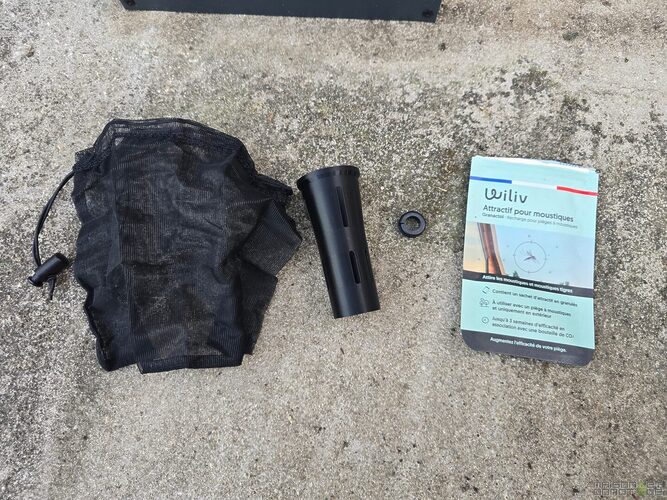
Finally, do not forget to place the olfactory lure, in the small tube provided:


Once the bottle and lure are in place, and the electrical connection set up correctly, simply replace the cover, which fits easily.
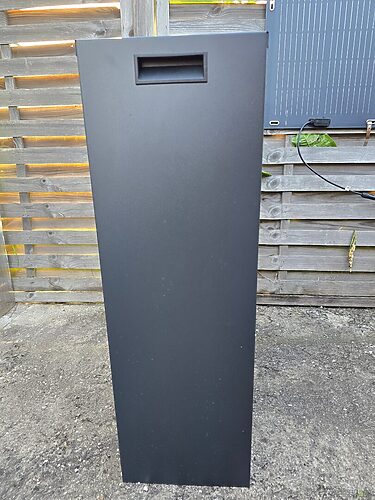
The installation literally takes less than 10 minutes.
The Wiliv application: simple, but really useful
Today, almost all connected objects have a mobile application. In many cases, it mainly serves to display pretty graphs. Here, the approach is different.
The Wiliv application does not seek to turn the trap into a gadget. It supports its use.

After Bluetooth pairing (a choice made by the manufacturer), you quickly access the main settings.

The first concerns the programming of CO₂ diffusion. The fan remains active continuously to keep captured mosquitoes contained, while the gas is only diffused at defined times. This programming enhances the efficiency of the trap while limiting consumption.
Bluetooth may surprise users accustomed to Wi-Fi. But this choice is coherent. The Willo is intended to be installed deep in the garden, often out of reach of the home network. And once the timings are set, there’s not much reason to adjust the parameters daily.
The application also allows for tracking consumables. You enter the replacement date of the olfactory cartridge and the refilling of the bottle, and the application estimates the remaining level according to the programmed operating time. This is just an estimate, but it is accurate enough to avoid unpleasant surprises.
The other good idea is the educational aspect.
Wiliv does not only sell a mosquito trap. The application explains the lifecycle of the tiger mosquito, reminds prevention gestures, offers seasonal advice, and sends a few useful reminders: cleaning gutters, removing standing water.

I particularly appreciated this. It quickly becomes clear that a trap, however good, cannot compensate for a garden filled with saucers from flowerpots and forgotten watering cans.

Why the Willo should not operate 24/7 at full power
Instinctively, one might think that the longer the trap diffuses CO₂, the more mosquitoes it will capture. In practice, it would mostly be wasteful.
The tiger mosquito has a very marked biological rhythm. Unlike the common mosquito, it bites primarily during the day but avoids the hottest times.
In spring, when mornings remain cool, Wiliv recommends diffusing late in the morning and then in the afternoon. In midsummer, the timings change. The first peak of activity occurs early, often between 5:30 and 8:00, when the air is still cool. The second appears in the late afternoon until nightfall.
This first time slot surprised me. I would have instinctively concentrated everything around the happy hour. However, the biologist from Wiliv raises an interesting point: morning is often the time when the most mosquitoes are captured, precisely because humans are still few outdoors. The trap then becomes almost the only “prey” detectable in the vicinity.
This is one of the examples that shows this product relies on an understanding of mosquito behavior much more than mere suction power.
User feedback: what to really expect from a mosquito trap
This is probably where many users risk being surprised. The Willo does not function like an insecticide. It does not make all the mosquitoes in the garden disappear on the first night. And that is a good thing.
Its goal is more ambitious. It gradually acts on the local population.
During the first days, you will find a few mosquitoes in the net. Then, over the weeks, captures decrease, which might lead one to believe that the trap is not working as well.

In reality, it’s often the opposite.
As the entomologist explained to me, an effective trap ultimately reduces the population around the house. Thus, it is normal for the number of captures to decrease throughout the summer.
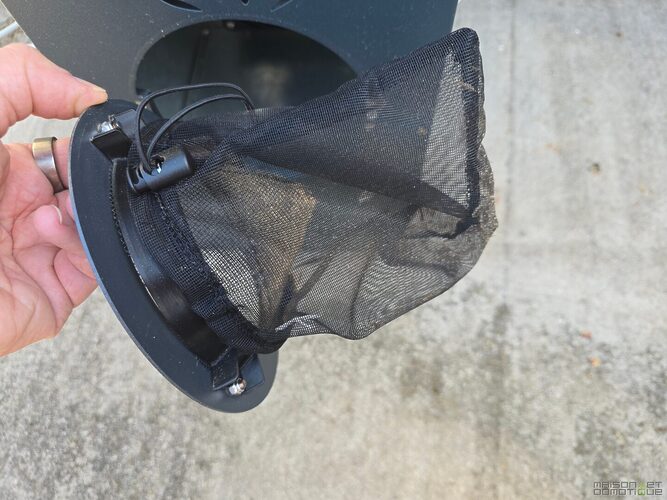
The real criterion is not the number of mosquitoes in the net. It is much simpler: can you finally enjoy your terrace without being bitten? That is the only result that matters.
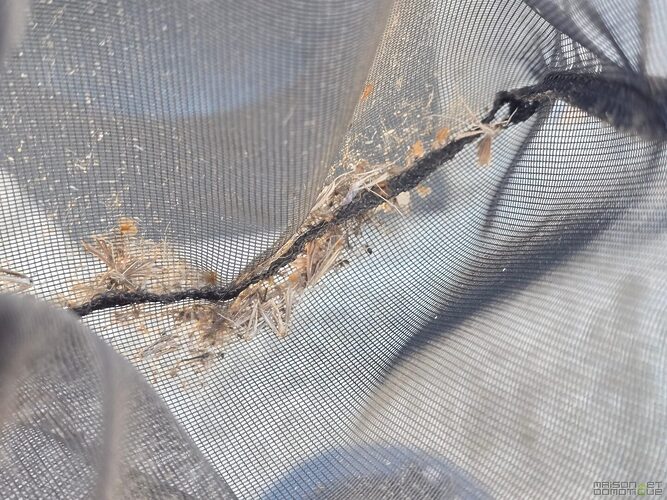
Also, don’t worry if the net sometimes appears almost empty. Captured mosquitoes can be taken by jumping spiders or evacuated by opportunistic ants, which can give the impression that the trap has captured nothing. Wiliv is well aware of this phenomenon and informs its users about it.
What is the real cost of using the Wiliv Willo?
This is probably the first question one asks after discovering how the Willo works. The principle is appealing, but what budget should one plan for a full season?
Unlike a spray or a spiral, the Willo operates several months a year. Three expense categories must be considered: electricity, olfactory lure, and CO₂.
Let’s start with the simplest. The fan runs continuously, but the power consumption remains very low: 9.5w. Over a period of 5 months (from May to September, for instance), this represents less than €10 in electricity, a negligible expense over the season.
The olfactory lure lasts several weeks. The application reminds when it needs to be replaced. The operation takes a few seconds. The lure costs €16.99 each.
The main expense is the CO₂ bottle.
With the recommended settings, a five-kilogram bottle lasts about two weeks with daily diffusion of eight hours. Users facing a lower pressure of mosquitoes can easily extend this duration.
A gas refill generally costs between €35 and €40, plus the deposit for the bottle upon the first purchase. At first glance, this may seem substantial.
But let’s put this into perspective. A family that regularly buys sprays, electric diffusers, spirals, candles, and various repellents often spends several dozen, even hundreds of euros each summer, without ever decreasing the mosquito population around the house.
The Willo acts directly on this population. It’s a different logic and a different budget to consider.
CO₂: a consumable that often raises questions
Besides the price, this is probably the point that comes up most often when talking about the Willo.
Using carbon dioxide to combat mosquitoes can seem paradoxical in an age where we seek to reduce emissions. The answer is more nuanced than it appears.
The gas used by Wiliv does not come from the combustion of fossil fuels. It is derived from the methanization of agricultural waste. This CO₂ already exists in the biological cycle of organic matter: it would have been released into the atmosphere during decomposition anyway. Wiliv simply valorizes it before its return to the natural carbon cycle. We are not introducing additional fossil carbon but utilizing a gas from the short cycle.
What I particularly appreciated
After several weeks of use, several points stand out clearly.
The first, without hesitation, is the scientific approach behind the product. You quickly sense that the Willo was not designed by a marketing team looking to surf the issue of the tiger mosquito. The entire development is based on serious entomological knowledge. This is reflected in the choice of attractants, the scheduling of diffusion times, the recommended placement, and the explanations in the application.
I also appreciate that Wiliv never claims that a trap alone will solve everything. On the contrary. The manufacturer emphasizes prevention, the removal of standing water, garden maintenance, and understanding mosquito behavior. This transparency stands in stark contrast to most products in the aisle.
The quality of the construction is another strong point. Metal structure, French manufacturing, spare parts available, customer service based in France. These are sensible arguments for equipment intended to last several years in the garden.
The application deserves praise. It does not attempt to multiply unnecessary features: it helps to effectively use the trap.
Finally, as a small bonus feature, the unit can also serve as a nightlight, programmable via the application. Personally, I really like the look of it at nightfall:


The few limits to be aware of
No product is perfect, and the Willo is no exception.
The first limitation is the price. The initial investment is higher than the solutions found in supermarkets, and there are consumables to consider each season.
One should see it as a durable piece of equipment, not merely a seasonal accessory.
Installation also requires more thought than a classic repellent. The right placement is important. A poorly located trap may operate, but much less effectively. Fortunately, Wiliv provides good support for its users, and there is nothing preventing you from moving the unit if another location seems more prudent.
Finally, one must accept patience. The Willo is not an insecticide. Its effectiveness gradually increases as the local population decreases. Users looking for immediate results may be surprised at first.
My verdict after this test
Before discovering the Willo, I viewed this type of trap as a more sophisticated version of the many anti-mosquito systems already on the market.
After speaking with the Wiliv teams and using the product, my perspective has changed.
The Willo is not a device that sucks in mosquitoes. It is a solution that relies on the biology of the tiger mosquito to act where most traditional products fail: by gradually reducing the population around your home.
One should not expect miracles on the first evening. The manufacturer is clear about this. The trap needs to be installed early enough in the season, well-positioned, and combined with good preventative practices. Under these conditions, it becomes a regulatory tool, not a simple means of temporary protection.
I also appreciated Wiliv’s approach. The company does not try to sell a miracle solution. It explains the limitations of the product, discusses mosquito behavior, and supports the user. This is rare enough to be noted.
If you live in an area affected by the tiger mosquito and want to enjoy your terrace without relying on multiple sprays, the Willo is today one of the most serious solutions I have had the opportunity to study.
Its price may hinder purchase, but it is justified by the quality of manufacturing, French design, the scientific work behind the product, and an effectiveness based on a true understanding of the mosquito, not on marketing promises.
FAQ
Does the Wiliv Willo work against all mosquitoes?
It is primarily optimized for the tiger mosquito (Aedes albopictus), although it can capture other species that are present in the garden.
Can the trap be left outside all year round?
Yes, the metal design withstands the elements well. However, it is recommended to bring it indoors in winter when mosquitoes are no longer active.
Is CO₂ dangerous?
No. It is the same carbon dioxide as that from beer taps or carbonated beverages. It is non-flammable and the quantities released remain very low.
Why shouldn’t the trap be installed near the terrace?
Because it intentionally attracts mosquitoes. If placed too close to you, it may temporarily increase their presence before capturing them.
Can the Willo be used without a CO₂ bottle?
The fan and olfactory lure will continue to operate, but the effectiveness will be significantly lower – CO₂ being the main signal detected from a distance.
How long before results are seen?
Initial captures appear quickly, but it generally takes several weeks to observe a real decrease in the population around the house.
Can the trap be moved?
Yes, and it is even advised if the chosen location does not yield the expected results. A few attempts often help to find the optimal position.
Does the Willo replace other methods of mosquito control?
No. It works even better when associated with good practices: eliminating standing water, maintaining the garden, and if necessary, treating certain larval breeding sites that cannot be removed. This holistic approach yields the best results.




Please remain courteous: a hello and a thank you cost nothing! We're here to exchange ideas in a constructive way. Trolls will be deleted.