



Résumer cet article :
Turning off the lights when leaving a room is a good habit. Knowing exactly where each kilowatt-hour goes, and letting the house adjust certain uses on its own, changes the scale.
Home automation has come a long way in this area. By 2026, it no longer just turns on a lamp from a smartphone or closes the shutters remotely: it measures the household’s consumption, identifies energy-hungry devices, adjusts heating based on individual presence, and chooses the best time to charge a car or a battery.
Six devices make this possible.
1. The connected thermostat to heat only when necessary
Heating remains one of the primary areas to monitor. The connected thermostat isn’t new; it’s almost become a classic, but its capabilities have evolved significantly. And its benefits are not just theoretical: the Ministry of Ecological Transition reminds us that a programmable thermostat can reduce consumption by automatically adjusting the temperature based on schedules and occupancy of the home.
A simple hourly schedule already prevents heating an empty room to a comfortable temperature. Add presence detection, geolocation of occupants, or consideration of the weather, and the system starts to think for itself.

Home automation goes even further: a scenario can automatically switch the heating to energy-saving mode as soon as the last person leaves the house, then raise the temperature before their return.
Once properly configured, the system runs without us thinking about it. That’s exactly what we want from a good home automation installation: to be forgotten.
2. The connected energy meter to know where the electricity goes
It’s difficult to reduce consumption when you don’t know what you’re using. It’s a bit like wanting to cut expenses without ever looking at your bank statement.
Measurement modules installed in the electrical panel today track the power drawn by the entire home, even circuit by circuit. Connected energy meters can thus separately monitor heating, the water heater, the charging of an electric car, or a pool pump.
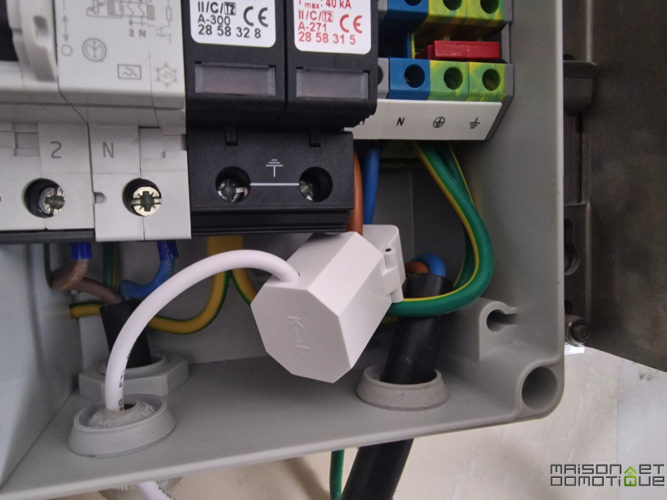
These data take on a new dimension once integrated into a home automation solution like Home Assistant or Jeedom: we can build histories, spot consumption peaks, and automatically trigger certain actions. A house can, for example, cut off a non-priority device when the demanded power becomes too high.
Reducing the number of kilowatt-hours consumed remains a priority, but choosing when to use them also counts. Comparing electricity offers and their pricing periods can complement the work of home automation: a water heater, a washing machine, an electric car, or a battery operates or charges during the most suitable periods.
3. Connected plugs to track consumption device by device
The connected plug is probably the simplest home automation accessory to install. With an integrated power measurement, it also becomes a powerful tool for tracking unnecessary watts.
Plugged into a freezer, a computer, a TV setup, or household appliances, it gives its precise consumption, hour by hour, day after day.
And the surprises are not lacking: a seemingly innocuous device can cost several dozen euros in electricity annually. It was thanks to this type of plug that I discovered my connected TV was never truly off and consumed 10w when we turned it off!

The connected plug also serves to automate certain uses. A multimedia corner (television, console, accessories) can be completely turned off during a long absence. Conversely, its power measurement can serve as a home automation trigger: when the washing machine’s consumption drops below a few watts for several minutes, Home Assistant can send a notification to say that the laundry is done.
We save energy while gaining a bit of comfort. Not bad for an accessory that installs in seconds.
4. Connected thermostatic heads to heat each room differently
A central thermostat already improves heating management. But why keep all rooms at the same temperature?
A bedroom, an office, and a bathroom do not have the same usage schedules or needs. Connected thermostatic heads manage the temperature radiator by radiator.
The bathroom can, for example, be heated more between 6:30 am and 8 am, then cool down for the rest of the day. An office in telecommuting can follow a completely different program while the bedrooms remain cooler.
When paired with opening detectors, they also automatically turn off the heating when a window is left open.
This is the kind of automation that you quickly forget until the day you have to return to completely manual heating.
5. The smart charging station to charge the car at the best time
With an electric car, charging can quickly become one of the heaviest consumption areas of the home. An automotive battery consists of several dozen kilowatt-hours: the time chosen to fill it is not insignificant.
A smart charging station can automatically delay charging until off-peak hours or adapt its power to the instantaneous consumption of the house.
The interest grows even more with photovoltaic panels. Instead of injecting surplus production into the grid, the station gradually increases the power sent to the car when the sun produces enough.
A home automation scenario can even arbitrate between multiple constraints at once: car to charge to 80% before 7 am, available solar production, current consumption of the home, maximum power of the subscription.
We are no longer in simple ON/OFF. Consumption becomes manageable.
6. The smart home battery to store energy at the right time
This is probably the equipment that best illustrates what energy management at home has become.
With the rise of photovoltaics, home batteries and storage systems for balcony solar installations are multiplying, as we have seen through many tests. Their basic mission is simple: to store electricity produced during the day for use once the sun has set.
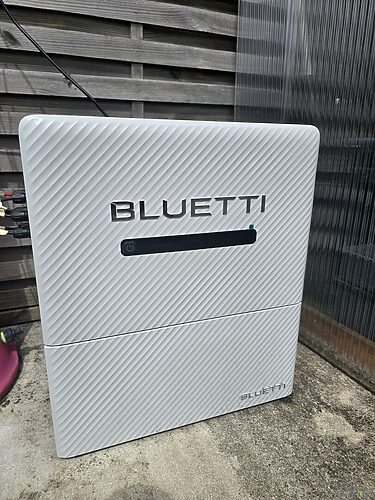
But the most advanced systems go further. Thanks to an energy management system, often called HEMS (Home Energy Management System), the battery adapts its behavior to photovoltaic production, home consumption, and what is planned in the upcoming hours.
Let’s take a sunny day. The house consumes 400 W, and the panels produce 1,800 W. Part of the excess charges the battery. When evening comes, this energy is used to power the house instead of immediately drawing electricity from the grid.
Add an electric car, a water heater, and a few programmable devices to the equation, and the possible combinations become quickly interesting.
The goal: to make all these devices work together
Buying six connected devices and installing six applications on your smartphone is not enough to turn your home into a smart home. The real interest appears when the devices start to communicate with each other.
A home automation platform can receive data from the energy meter, know the temperature of the rooms, detect the presence of occupants, and track photovoltaic production. This allows for real decisions, not just displaying numbers.
A solar surplus appears: the battery charges. It is full: the car receives the excess. The power consumed rises too high: the charging slows down. Everyone leaves: the heating switches to energy-saving mode.
This is where the evolution of energy home automation in 2026 lies: less accumulating connected objects, more making them cooperate.
The best kilowatt-hour is the one we don’t consume. And when consumption is truly necessary, it’s best to place it at the right time.



Please remain courteous: a hello and a thank you cost nothing! We're here to exchange ideas in a constructive way. Trolls will be deleted.