



Résumer cet article :
The market for robot lawn mowers is evolving quickly. A few years ago, setting up a robot meant unwinding several hundred meters of perimeter wire, pulling out the mallet, and spending half a day marking out your land. RTK antenna models simplified things, but you still have to find a clear spot for the antenna, and they quickly show their limits under dense vegetation. With the NexLawn Vidar 3000 AWD, the manufacturer tackles the problem from the other end. No buried cable, no RTK antenna. The entire navigation relies on a 3D rotating LiDAR combined with a dual AI-controlled camera, capable of mapping the garden to within a centimeter, recognizing obstacles, and continuing to work under trees or near buildings.
This is not the only feature of the robot. The Vidar has four independent powered wheels, a suspension to handle rugged terrain, a cutting system that automatically shifts to mow right up to the edges, and an app that manages multiple maps, many mowing zones, and a long list of settings. The technical specifications also announce daytime and nighttime navigation, detection of more than 300 types of obstacles, a mode dedicated to protecting animals, and a noise level below 60 dB.
There’s plenty to be excited about. After several weeks of testing in different configurations, here’s our complete review of the NexLawn Vidar 3000 AWD.
Unboxing and presentation of the NexLawn Vidar 3000 AWD
From the moment you open the box, it’s clear you’re not dealing with an entry-level robot. The size is impressive, the finishing is neat, and the whole thing inspires confidence.
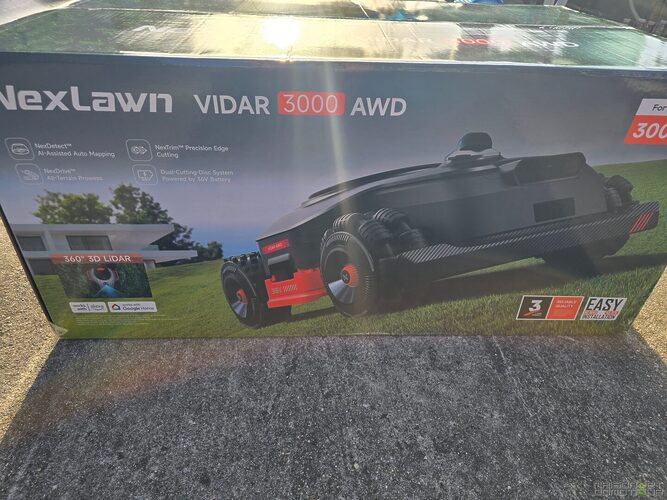
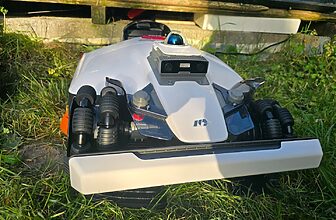
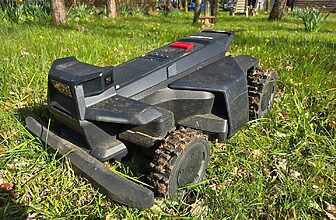
The design stands out from usual lawn mowers, which can often be quite ordinary. Here, the lines are sporty, almost automotive: a well-designed front shield, angular bodywork, and a successful integration of the LiDAR at the top of the device.
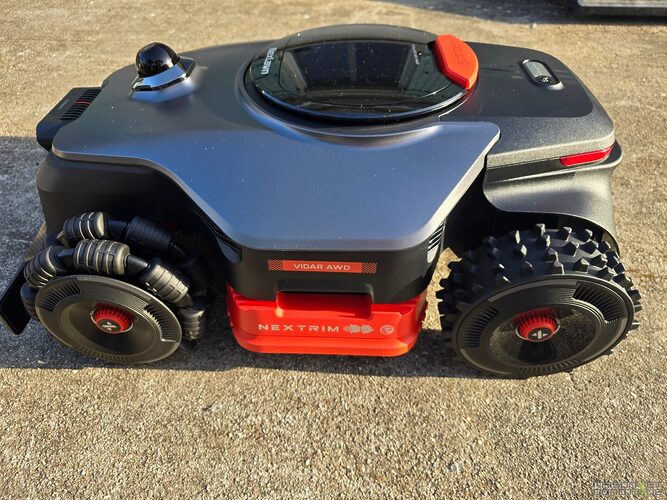
Let’s highlight the build quality and the robustness of the plastics used. This is a product that genuinely feels premium.

Weighing nearly 24 kg, it’s not a lightweight. NexLawn has provided an integrated transport handle, practical for occasional movements (even though, once installed in the garden, you don’t really lift it anymore).

Inside the box, we find everything needed to get started right away:
- the robot lawn mower;
- the charging station;
- the power supply;
- the base fixing screws;
- several sets of spare blades;
- the tools necessary for assembly;
- the documentation.
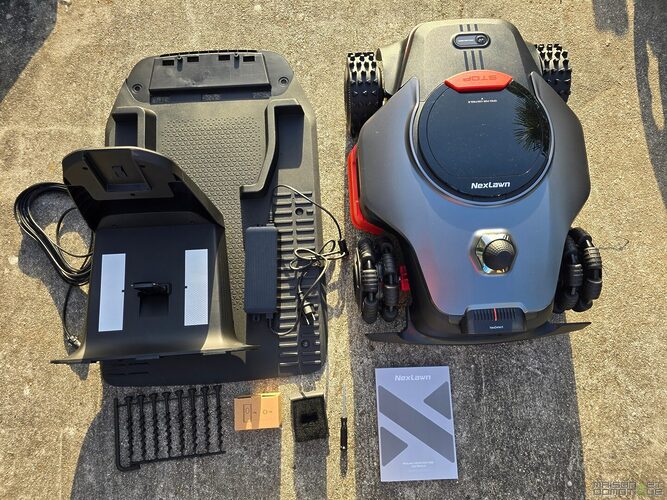
On this point, NexLawn does things right: 36 blades provided, enough to last several seasons before needing to purchase more consumables.
An ambitious technical specification
The NexLawn Vidar 3000 AWD is clearly positioned at the high end of the market.
Its first feature is the NexDetect 2.0 system, which combines a 360° rotating LiDAR and a dual AI-controlled HDR camera.

This combination allows the robot to build a 3D map of its environment up to 70 meters, while identifying obstacles encountered along the way. According to NexLawn, this navigation remains precise both in bright sunlight and at dusk, or in areas where GPS tends to drop out.
No perimeter cable is required, and no RTK antenna either, simplifying installation and avoiding reception problems under trees or between buildings. NexLawn reports a time savings of almost 90% compared to an installation with perimeter wire.
The all-wheel drive is another major selling point of this AWD version. Each wheel has its own motor, allowing the robot to tackle slopes up to 80% and cross obstacles of about 6 cm without losing traction on rough terrain. The omnidirectional front wheels limit slippage during turns, reducing grass wear.

In terms of cutting, the Vidar has a working width of 40 cm thanks to two decks each with six blades. The cutting height is electrically adjustable between 30 and 100 mm via the app, without any manual handling. An interesting detail: the NexTrim system automatically shifts the disks towards the edge of the machine to mow within 3 cm of the borders, which limits the need for a trimmer.

Finally, NexLawn announces the management of multiple maps, dozens of mowing zones, seasonal programs, an anti-theft feature with geolocation, 4G connectivity, an animal protection mode, and an IPX6 certification for complete cleaning with a water jet.
After reading this technical specification, it’s hard not to be intrigued: on paper, the Vidar ticks just about all the boxes expected from a premium robotic lawn mower.
Installing the NexLawn Vidar 3000 AWD: one of the simplest robots to set up
Installation is often the step that worries potential buyers the most before purchasing a robotic lawn mower. Some models make things complicated: cables to bury, RTK antennas to position to the millimeter, shaded areas to avoid. It can sometimes take half a day, or even more. With the NexLawn Vidar 3000 AWD, the approach completely changes.
The only real constraint is to install the charging station near a power outlet. No need to find a clear spot towards the sky: the robot does not depend on satellites for its location, so the base can be placed under a shelter, against a wall, or even in a garage open to the garden. This placement freedom is especially important in wooded gardens, where an RTK antenna often struggles to maintain a stable signal.

The station is fixed to the ground with the provided screws. The power supply is certified for outdoor use, although it is still best to protect it from direct water splashes or to mount it on a wall, as recommended by NexLawn.
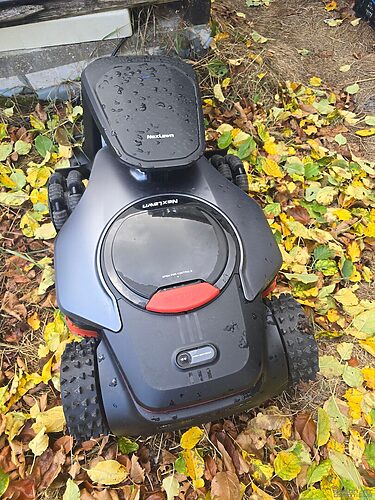
Once the robot is placed on its base, you simply need to turn it on, choose the language, and set a PIN code: a mandatory step that acts as the first protection against theft.
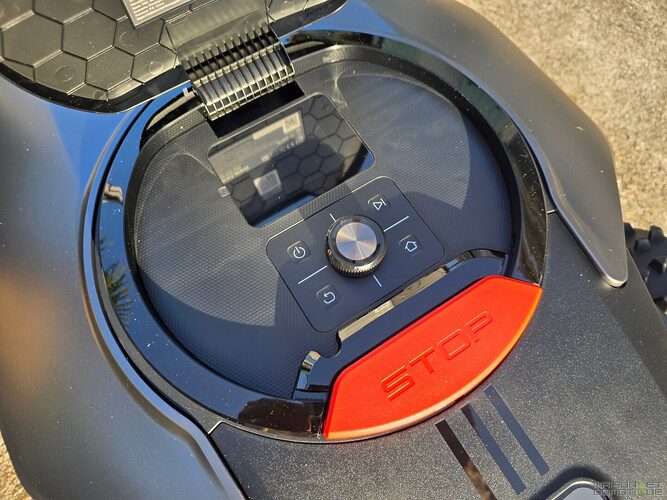
The association with the smartphone is just as quick: you scan the QR code under the hood, connect the robot to the 2.4 GHz Wi-Fi, and the app detects it automatically.


Expect to spend less than fifteen minutes from unboxing to a robot ready to map the garden.
Mapping without cables or RTK antennas
This is probably the greatest strength of the NexLawn Vidar 3000 AWD. The robot offers two mapping methods.
The first involves controlling it like a remote-controlled car from the smartphone, following the edges of the lawn.

This is the most precise method, and the one we recommend for a permanent garden. The map is constructed in real-time on the phone screen, and it becomes easy to add restricted zones, several mowing areas, or paths between different parts of the land.

The second method uses AI: thanks to NexDetect 2.0, the robot explores the terrain on its own and automatically generates the map. NexLawn states that it achieves centimeter-level precision in just a few minutes, without user intervention. Convenient on a simple terrain or for a quick initial installation.
In practice, manual mapping remains slightly more precise for navigating complex flower beds, rocky areas or irregular borders. However, for a large rectangular lawn, the automatic mode saves a significant amount of time.

The NexLawn Vidar 3000 AWD also manages two completely independent maps: a feature rarely highlighted, but which can be useful: one map for the primary residence, another for a vacation home, or simply two separate gardens. Just move the robot and install a second base. You can also create up to 150 zones on the same map, more than enough to cover the most intricate terrains!
A comprehensive app
The NexLawn app is one of the pleasant surprises. The interface is modern, responsive, and clear enough to be quickly grasped, even by someone discovering their first robotic lawn mower.
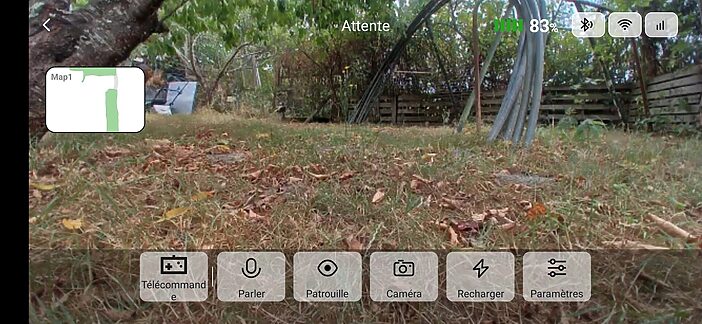
From the main screen, you can see the map of the area, the robot’s position, the battery level, and the real-time mowing progress. But it’s mainly the richness of settings that stands out: each zone can have its own parameters: cutting height, speed, mowing frequency, direction, overlap between bands.

You can also modify these settings while the robot is working. The cutting height can be adjusted remotely without interrupting mowing, just like the obstacle detection level, which can be tightened to protect fragile plantings or loosened to allow the robot to advance through taller grass.

The app also allows you to program multiple schedules according to the seasons: logical, since you don’t mow at the same rate in the middle of August as in spring when the grass grows quickly. NexLawn enables the definition of several programs that automatically follow one another throughout the year, without having to manually tweak the schedules. This is sensible, but still uncommon on the robotic lawn mowers we have already tested.
Another appreciated feature is the onboard camera. Thanks to the 4G connection (included for several years depending on the models), you can see what the robot sees while it works. This same camera can serve as a surveillance mode, with notifications if a presence is detected: the robot becomes, occasionally, a real mobile guardian of the garden.
NexDetect 2.0: navigation that inspires confidence
The technological core of the NexLawn Vidar 3000 AWD is the NexDetect 2.0 system, which combines several sensors to completely avoid relying on satellites. At the top of the robot, a rotating LiDAR scans the environment at 360°, with a stated range of up to 70 meters. It is supported by a dual HDR camera that continuously analyzes what is in front of the robot.

This fusion of sensors provides two benefits. Firstly, the robot continues to locate itself under trees, near hedges, or between buildings, where purely RTK robots sometimes lose precision. Secondly, navigation is fluid: the Vidar never gives the impression of searching for its position, turns are smooth, three-point turns are neat, and trajectories are consistent. The omnidirectional front wheels largely prevent pivoting in place, which tends to mark the lawn over weeks.

The system also analyzes obstacles: the manufacturer claims recognition of over 300 different types of objects: toys, garden furniture, forgotten tools, animals, people. If in doubt, the robot slows down before deciding whether to navigate around or continue on its path. This approach provides a genuine sense of intelligence in its movements.
On the ground: methodical mowing
A strong technical specification does not make a good robotic lawn mower. What matters is the behavior once released on the lawn, and that’s where the NexLawn Vidar 3000 AWD excels the most.
Unlike older robots that mowed randomly for hours, the Vidar first traces long parallel stripes in neat lines. Coverage is uniform, with no missed spots or unnecessary passes. Once this step is completed, it makes one or more passes along the edges to finish. The robot effectively covers the entire designated area, even on terrains with multiple sectors connected by narrow paths.
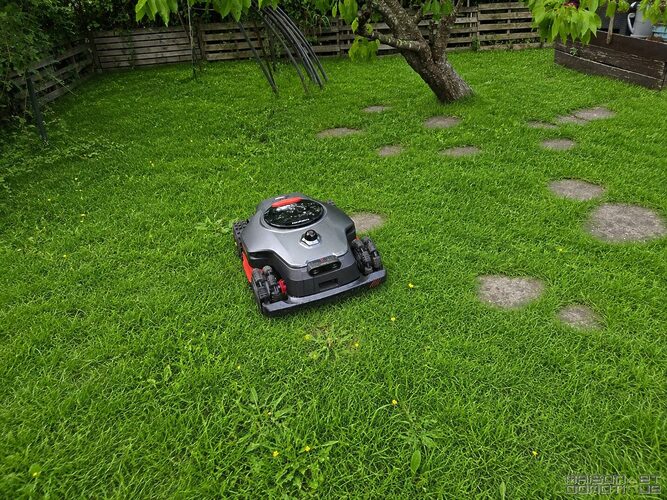
This method has several advantages: mowing is faster, power consumption is lower, and the visual result is pleasant: you see the famous alternating stripes like on a football field, especially when the grass is quite tall.
The robot is also remarkably quiet. With a noise level stated to be below 60 dB, you can consider mowing early in the morning or in the evening without disturbing the neighborhood. The sound of the cutting motors is discreet, often overshadowed by the birds (or the neighbor’s mower).
The cutting quality is convincing: the two decks with six blades offer a working width of 40 cm, significantly reducing the number of trips compared to a robot equipped with a single 20 to 25 cm disc. The floating deck system is also worth noting: on a bump or slight depression, the disks follow the terrain irregularities without scraping the ground, avoiding the scalping sometimes seen with more rigid robots.
NexTrim: clean edges at last
Edges remain the weak point of most robotic lawn mowers. Even the best models often leave a strip of grass several centimeters against walls, fences, or flower beds, necessitating the use of a trimmer.
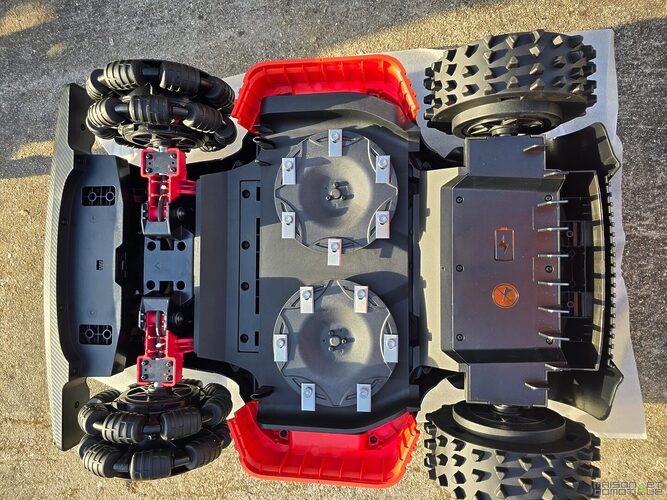
NexLawn attempts to solve this problem with NexTrim. The principle is that during the second pass dedicated to the edges, the cutting deck shifts to the left side of the robot, and the blades work almost outside the chassis to trim the grass as close as possible to the obstacles. The manufacturer claims a distance of less than 3 cm between the blades and edges, and in practice, this technology clearly reduces the finishing work needed by hand.
This obviously doesn’t work miracles in 90° angles or against some closely placed obstacles: a trim will still be necessary from time to time, but much less often than with a classic robot.
Four-wheel drive that changes the game
The AWD badge isn’t just for show: the Vidar truly has four independent motors, one for each wheel.
On perfectly flat ground, the difference with a two-wheel drive robot isn’t obvious. But as soon as the terrain becomes complicated, the difference becomes clear: the robot climbs steep slopes, crosses holes, bumps, or deformed passages without ever giving the impression of being in difficulty. The front suspensions keep the wheels in contact with the ground and limit loss of traction.
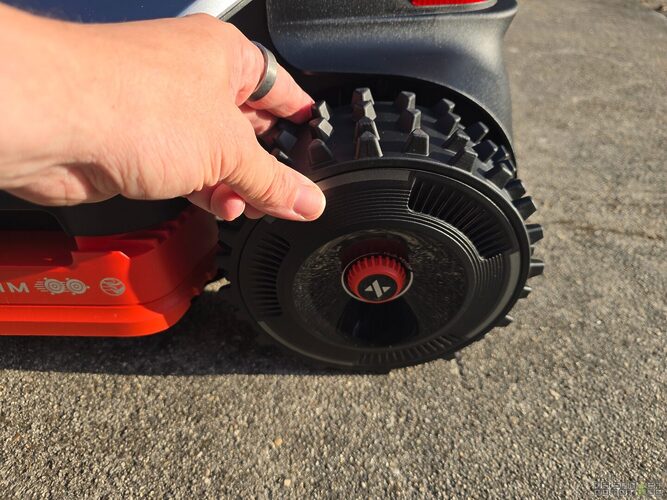
NexLawn claims a capacity to climb slopes of up to 80% and to cross obstacles of about 6 cm: values that place the Vidar among the most capable robots on the market in this regard.

The omnidirectional front wheels also play a role in making turns: they accompany the movement without laterally rubbing the grass. As a result, there are far fewer circular tracks in front of the charging station or in the corners of the lawn. A detail, but one that matters after several weeks of use.
A reassuring obstacle avoidance system
Not all robotic lawn mowers react the same way to obstacles. The NexLawn Vidar 3000 AWD adopts a fairly cautious approach: thanks to the LiDAR and dual HDR camera, it detects objects early on its path, slows down as it approaches, analyzes the situation, and then navigates around or resumes its path depending on what it has identified.
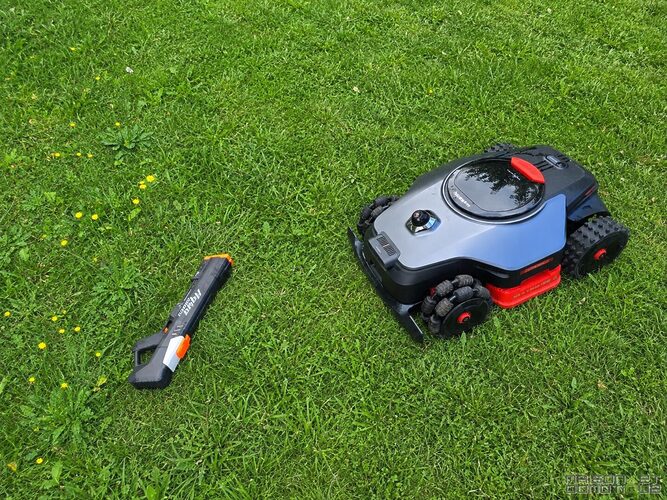
The robot easily avoids trees, posts, garden furniture, forgotten toys on the lawn, but also animals present in the garden (even free-range chickens are detected and navigated around without unpredictable reactions).

The sensitivity level can be adjusted: at maximum, it preserves everything that’s lying around the garden; conversely, if the lawn is a bit high or if weeds are mistaken for obstacles, you can lower the threshold to let the robot continue its work normally. This adjustment can be modified during mowing, without interrupting the program.
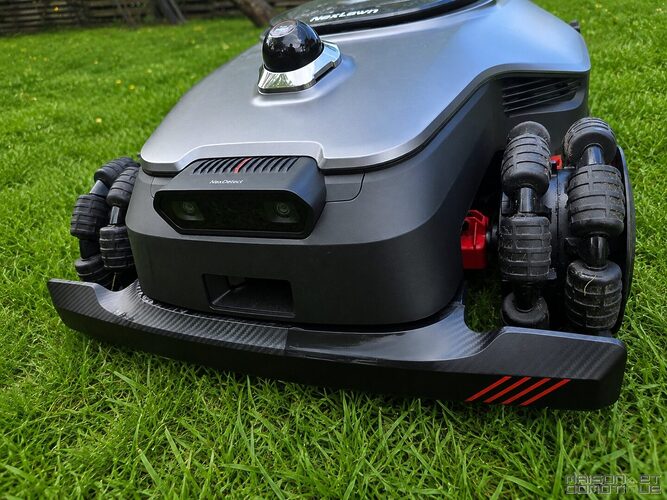
The front bumper remains the ultimate safety feature: if an obstacle escapes the sensors, the robot stops at the slightest contact before recalculating a route, without pushing objects or damaging fragile plantings. As a result, you are much less hesitant to let the NexLawn Vidar 3000 AWD work alone, even with animals in the garden or a few forgotten objects on the lawn.
Autonomy designed for large surfaces
The NexLawn Vidar 3000 AWD is clearly not aimed at small urban gardens. Capable of maintaining up to 3,000 m² in this version, it is intended for owners of large plots who want to fully automate the maintenance of their lawn, with an automatic return to the station as soon as the battery reaches its minimal threshold.
Like most high-end robots, the NexLawn Vidar 3000 AWD operates entirely autonomously: when the battery is low, it stops mowing, returns to its station, recharges, and then resumes exactly where it left off. There is no need for the autonomy to cover the entire garden in one charge; the final result is what matters. This logic even has an advantage: the robot often works multiple times a week or even daily during periods of rapid growth, keeping the lawn at a good height, reducing the strain on the cutting motors, and improving mulching.
The fast charger also minimizes downtime: on models using this same platform, a full recharge takes just over an hour thanks to a high-powered supply.
Safety: a robot that does more than just mow
NexLawn has focused on safety, both for the robot and its surroundings.
The first protection is the PIN code requested at startup. It is impossible to use the robot without it, even after a standard reset attempt. In the event of lifting, an alarm immediately sounds, and the robot remains locked until the code is entered: a deterrent against opportunistic theft. It is also impossible to bypass this protection simply by holding down the power button.
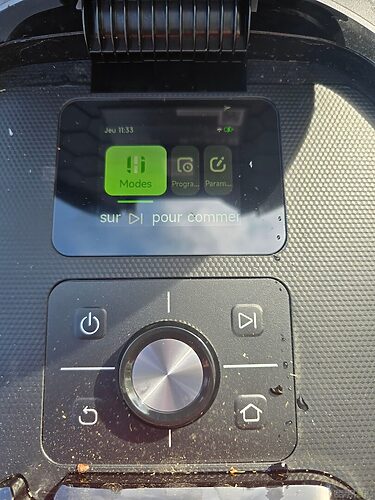
The 4G connectivity further strengthens this point: depending on the versions, several years of connection are included, allowing for remote geolocation of the robot, even outside of Wi-Fi coverage. The app alerts if the robot leaves its usual area or moves unusually, and support for an AirTag is provided for those who want extra protection.
For the occupants of the garden, the Animal Friendly mode allows for automatically slowing down the robot, defining time slots when animals are likely to be present, or creating temporary zones to avoid: a consideration that is still quite rare among manufacturers.
Maintenance reduced to a minimum
Modern robotic lawn mowers require little maintenance, and the NexLawn Vidar 3000 AWD is no exception.
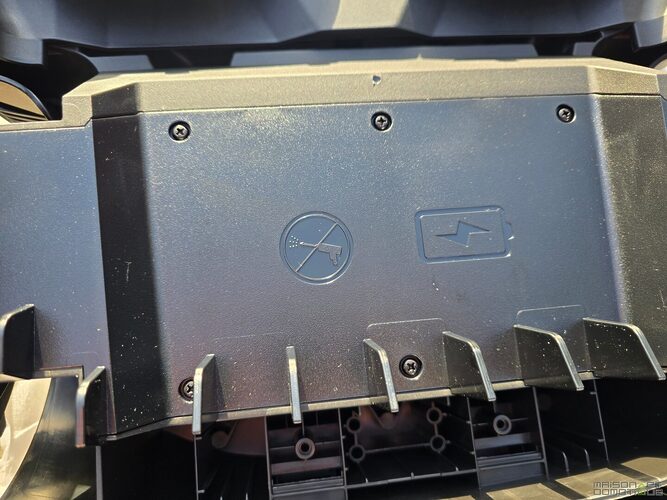
After a few mowings, a simple rinse with a water jet is enough to remove grass residues under the chassis: IPX6 certification allows for this without issue. However, as NexLawn reminds us, no high-pressure cleaner: it would damage the joints and electronic components.
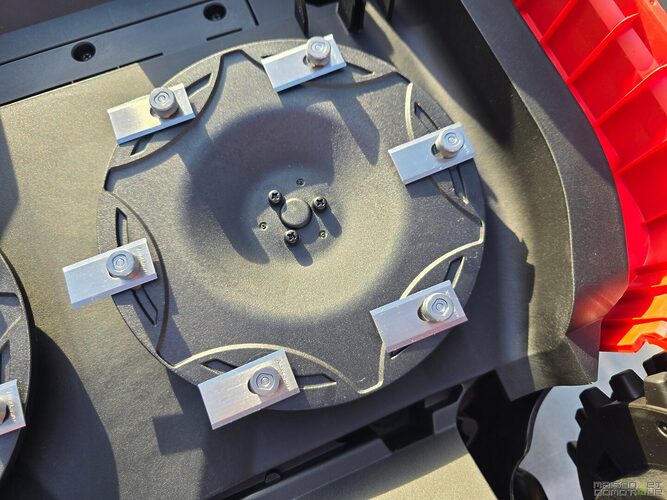
The blades need to be replaced regularly, every two to three months on average depending on the nature of the terrain, to maintain optimal cutting. The operation is simple: each blade is secured by a screw accessible directly under the decks.
The LiDAR also deserves a little check from time to time. A great idea from NexLawn: an integrated brush at the station automatically cleans the sensor each time the robot returns, which limits dust accumulation. However, occasional manual cleaning is still recommended for maximum precision.

Finally, the battery is easily replaceable, which is important after several years of use. Unlike some robots where it requires a workshop return, the Vidar provides direct access to the battery compartment, which enhances repairability and lifespan.
Facing the competition
The premium robotic lawn mower segment has become highly competitive. Mammotion, Segway Navimow, Ecovacs, or Husqvarna now offer excellent machines, each with their strengths.
The NexLawn Vidar 3000 AWD adopts a slightly different philosophy. While many competitors still primarily focus on RTK, NexLawn chooses to rely entirely on LiDAR and artificial vision for navigation: a real advantage for wooded gardens or those surrounded by buildings, as it avoids precision losses associated with satellite reception.
All-wheel drive is another significant argument: not all premium robots have four-wheel drive, and on steep, bumpy, or tricky terrains, it offers genuine peace of mind. The NexTrim system also stands out: few robots manage to reduce finishing work along edges as effectively, even though a trimmer remains useful for the tightest corners.
Finally, the app is among the most comprehensive on the market: managing multiple maps, mowing areas, advanced settings, garden surveillance, 4G connectivity, and anti-theft features. It’s hard to fault it for lack of functionality.
So, should you go for the NexLawn Vidar 3000 AWD?
The NexLawn Vidar 3000 AWD leaves an excellent impression. Beyond its ambitious technical features, it’s primarily the overall coherence that impresses. Installation is strikingly simple due to the absence of cable and RTK antenna. Navigation is smooth, precise, reassuring, including in gardens where GPS robots sometimes show their limits.
The cutting quality is top-notch, the four-wheel drive provides a real benefit on difficult terrains, and NexTrim effectively reduces finishing work. Add to this a very comprehensive app, well-thought-out safety features, a replaceable battery, and a design that seems built to last, and you have a captivating robot.
However, caution is advised. Its size makes it more suitable for medium and large gardens than for small confined areas. Corners will always be the weak point of any robotic lawn mower, even with NexTrim. And like any robot reliant on intelligent mapping, it requires some setup time upfront to deliver optimal results.
But once this step is completed, the NexLawn Vidar 3000 AWD does exactly what you expect from a premium robot: it becomes forgettable. And that is likely the greatest compliment you can give a robotic lawn mower.

Please remain courteous: a hello and a thank you cost nothing! We're here to exchange ideas in a constructive way. Trolls will be deleted.