



Résumer cet article :
For the first time this year, I had the opportunity to attend Intersolar Europe in Munich. Considered the largest European trade fair dedicated to solar energy, energy storage, and new energy solutions, the event brings together the key players in the sector each year to present their innovations and their vision of the market. Among the announcements that caught my attention, those from Zendure held a special place, with an ambitious strategy that goes well beyond simple home energy storage.
After unveiling in the spring in Lille and then officially launching its new PowerHub and SolarFlow Mix Series ecosystem, the company took advantage of the largest European trade fair dedicated to energy to showcase a much more ambitious vision: to become the true energy operating system of the home. A change in positioning that is not trivial.

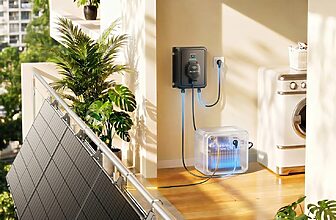
For three years, Zendure has established itself as one of the most dynamic players in the residential storage market. First with its SolarFlow solutions intended for balcony solar installations, and then with increasingly comprehensive systems capable of integrating photovoltaic panels, batteries, electric vehicles, heat pumps, and intelligent energy management.
The speech in Munich went further than that: batteries that only store kilowatt-hours are a thing of the past.
Residential storage is booming in Europe
Even before Zendure took the stage, EUPD Research analysts set the scene.
The figures presented during the conference are impressive.
The European energy storage market has grown by 45% year-on-year, while the growth of photovoltaics is now slower. An interesting turnaround: for a long time, solar energy drove storage. Today, storage is becoming the main driver of development for residential photovoltaics.

2026 forecasts predict 87 GWh of installed capacity in Europe, representing +80% in one year. Residential would account for 25% of the total.
Three reasons for this: the guaranteed purchase tariffs of the past are disappearing, electricity prices remain high, and dynamic tariffs are becoming widespread. Households therefore prefer to consume what they produce rather than selling it back.

In Germany, 70% of homes equipped with photovoltaics already have a battery. The rest of Europe will follow at its own pace.

HEMS: the brain missing from solar installations
In recent years, manufacturers have stopped talking only about panels or batteries. The term HEMS is being referenced everywhere.
Home Energy Management System: a tool that monitors, analyzes, and controls the energy flows of a house. In practice, a house with panels, batteries, a heat pump, and an electric car generates dozens of decisions to make each hour. Do we consume the energy produced now? Do we store? Do we charge the car? Do we wait for the network rate to drop?

Without HEMS, each device follows its own rules. The battery manages its cycle, the charging station its own, the heat pump its own. The installation works, but it misses out on optimizations throughout the day.
HEMS coordinates all of this. It aggregates data from each device, monitors solar production, analyzes consumption, and makes decisions to maximize self-consumption or preserve a reserve for critical moments.
With dynamic tariffs, its usefulness goes even further: charging the battery when electricity is cheap, discharging it when prices rise.

This was the territory where Zendure had already placed its pieces with the SolarFlow. But in Munich in 2026, the stated ambition was different: not just to manage a battery, but to control the entire energy ecosystem of the home, via ZEN+ HOME and ZENKI, its artificial intelligence agent.
ZEN+ HOME: a new approach to domestic energy
ZEN+ HOME starts from a simple observation: a modern house can have photovoltaic panels, several batteries, a heat pump, a charging station, connected plugs, controllable devices, and sometimes several different software for all of this. Most of the time, these devices do not communicate with each other.

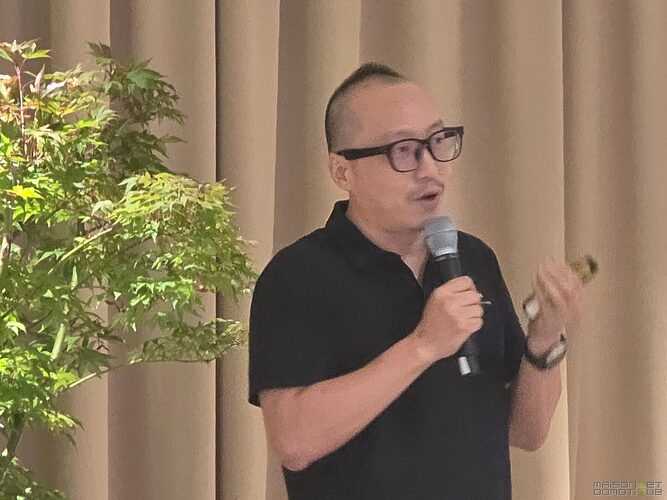
Bryan Liu, founder and CEO of Zendure, put it this way: the energy complexity of homes is increasing faster than the tools to manage it.
ZEN+ HOME is the answer: a single platform to coordinate all of this.
The goal of artificial intelligence is not to ask users to work harder. It should make the right decisions automatically, learn from the household’s habits, and manage energy continuously. Users should simply be able to sit back… and relax.
Bryan Liu, founder and CEO of Zendure
ZENKI: artificial intelligence at the heart of the system
The central element of this new strategy is called ZENKI.

ZENKI is the AI agent that runs behind ZEN+ HOME. It continuously ingests current and forecast solar production, the home’s consumption, the state of the batteries, the weather, electricity prices, and the household’s habits. From there, it builds a strategy for the next 24 hours.

Charging the batteries, discharging them, powering certain devices, keeping a backup reserve, buying electricity at the right time, without the user having to intervene.
Zendure emphasizes this: the system must operate without constant supervision. No need to check the app every hour or manually adjust scenarios. Savings should come without friction.
PowerHub becomes the energy conductor of the home
Specifically, ZEN+ HOME relies on the platform PowerHub already presented in recent months.
PowerHub becomes the central point capable of enabling communication between:
- the SolarFlow 2400
- the SolarFlow 3000 AC+
- the SolarFlow 4000 Mix
- the photovoltaic panels
- the batteries
- the heat pumps
- the charging stations
- the connected devices

This architecture allows considering the home as a global energy system rather than as an addition of independent devices.
One home, one energy.
Bryan Liu, CEO of Zendure.
This is probably the most important evolution revealed this year by Zendure.
A very open approach to third-party ecosystems
What surprised me in the presentation was the extent of the announced compatibilities.
Zendure now claims to work with Home Assistant, Homey, ioBroker, MQTT, Shelly, the EEBus and OCPP standards, over 5,000 models of heat pumps, and more than 870 energy suppliers representing about 150 million users in Europe. Just that!

For those already using Home Assistant or Homey, this is good news. Zendure is not looking to replace everything; it wants to integrate with what already exists. And that’s rather smart :)
We are not building a closed ecosystem. We want our system to work with everything users already own.
Bryan Liu, CEO of Zendure.
Dynamic tariffs become a major issue
Dynamic tariffs occupied a large part of the discussions.
In France, with the arrival of TURPE 7 and the evolution of the electricity market, buying and storing energy at the right times could become a concrete economic advantage.

Zendure announced a partnership with Sobry and is preparing the arrival of ZenWave in the French market. The idea: to give ZENKI access to real-time market prices to automatically optimize charging cycles. The battery will no longer just store solar surpluses; it will also arbitrate between grid prices.
AI, yes… but transparent
A point raised behind the scenes, and clearly taken seriously by the teams: transparency.
The first control algorithms were perceived as black boxes. Decisions were made, but users did not know why. This was frustrating.

The next version will allow users to view hour-by-hour planning, understand why the system charges or discharges, and take control at any moment. An evolution that will interest both advanced users and professional installers.
200,000 European households and over 230 patents
The figures presented during the conference also show the progress made.
Zendure currently claims:
- over 200,000 equipped households in Europe
- over 230 international patents
- a leading e-commerce position in several European markets
- first place in customer satisfaction according to the German organization DTGV.

The company is now looking to capitalize on this installed base to develop a true complete energy ecosystem.
And tomorrow? Storage leaves the home
Even though the concept is not new (we had a glimpse of it at IFA in September, but the prototype has evolved a lot since), the manufacturer specifically discussed the Zendure Cargo. An electric cargo bike, with a battery derived from their expertise in residential storage.


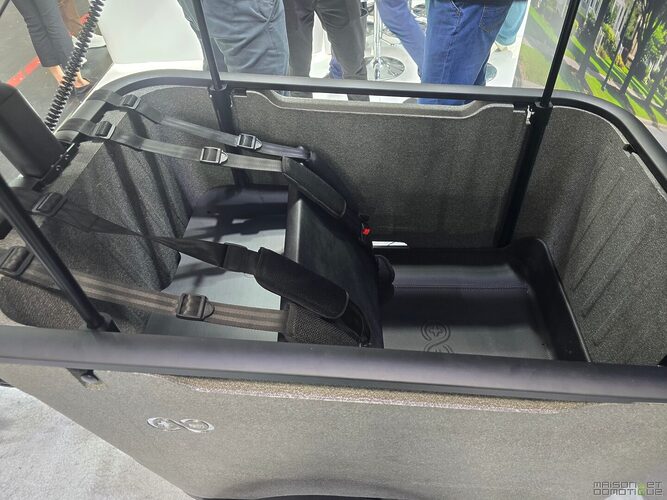
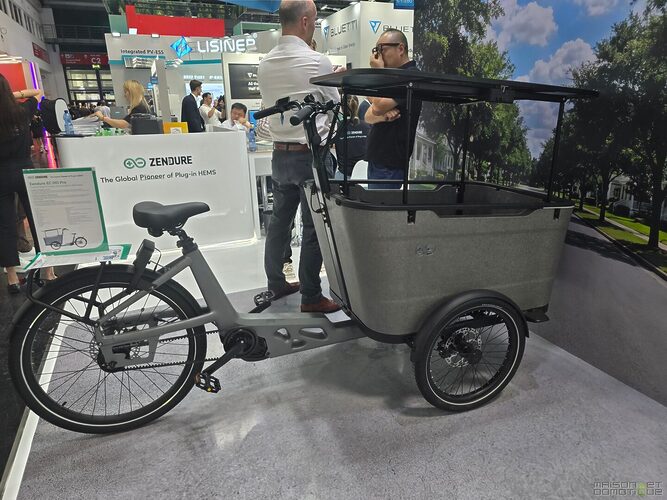
The bike charges with solar energy produced at home and integrates into the strategy managed by ZEN+ HOME. I’m not sure this is the product that will change everything, but it illustrates where Zendure wants to go: not just to manufacture batteries, but to be present in everyday energy in a broad sense.
Our analysis: Zendure prepares for the post-battery era
The products were not new. The SolarFlow 2400, 3000 AC+, and 4000 Mix have been known for a few months now. The PowerHub too.
What was new is the positioning.
Zendure wants to become the central interface of the energy home. The company bets on three trends that are all accelerating in Europe right now: the explosion of residential storage, the generalization of dynamic tariffs, and the arrival of AI in energy management. The figures presented in Munich go in this direction.

It remains to be seen whether ZENKI lives up to its promises on a daily basis. In the connected home, trade show demonstrations do not prove much. What matters is the quality of decisions made day after day, without the user having to intervene. This is how Zendure will be judged. And we will soon have the opportunity to verify all of this in real situations. We’re excited because the promise is enticing!



Please remain courteous: a hello and a thank you cost nothing! We're here to exchange ideas in a constructive way. Trolls will be deleted.