


Résumer cet article :
Long reserved for a handful of insiders, home automation is today reaching a new level and silently transforming our daily lives. At the intersection of smart technologies and automation, it is invading all spaces of the modern home. Designed to simplify, secure, and make our lifestyle more responsible, it meets the aspirations for tranquility as well as the challenges of energy efficiency demanded by contemporary society. Home automation systems are now accessible via apps on smartphones or tablets, or through voice assistants such as Google Assistant, Alexa, or Siri. Driven by innovative brands like Somfy, Delta Dore, Jeedom, Homey, Nice, Aqara, or Home Assistant, home automation aims to be both inclusive and adaptable, designed to serve everyone, including seniors and people with reduced mobility. Rather than asking, “Is it useful?”, the question today is: “How can it serve real needs?”. Here’s a look at the three essential uses of home automation.
Home Automation: Definition, Concept, and Role in Modernizing the Home
Home automation refers to the set of solutions that allow for the automation, control, and centralization of various devices and equipment in a house or building. Utilizing Wi-Fi networks or dedicated protocols (Zigbee, Z-Wave), it connects smart objects to enable personalized management, either remotely or via voice, of the home.
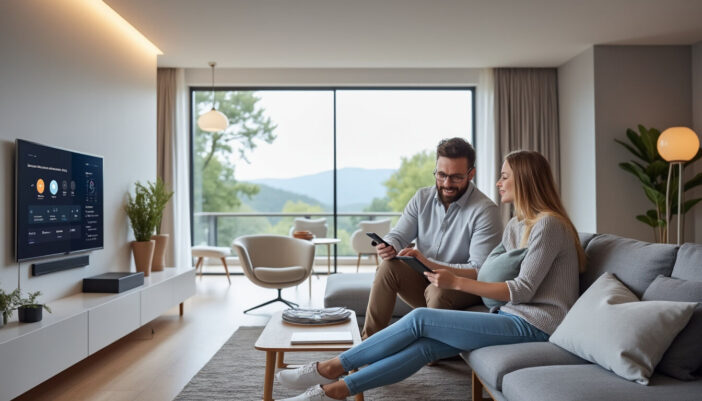
The concept is rooted in an ambitious vision: to transform the residence into an intelligent ecosystem, where every interaction aims to enhance security, comfort, and energy management. Connected thermostats, sensors, motorized blinds, alarm systems, robots, and various automations are its cornerstones.
- Enhanced connectivity: all devices communicate to adapt to real needs.
- Personalization: each user, local or remote, controls the environment according to their preferences.
- Intuitive integration: the entire house can be managed through a single interface, whether it’s Home Assistant, Jeedom, or a specific app.
| Element | Home Automation Function | Main Benefit |
|---|---|---|
| Connected Lighting | Automation, programming, voice control | Cost savings and customized atmospheres |
| Alarm Systems | Real-time monitoring and alerts | Increased peace of mind |
| Smart Thermostats | Heating management, programming | Optimization of energy expenses |
This centralization enables easier control and precise anticipation of needs. Designed this way, home automation leads to a real revolution in daily life, making the connected home more flexible, protective, and efficient.
Understanding Home Automation: Technologies, Connectivity, and Intelligence Serving the Home
Home automation is based on an interconnection of technologies: motion sensors, modules for devices (lighting, heating, motorized shutters, etc.), Wi-Fi gateways. These systems capture data (presence, temperature, lighting, door opening) to trigger suitable reactions.
- Mobile applications: control from anywhere, immediate notifications in case of anomalies.
- Voice assistants: natural commands, simplified interaction (Google Assistant, Alexa, Siri).
- Universal compatibility: gradual integration of new devices to meet every specific need.
Behind this technological mesh, the intelligence of scenarios allows for anticipating and automatically adjusting the domestic environment. Home automation does not just relieve repetitive tasks: it learns and evolves, adapting to changing uses and the unique configuration of each home.
From fine control of heating via smart thermostats to the automation of shutters in sync with the solar rhythm, every detail contributes to enriching the living experience within the residence.
Home Security: The First Essential Use of Home Automation
Security constitutes the primary lever for adopting home automation. Connected systems ensure proactive monitoring of the home, from a simple security camera to sophisticated alarm systems, as offered, for instance, by Ajax. Immediate alerts and automated initiatives make home automation a reliable barrier against intrusions, domestic incidents, or absenteeism.
- Intrusion detection via motion sensors at access points
- Simulations of presence through scheduled lighting activation or random opening of shutters
- Instant alerts on smartphones and notifications on tablets: maintains constant vigilance
- Fire prevention through smart smoke detectors and water or gas leak detection
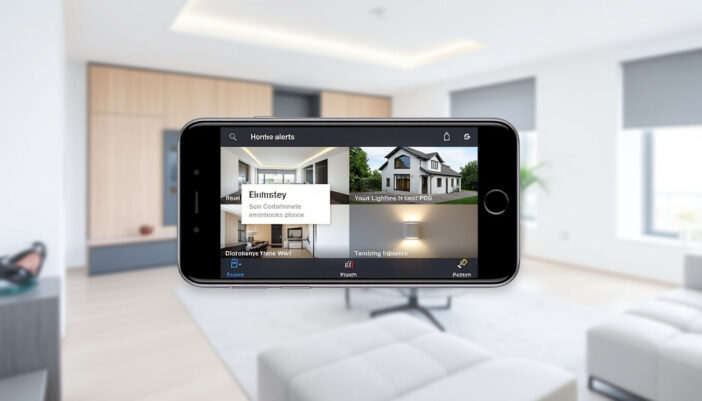
A concrete case: during a family trip, simulating presence through the lighting automation thwarts an attempted break-in, while a water leak triggers an automatic closure of the main valve. This type of scenario offers not only physical protection but also psychological peace of mind in daily life.
| Equipment | Home Automation Action | Security Advantage |
|---|---|---|
| Security Cameras | Motion detection, recording, and sending alerts | Quick recovery of evidence, effective deterrence |
| Connected Alarms | Automatic activation, real-time notifications | Immediate alert, quick intervention |
| Smoke/Gas Detectors | Notification and automated triggering | Reduction of disaster risk |
| Home Access Control | Opening via app/code, access history | Better traceability, secure access |
Home automation solutions like Homey, Delta Dore, or Nice today offer refined management of security routines that are compatible with various systems and capable of evolving based on the household’s configuration. They promote autonomy, especially for vulnerable users, while adapting to family life or connected residences of a residential or professional nature.
Home Automation Systems for Video Surveillance, Connected Alarms, and Intrusion Detection
Video surveillance systems allow real-time viewing of activity around the house, wherever one may be. With cameras connected to the home automation app, any suspicious event triggers notifications on the user’s smartphone.
- Intelligent alarms customizable according to time slots and risk levels
- Automatic detection of faces or abnormal behaviors
- Secure archiving of video streams, respecting personal data with advanced encryption
A notable advantage: remote control of accesses—opening the gate or front door—is only possible for authorized individuals, with precise history tracking. This is essential for families and owners of second homes, as well as for professionals seeking to secure their premises accurately.
Some solutions rely, for example, on Jeedom and Aqara to manage filtering, permissions, and complex protocols, while remaining accessible with a simple gesture on the app or through voice commands (Google Assistant, Alexa, Siri).
Home automation for security also includes monitoring environmental anomalies: alerts in case of temperature exceedance, smoke detection, or gas leaks—for enhanced peace of mind, 24/7.
Home Automation and Smart Comfort: Automating and Personalizing Daily Life
Beyond security, the true driving force of home automation lies in the comfort it brings to everyday life. Driven by new uses and integrated technologies, it anticipates needs and makes life more enjoyable for everyone, under all circumstances.
- Automatic control of heating based on the presence of residents
- Dynamically adjusting brightness via light sensors or lighting scenarios
- Intelligent opening/closing of shutters according to sunlight or time of day
- Instant control of equipment (appliances, smart plugs)
| Home Automation Function | Concrete Example | Impact on Comfort |
|---|---|---|
| Connected Thermostats | Heating activated just before arrival, turned off during absence | Ideal temperature, savings, serenity |
| Lighting Scenarios | Movie ambiance, automatic night light in child’s room | Diverse atmospheres, time savings |
| Shutter Automation | Open at sunrise, close at night | Sun protection, burglary prevention |
| Control by Voice Assistants | “Turn off all lights” from bed | Accessibility, practicality for people with reduced mobility and seniors |
For active families, home automation adjusts the temperature according to school or work schedules, activates watering before a heatwave, or starts the robot vacuum in their absence. This comfort makes the home more pleasant to live in while contributing to greater autonomy for elderly or mobility-impaired individuals, who benefit from a secure, customizable, and easy-to-manage environment.
Optimized Management of Heating, Lighting, and Shutters via the Connected Home
The synergy between thermostats, sensors, and motors creates a truly intelligent comfort. A connected thermostat commands the heating based on school or office hours. Automatic lighting activates as soon as the light dims, avoiding unnecessary handling.
- Favorite scenarios for the evening: dim the lights, close the shutters, play music with a simple “Hey Google”
- Remote control via a smartphone or programming (by time slot or based on external weather data)
Illustration: a family using Home Assistant synchronizes all their devices to return home to a warm atmosphere, where the temperature is ideal, and the lights turn on as soon as the door opens. This level of personalization enhances well-being regardless of lifestyle, transforming the home into an authentically intelligent cocoon.
Brands like Somfy and Aqara have distinguished themselves by offering solutions capable of orchestrating, in real-time, roller shutters, lighting, and household devices according to defined scenarios, confirming the potential of home automation to simplify and improve our habitat.
Energy Savings through Home Automation: Responsible and Efficient Management
Home automation is not only synonymous with comfort and security: it has established itself as an essential ally in energy management and reducing electricity bills. By linking the analysis of real needs, smart programming, and connected devices, it allows for consuming less and better.
- Automatic shutdown of heating or air conditioning when an absence is detected by sensors
- Lighting management: automatic shutoff in unoccupied rooms
- Optimization of device operation based on hourly pricing or photovoltaic self-production
| Equipment | Home Automation Action | Potential Savings |
|---|---|---|
| Smart Thermostats | Fine tuning based on presence and weather | Up to 25% of annual expenditure |
| Smart Plugs | Automatic shutoff of unnecessary loads | 15 to 30 € per year, per device |
| Automated Blinds | Management of passive sunlight | Reduced heating/cooling |
Individuals see a double benefit: responsible management, real savings every month, and a tangible reduction in ecological footprint. For professionals, these systems also serve to optimize energy across multiple sites or buildings, guaranteeing centralized control.
Intelligent Programming to Reduce Electricity Consumption and Costs
Mastering energy starts at the source. A home automation app—compatible with Homey, Jeedom, or Home Assistant—ensures programming of equipment according to atypical schedules, alerts in case of overconsumption, or management of thermostats room by room.
- Automatically turn off any device left on standby
- Adopt standard routines for weekends or vacations
- Manage electric vehicle charging during advantageous pricing periods
Such uses adapt to all configurations of homes or buildings and contribute to a more efficient habitat. Professionals appreciate the flexibility of home automation to synchronize their devices according to current needs, ensuring comfort and significant savings.
Through these solutions, home automation gives the user direct control over their budget while promoting eco-friendliness.
Daily Scenarios and Concrete Examples of Home Automation Uses
Home automation scenarios illustrate how technology discreetly integrates into our lives. Each routine, set once, becomes an automated reflex benefiting daily life.
- Simulation of presence during an extended business trip
- Automatic adjustment of temperature before returning home
- Activation of a movie ambiance: dimmed lights, closed shutters, TV on
- Instant notification on smartphone in case of detected intrusion
A striking example: an elderly person manages the lighting, heating, and receives reminders on their tablet for their medication, reinforcing their autonomy and security.
| Situation | Home Automation Scenario | Concrete Result |
|---|---|---|
| Return from work | Automatic activation of heating and lighting | Welcoming home, controlled consumption |
| Vacations | Simulation of daily life (shutters, lights) | Deterrence against burglaries, peace of mind |
| Movie Night | Lighting ambiance, home cinema activation | Maximum immersion, minimal manipulation |
| Intrusion Alarm | Alert on smartphone and application | Quick response, appropriate intervention |
In each case, home automation adapts to specific expectations, maximizing comfort, security, and energy efficiency, enhancing the tailored experience of the connected home.
Presence Simulation, Automatic Adjustments, and Real-time Alerts: Case Studies
Let’s take the daily life of a family: at sunset, activating the outdoor lighting simulates occupancy, reassuring neighbors and owners. Later, an alert on the smartphone signals the opening of a door while the house is empty: the user can react or notify a neighbor via the application.
- Activation of the night light in the child’s room at nightfall
- Reducing heating in unoccupied areas while maintaining comfort where life is present
The strength of home automation lies in its ability to combine and automate all these actions into a harmonious system, ensuring serenity and simplicity throughout its use.
Tips for Adopting Home Automation: Best Practices, Accessibility, and Security
The installation of a home automation system should be considered as a comprehensive project, whether for an individual house, an apartment, or an office. The goal? Maximize accessibility of technology and compatibility of devices, while ensuring the security of access and personal data.
- Opt for open equipment that allows for the future integration of new modules
- Prioritize ease of use, particularly through voice assistants or multi-platform applications
- Consult a qualified professional for configuration and securing the system
- Secure access to commands, with a strong password and the segmentation of user permissions
| Criterion | Best Practice | Expected Outcome |
|---|---|---|
| Compatibility | Choose reputable brands (e.g., Somfy, Delta Dore, Aqara) | Scalability, stability of the system |
| Accessibility | Simple interface, voice commands | Rapid adoption, suitable for all audiences |
| Security | Strong authentication, regular updates | Maximum protection of access |
| Support | Installation by a certified professional | Reliability, compliance with standards |
Home automation, far from being reserved for tech enthusiasts, is becoming popular thanks to increasingly simple, stable, and affordable solutions that can meet the needs for comfort, security, and controlled energy. A well-adapted and supported project guarantees a serene and personalized experience for everyone.
Consider home automation as an investment in the modernity of the domestic environment, with security, comfort, and sustainable savings at stake.
Ease of Use, Compatibility of Equipment, and Professional Support
The success of a home automation project relies on three axes: choosing an intuitive system, ensuring interoperability between equipment, and receiving tailored support from specialists. From the selection of the control application to the networking of connected systems, each step matters in ensuring service continuity and satisfaction in daily life.
- Gather information on the compatibility of thermostats, plugs, and detectors before any purchase
- Anticipate future needs: extending to video surveillance, energy management, or assisting the mobility-impaired
- Rely on practical guides provided by manufacturers like Jeedom, Home Assistant, or Homey
This collaborative approach facilitates a smooth, secure, and sustainable adoption, whether aiming for an ultra-connected habitat or an evolving installation. Home automation 2025 is resolutely designed for everyone, serving a peaceful daily life and ready for the future.
Please remain courteous: a hello and a thank you cost nothing! We're here to exchange ideas in a constructive way. Trolls will be deleted.