



Résumer cet article :
Who has never dreamed of reducing a good part of their EDF bill by capturing every ray of sunlight that lands on the tiles? Except that in real life, energy is rarely consumed exactly when it is produced. Solar panels alone are not enough to eliminate electrical consumption: it is necessary to add a storage battery. In this field, many players have launched their solutions. And Anker, with its Solix range, is among the most prolific. Its Solarbank 3 arrives like a sledgehammer in the anthill of domestic solar energy: it promises to absorb without flinching the peaks of your photovoltaic installation, to deliver energy almost on command, while planning its life (and a bit of yours) thanks to artificial intelligence. I installed it several weeks ago, twisted, mistreated, and pampered to see if it’s worth the effort… It’s time now to tell you more about it!
Unboxing the Solarbank 3 Pro
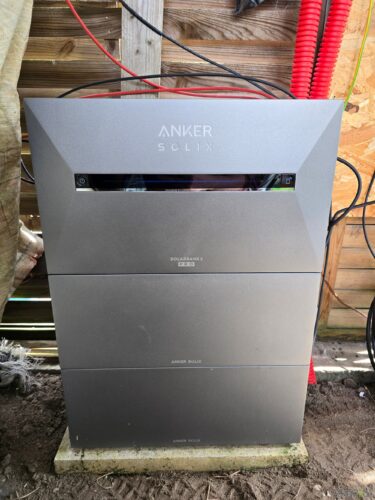
Unboxing the Solarbank 3 Pro is a bit like opening a safe. First, you get a sleek but sturdy packaging. The battery is perfectly protected.
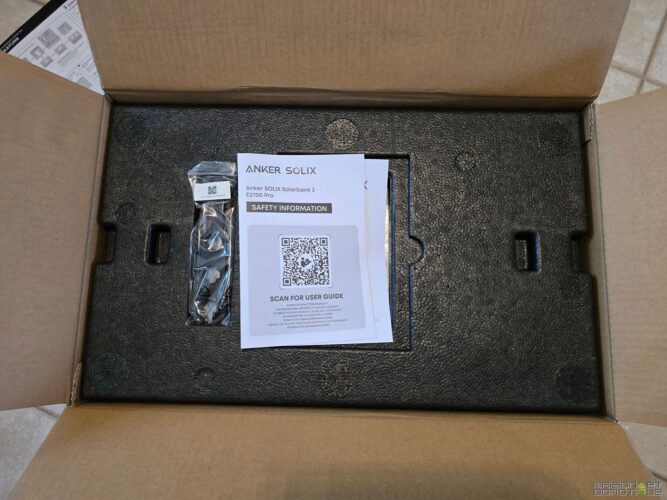
The beast weighs its weight: nearly 30 kg on the scale for the main module. It makes an impression, with its compact dimensions (about 46 × 25 × 28 cm) barely larger than the previous generation, but with 68% more capacity.
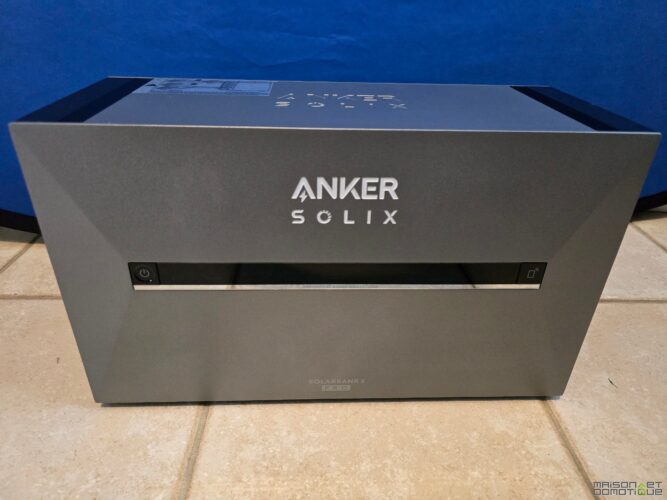
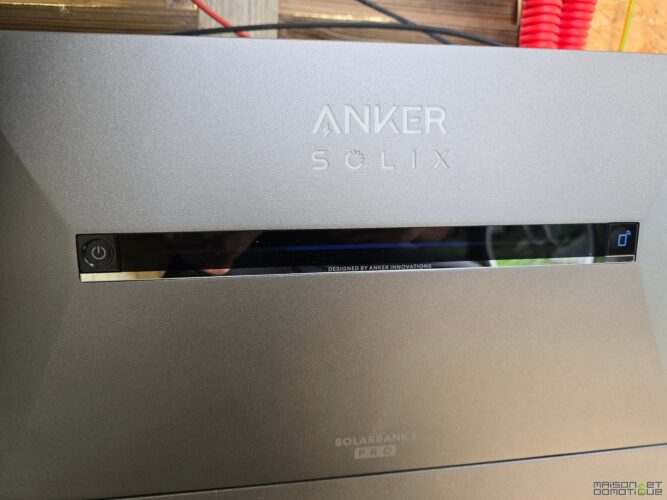
This v3 retains the look of previous versions, which has proven itself. It’s a large elegant block, all in matte gray, that fears neither the outside (IP65), nor harsh winters, nor torrential rains. You can feel the sturdy material, nothing creaks, the grip is reassuring; you are miles away from a supermarket gadget.
Upon opening the box, you find: the Solarbank E2700 Pro, tools for dismantling the MC4 connectors, a specific AC power cable (3 m), and a truly clear manual.
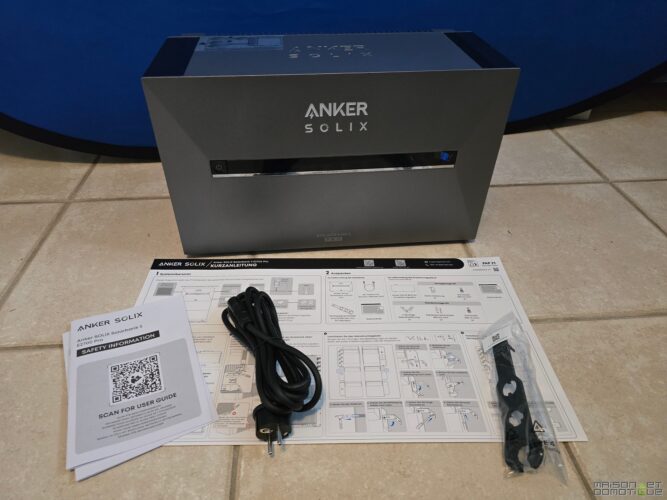
The promise, as soon as you unpack: everything here screams plug-and-play. The connectors are standard, and the accessories are well finished. Once in your hands, you just need to prepare for a bit of exercise to place the entire unit in its location, as it is not meant to be moved daily in the garden. We are not dealing with a portable battery :)
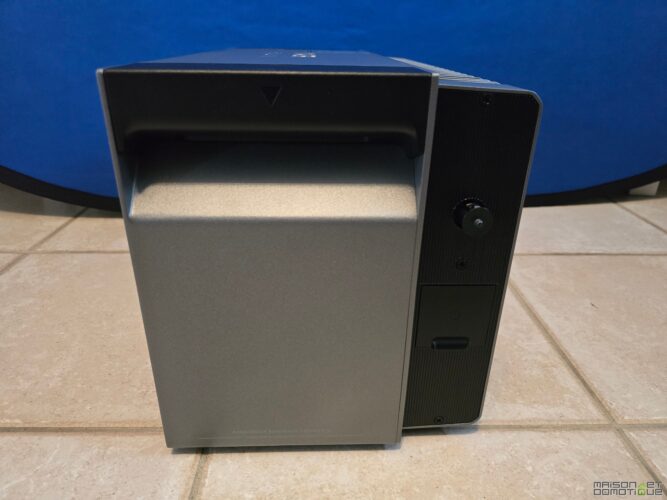
To transport it, you will find the same robust integrated handle system on each side of the battery.
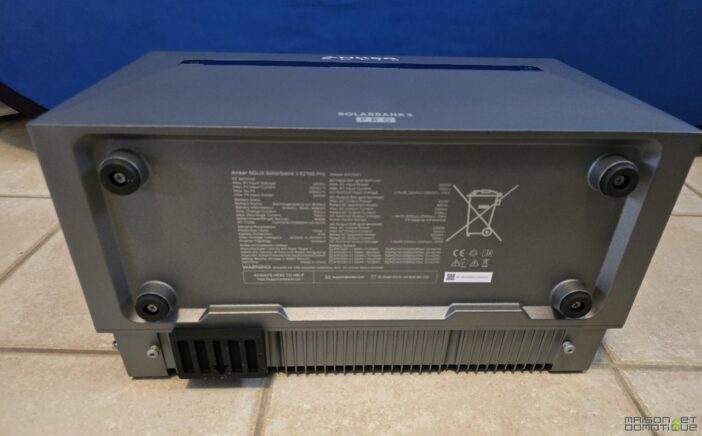
Below, rubber feet protect the entire unit, ensuring it doesn’t soak in water directly when it rains.
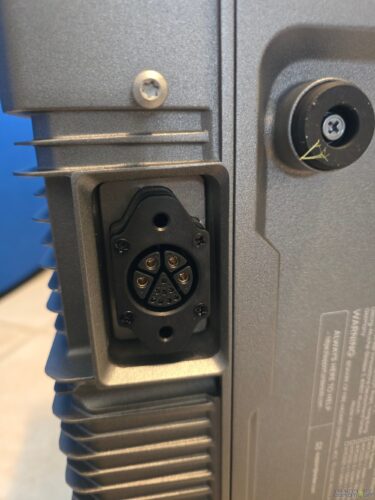
A small detail that is nice: absolute compatibility with old Anker battery extensions (BP1600, 1.6 kWh). You can stack up to 5 modules in total, for a staggering maximum storage capacity of 16 kWh! The RECUP, we do not throw anything away, we optimize everything!
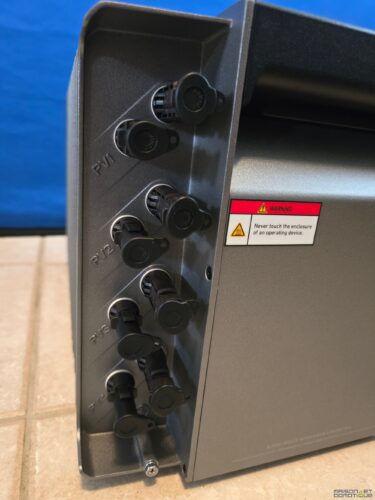
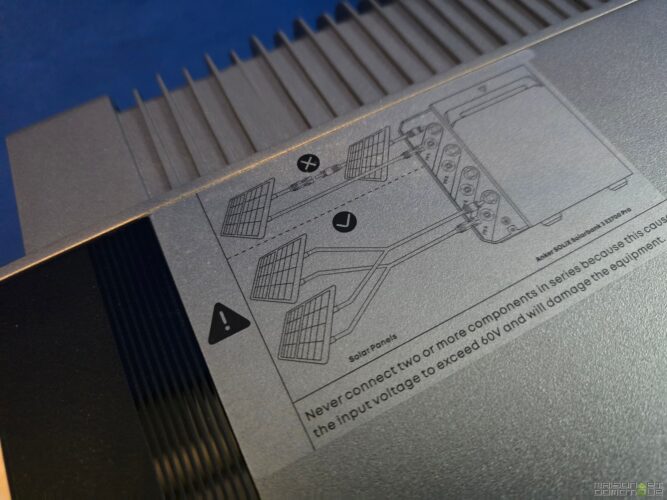
On the components side, a quick zoom on the four PV inputs (MC4) for solar panels, which accept up to 3600 W in total (yes, you read that right), each independently controlled by an MPPT (that’s the brain that optimizes production). To summarize: you can connect panels of different powers, connecting 1 or 2 panels per MPPT (max. 900 W per input), as long as you do not exceed 60 V. So be careful: forget the series connection if your panels exceed 32 A or 60 V. Stay in parallel, follow the diagrams in the manual, and everything will be fine.
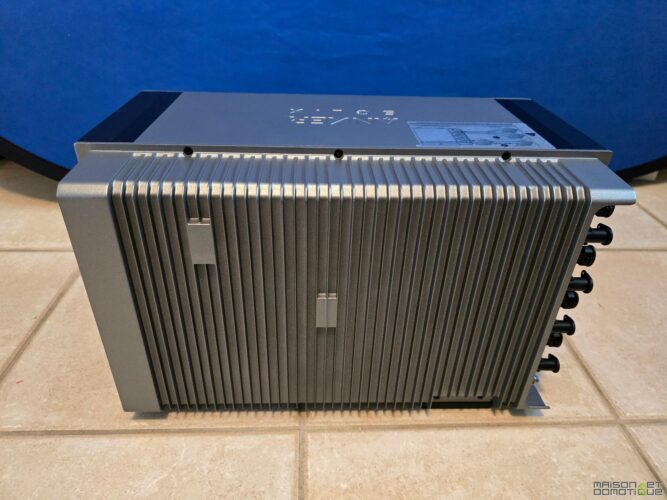
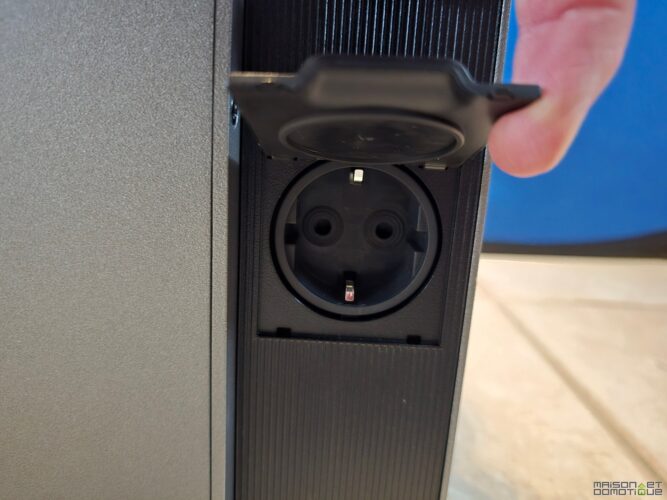
The back of the device accommodates the inverter (1200 W, bidirectional), the AC socket (mains recharge), and an emergency output (“off-grid”, very useful in case of a blackout, with a limit of 1200 W).
From a design perspective, it’s simple and reassuring, bordering on industrial chic. This case fits perfectly in a garage, a shed or even under a garden shelter, as long as it does not get direct sunlight (especially to preserve the longevity of lithium-iron-phosphate cells, as the case itself will withstand anything).
Setup and Discovery of the Solarbank 3 Pro
Did you think installing a solar storage system was reserved for qualified electricians or cable-obsessed home automation fans? The Solarbank 3 Pro has been designed to demystify all of this, and it’s really refreshing.
First, connect your panels. If you’re just starting, take it slow: MC4 + MC4, click. One male plug, one female plug, there’s no way to get it wrong.
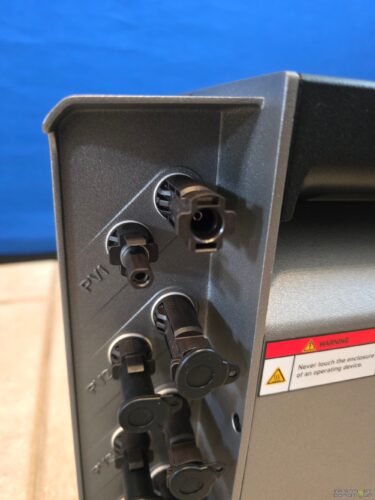
You just need to connect the plugs correctly by group (panel 1, panel 2, etc.). A tip: label each pair/input with color-coded labels, especially if you are chaining panels or using extensions! Then, the battery installs wherever you want. The outside doesn’t scare it, but keep a bit of ventilation, especially at the back: the beast generates heat during recharging, especially at full blast.
The mains? Connect with the dedicated cable, to a dedicated 230 V socket with 2.5 mm² wire, ideally on a 20 A circuit breaker for safety, and to ground. On the safety side, it’s almost faultless.
Here, I connected it with two extension batteries recovered from previous versions: compatibility validated!
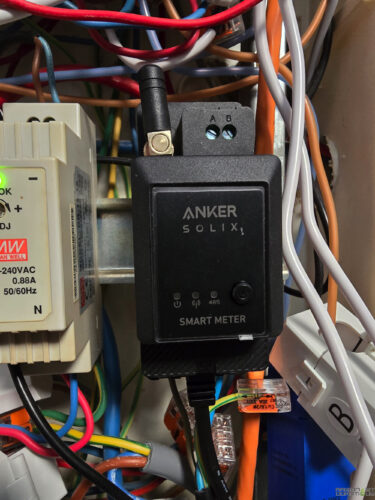
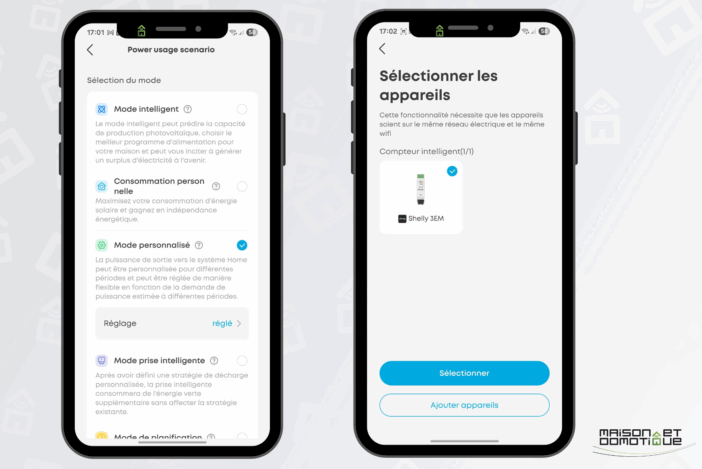
But the Solarbank 3 Pro doesn’t stop there. It comes with Anker’s “Smart Meter” option, a kind of brain placed in the electrical panel (an ammeter clamp around the main phase quite easy to install). This small box communicates with the battery via Wi-Fi and enables real intelligent management: it measures the consumption of the house, the solar surplus and directs excess into the battery in real time. The kind of technology that almost eliminates all the losses you experience on the national grid.
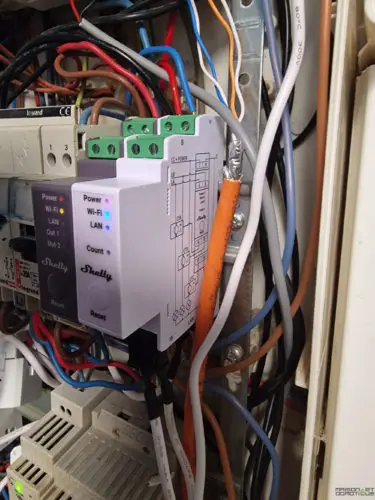
Good news, as with previous models, the Solarbank 3 Pro remains compatible with the Shelly Pro 3 EM. If you’re already equipped, there’s no need to pay again for the Anker model.
For those who don’t want to touch the panel, there are also the connected plugs “Anker Smart Plug”: a sort of spy plugged between the wall and the power-hungry device, perfect for the washing machine or water heater. The battery sends the required power to the socket as soon as consumption starts. Quite handy!
On the software startup side, the Anker app (iOS/Android) really does the job. You start by adding your device via Bluetooth, then Wi-Fi.
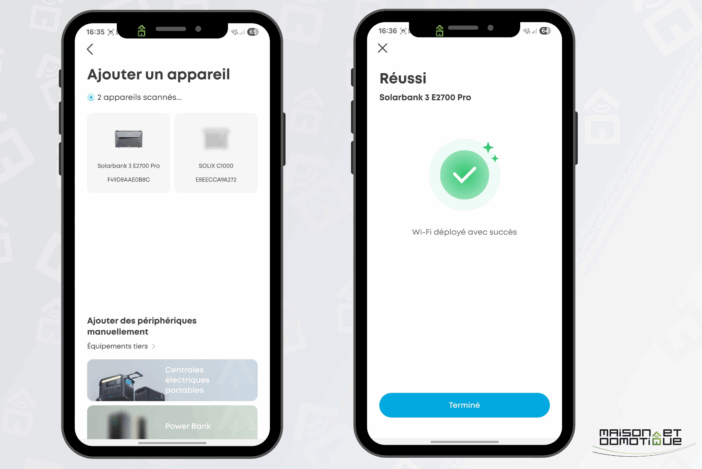
The connection is made in just over two minutes. You name your installation, update the firmware if necessary, and everything is displayed: flow, production, storage, instantaneous consumption…
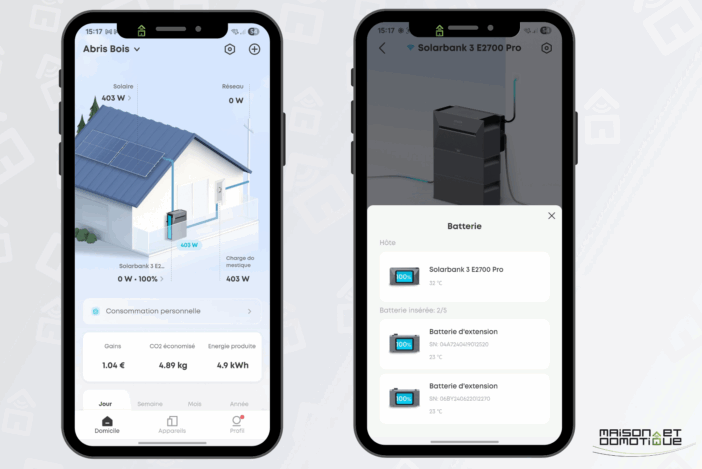
The interface is clear, colorful, and dynamic: you have to see it working in real time to savor the guilty pleasure of watching the house “live” on solar energy.
The only possible drawback: the app sometimes imposes slight limitations in the granularity of the settings (only one digit after the decimal for the kWh price? Darn!), and not all French dynamic tariffs (Tempo, peak/off-peak dynamic, etc.) are yet automatically supported (but this is evolving).
User Feedback: the Solarbank 3 Pro in Everyday Life
Let’s not kid ourselves: installing the Solarbank 3 Pro is like feeling the thrill of a homeowner in front of a Linky meter going crazy… but in reverse! After several weeks of taming the beast, several things stand out (and put a smile on your face).
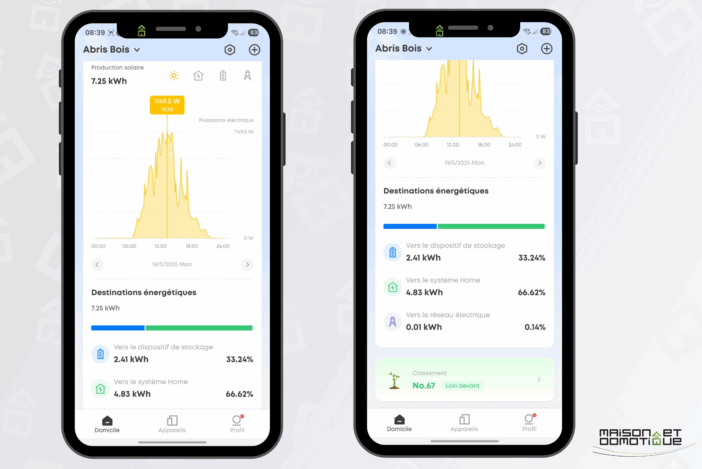
First, the consistency and simplicity. As soon as the sun shines, solar production (up to 3600 W if you maximize the eight possible panels) goes primarily into the house. The surplus goes directly into the battery. As soon as night falls, the Solarbank 3 Pro repays its due, emptying its electrons to power the evening’s first consumers. Fridge, freezer, induction plates… it all passes through without the bill moving, or almost.
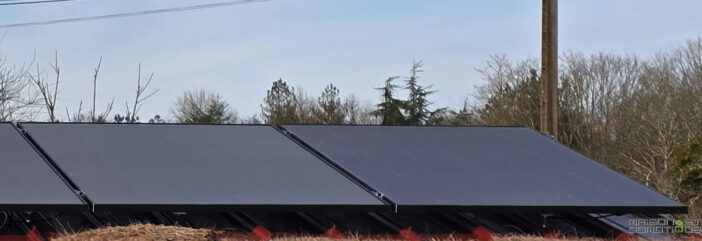
Here, I had “only” connected 4 photovoltaic panels, for a power of about 1600 Wp. But that was more than enough to charge the 3 batteries to 100% during the day, while sending what was necessary to the house when it needed it.
What changes the game is indeed the automatic management. With the Smart Meter, you can truly aim for near-complete self-consumption. The app regulates “to the watt,” adjusts by the minute, so that even consumption peaks are smoothed by storage. A water heater that starts up? Boom, the battery adjusts. You decide to start a washing machine at 1 PM, the system detects the peak and compensates. Sometimes it feels like electricity has become as fluid as tap water. You realize this in my Ecojoko tracking, which monitors my electricity consumption live. Here, there was almost no consumption during the day, despite everyone being home…
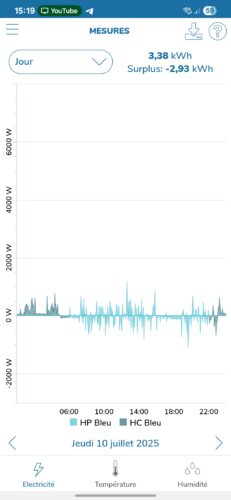
The AC output power is, however, limited to 1200 W (we’re not going to cook a leg of lamb, do a raclette, and charge the Tesla in the middle of the night on the battery alone), but it’s more than enough to erase the “footprint” of consumption, and even more, in residential use. Just remember: beyond 1200 W of need, the house will draw the rest from the grid. No miracles; it’s a matter of safety standards and socket size, not Anker being stingy. All competitors are in the same boat.
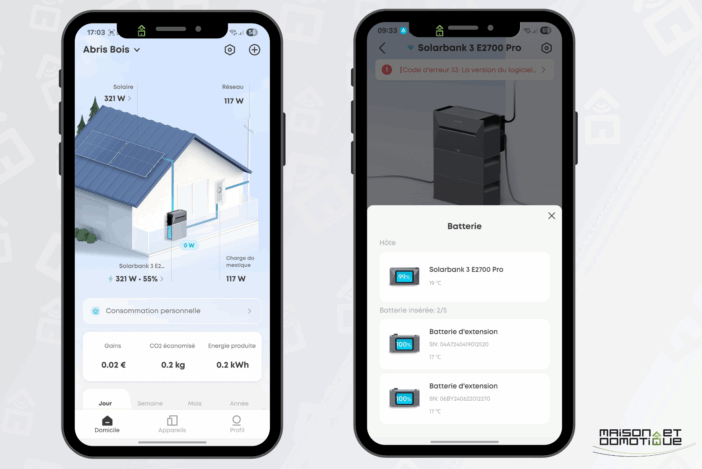
Now let’s talk about the real capacity: 2.7 kWh for a single E2700 Pro module. But with extensions (up to 5), we can easily go over 16 kWh, enough to last an entire night (or several days, depending on each person’s electricity consumption). The thermal management is top-notch: even in winter, with negative temperatures, no freezing, no cuts, the battery self-regulates and activates its own heating system if necessary (according to the manufacturer, since I haven’t yet experienced winter).
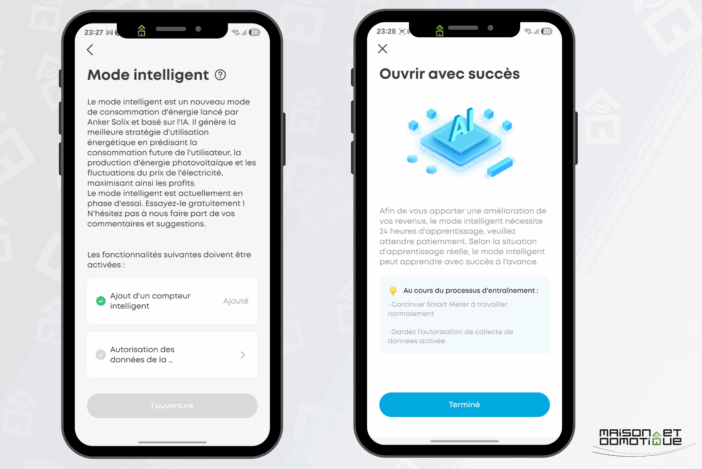
Where the Solarbank 3 Pro really drives the point home is in its so-called “AI” intelligence: every evening, it downloads the weather forecasts, assesses your consumption profile, crosses it with the kWh rate to decide to optimize charging at night (in off-peak hours if the weather predicts clouds the next day). If the sun is forecasted, it waits for the natural production of the next day before fluttering onto the grid. This assisted autonomy mode sometimes needs two or three days to understand your profile, but once the system is “tamed,” we dangerously approach (almost) free electricity. It’s quite impressive! Where AI is increasingly just a marketing tool, here we have a real utility for optimizing our electric consumption.
Tested in real conditions: sunny morning, the panels are already producing over 1,500 W by 9 AM. By noon, the battery is at 100%: the surplus then flows into the house, and to avoid waste, the app nudges me (with a notification) to start the washing machine or to recharge the electric bike. In the evening, the water heater runs on the battery. Result: 80 to 90% smoothed autonomy over a week (excluding periods when large appliances run non-stop), and a significantly reduced bill!
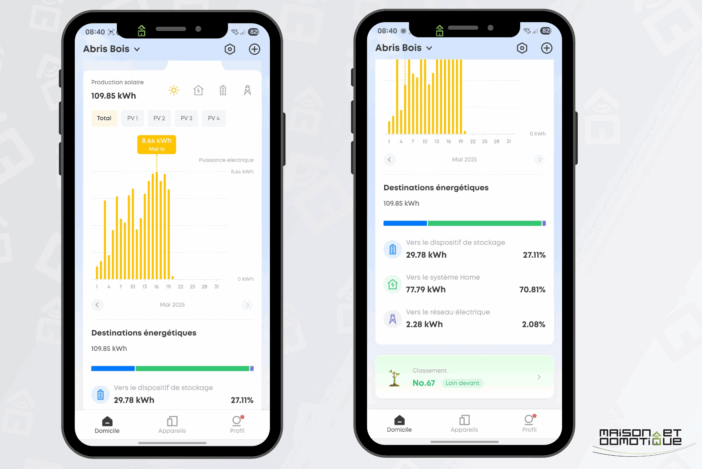
Noted for the more discerning: the built-in statistics in the app provide a wealth of details. Production, consumption, savings history, carbon balance, storage peaks, and even the possibility to visualize what has been “lost” (overvoltage/full battery) to adjust your strategy. Do you love numbers? You’re going to enjoy it!
In terms of reliability, nothing to complain about. The battery endures cycles without flinching: 6,000 cycles claimed, 10-year warranty, 15-year lifespan according to Anker. It hasn’t batted an eye during the two months of testing, even in outdoor use, and copes with the weather without hesitation.
Finally, the Solarbank 3 Pro excels in its versatility. A DIY enthusiast can start from scratch or complement an existing installation: compatible multi-brand panels (as long as it’s MC4), support for extensions of old Anker batteries, grid mode, off-grid emergency mode if the main meter fails (1200 W, which saves a freezer without problem!).
Conclusion: Solarbank 3 Pro, the Solar Companion for Your Savings
You’ll have understood, the Solarbank 3 Pro is much more than a simple “current box.” It’s a transition tool, designed for the busy but discerning owner, who wants neither to break the bank nor to tinker all Sunday. Easy to install, very well made, compatible with everything that breathes MC4 and self-consumption, it breaks down the entry barriers to plug-and-play solar energy.
I loved its ability to swallow every bit of energy surplus without flinching, to deliver flexibly what falls from the sky or from the mains, the intelligence that learns our lifestyle, and the possibility to evolve its installation according to one’s desires or budget.
Well, there are of course a few downsides: at €1499 the initial investment remains substantial, the AC power limit of 1200 W may frustrate electrical device enthusiasts, and not all French dynamic rates are (yet) automated. So don’t hesitate to take a look at the official site, which regularly offers discounted prices, especially through solar panels + battery bundles.
Despite these minor details, the promise of quick returns, sharp management thanks to AI, which for once is not just a commercial argument, and the robustness of the equipment, make the Solarbank 3 E2700 Pro truly irresistible for anyone looking to free themselves from the dictates of the grid, without fear or hassle.
The domestic solar energy scene has finally found a companion that is as plug-and-play as it is ambitious… The Solarbank 3 Pro truly lives up to its name!



Please remain courteous: a hello and a thank you cost nothing! We're here to exchange ideas in a constructive way. Trolls will be deleted.