
Résumer cet article :
The smartphone market has become very homogeneous. Every year, manufacturers compete to release devices that are ever thinner, lighter, and more elegant. And then there’s Blackview, which systematically does the opposite. With its Xplore 2 Projector, the Chinese manufacturer is clearly not trying to appeal to the mass market. Forget a smartphone that slips discreetly into the pocket of your jeans: we’re talking about a device weighing nearly 700 grams, almost 3 centimeters thick, capable of withstanding extreme conditions, equipped with a 20,000 mAh battery… and with a full-fledged video projector built in.
On paper, the whole package seems almost over the top. You might think it’s more of a technological exercise than a product that can genuinely be used every day. Yet, when you look more closely at its specifications, one thing quickly becomes clear: Blackview isn’t targeting everyone, but a category of users who will find a tool here with virtually no equivalent.
Tradespeople, maintenance technicians, construction professionals, adventurers, motorhome owners, boaters, long-distance hikers, or travelers who spend several days away from a power outlet: these are all people for whom the usual compromises of modern smartphones may not be the right fit. When battery life, durability, or versatility becomes the priority, a device like the Xplore 2 makes perfect sense.
Let’s be clear from the outset: this review isn’t intended to compare this phone with my faithful Samsung Galaxy S24 Ultra or an iPhone 17 Pro Max. Blackview has a different goal: bringing together a powerful smartphone, a huge power bank, a portable video projector, a powerful camping light, and a whole range of tools for work and outdoor activities in a single device.
That also explains its size. There’s no way to fit a projector, an active cooling system, a battery four times larger than that of a conventional smartphone, and a military-grade structure into an ultra-thin case. Blackview has fully committed to this choice without trying to compromise.
The question remains: has this gamble paid off?
After several months of using it in various environments and scenarios, the Blackview Xplore 2 Projector reveals a likeable personality—provided you accept that it doesn’t play in the same league as traditional smartphones at all.
Unboxing the Blackview Xplore 2 Projector
It’s hard not to be impressed when opening the Blackview Xplore 2 Projector’s box.
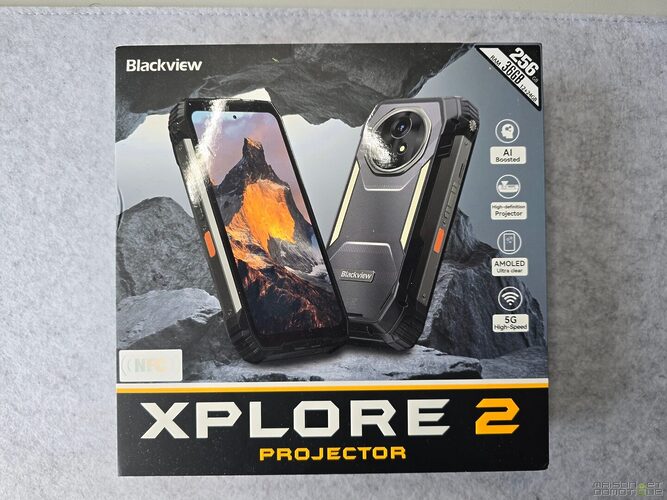
Even before turning on the smartphone, one thing immediately stands out: its size. The box is imposing, and when you finally pick up the device, the surprise is real.

At around 670 grams, it weighs more than some 11-inch tablets. The first time you pick it up, the feel is almost disconcerting. The first thought is: this is a real “brick,” so striking is the difference compared with a regular smartphone. After a few minutes, though, you understand that it’s not heavy for no reason.
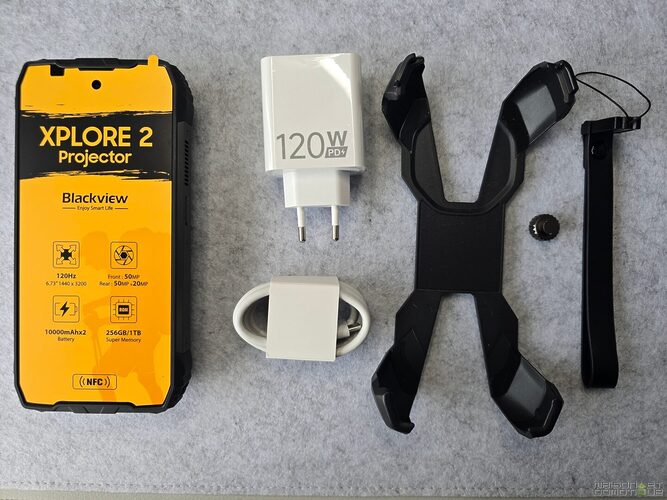
The packaging inspires confidence. Blackview includes a substantial 120 W charger, a quality USB-C cable, a wrist strap, and various accessories that let you start using the phone right away. Unlike some manufacturers that reduce the box contents to the bare minimum, everything you need to use the smartphone is included right out of the box.
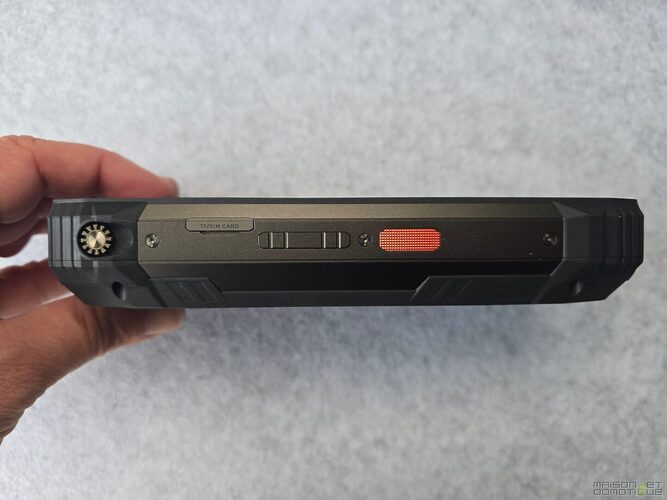
The exterior perfectly reflects its purpose. The reinforced sides, the port covers, and the numerous ventilation grilles all point to a device designed to withstand harsh environments.
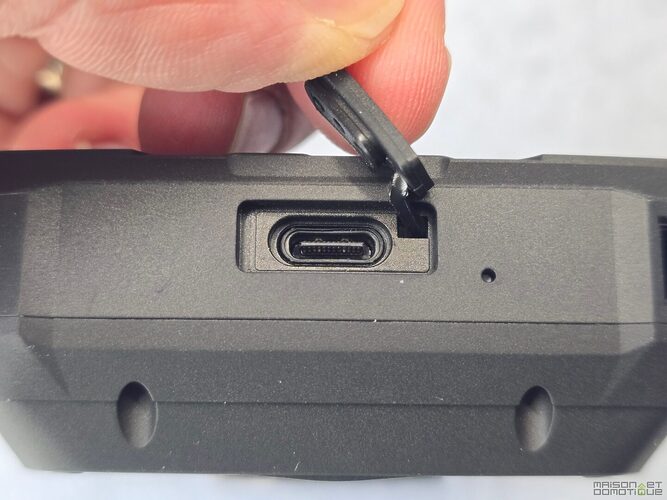
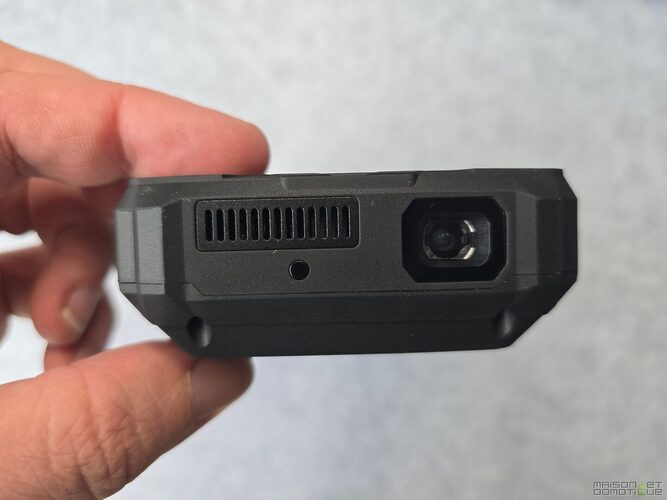
The projector, mounted on the top edge, naturally draws the eye, while the back houses a large camera module surrounded by powerful camping LEDs.
Despite its size, the construction feels solid. The materials feel sturdy, and the case doesn’t creak when you press on it. Blackview has clearly prioritized durability above all else.
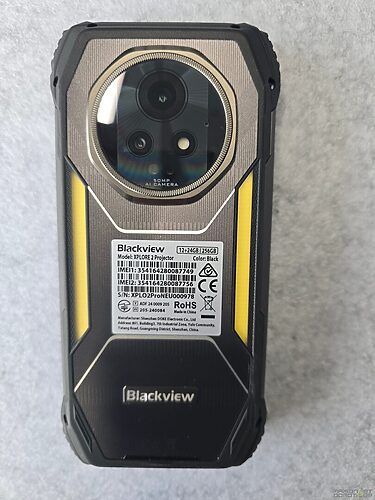
It’s best to be realistic, though: this smartphone isn’t for people who like to forget their phone in a trouser pocket. Even in loose-fitting jeans, you can feel it. Carry it in a backpack, work jacket, tactical vest, vehicle, or motorhome, and this constraint almost completely disappears.
That’s probably the whole philosophy behind this Xplore 2 Projector. It isn’t trying to replace the ultra-thin smartphone you take everywhere. Instead, it positions itself as a field tool, capable of serving several purposes on its own.
Turning it on confirms this first impression. Android 15, with the Doke OS 4.2 overlay, starts up quickly. Setup is straightforward and won’t confuse anyone coming from a recent Android smartphone. There are a few thoughtful features, such as the customizable programmable button, tools for professionals, and the built-in infrared remote, which turns the phone into a universal remote for controlling a TV, air conditioner, or other compatible equipment.
This first hands-on experience leaves you with a particular impression. You don’t fall for it immediately, as you might with a conventional high-end smartphone. But you’re quickly intrigued by everything this unusual device can do, and the urge to explore its capabilities becomes almost irresistible.
A smartphone designed to survive (almost) anything
The Blackview Xplore 2 Projector belongs to the family of so-called “rugged” smartphones. The term refers to devices designed to withstand conditions that most conventional smartphones wouldn’t survive for more than a few seconds.
Here, Blackview has clearly gone all out.
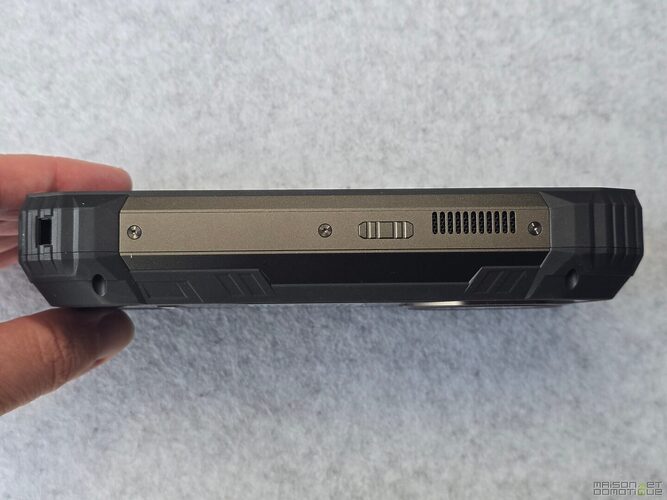
The case is built around a multilayer structure called ArmorShield: an aluminum-titanium alloy frame, several shock-absorbing layers, and Gorilla Glass 5 to protect the screen. The aim is to absorb mechanical stress before it reaches the sensitive components.
The manufacturer claims compliance with the IP68, IP69K, and MIL-STD-810H certifications, which are now well known to fans of rugged smartphones.
In practical terms, the phone easily withstands dust and prolonged immersion in water, as well as high-pressure, high-temperature water jets. This might seem like a minor detail, but it makes perfect sense on a construction site, in a mechanic’s workshop, on a farm, or on a boat, where equipment is regularly rinsed down.
The phone also works in temperatures from -20 to +60 °C, while withstanding vibrations, humidity, salt fog, and major changes in climate: conditions regularly encountered by construction professionals, maintenance technicians, and outdoor enthusiasts.
Blackview also claims it can withstand pressure of up to 500 kg. I didn’t drive over it to check, but it gives you an idea of how robust the whole thing is.
The phone takes several falls onto tile in its stride (to be honest, I was worried about the tile…) and can also be washed thoroughly under the tap after getting dirty. It continues to work normally after this rough treatment, which inspires confidence.
That doesn’t make it indestructible, of course. Like any electronic device, a particularly unlucky drop onto a corner or a very hard impact can still leave a mark. But compared with a conventional smartphone, its level of protection is in a different league.
This ruggedness comes with some well-thought-out details. The USB-C port is protected by a thick waterproof cover, which is a little harder to open than a standard port cover but ensures the IP68 rating. The side buttons are large, well spaced, and easy to use even with work gloves on.
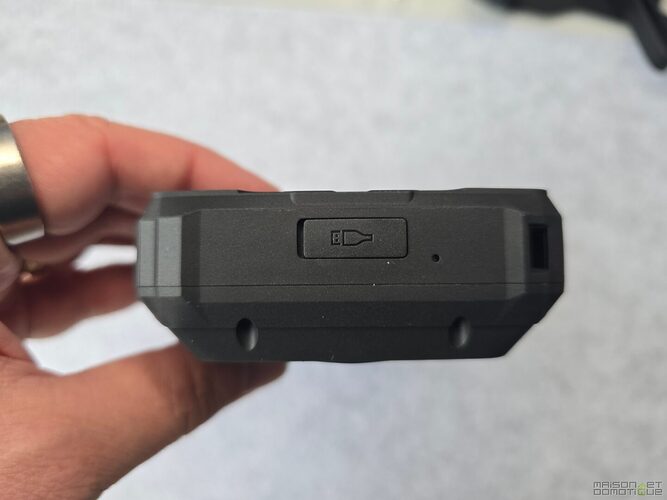
There’s a programmable button on the left side. It can launch almost any function: flashlight, camera, screenshot, video recording, favorite app—and you can tailor it to suit your needs.
There’s also an infrared emitter that turns the smartphone into a universal remote. This feature has become rare on conventional smartphones but is still useful, particularly when working at a client’s premises or when you want to control a TV, video projector, or air conditioner.
Finally, Blackview has built a whole toolbox into its system: compass, spirit level, protractor, digital plumb line, barometer, sound level meter, magnifier, inclinometer, mirror, underwater mode for using the phone while submerged, plus several lighting and emergency features. Some are novelties, while others can genuinely come in handy in the field.
You can tell the manufacturer had users in mind who spend their days outdoors rather than sitting behind a desk.
An AMOLED screen that’s nothing like those on traditional “rugged” smartphones
For a long time, rugged smartphones had one almost universal weakness: the screen. You had to settle for a decent LCD panel, often not very bright and with average resolution, on the grounds that durability came first.
The Blackview Xplore 2 Projector breaks with that tradition. The manufacturer has fitted it with a 6.73-inch LTPO AMOLED panel with a 3.2K resolution (3200 × 1440 pixels)—specifications more commonly found on premium smartphones than on a model designed for construction sites or expeditions.
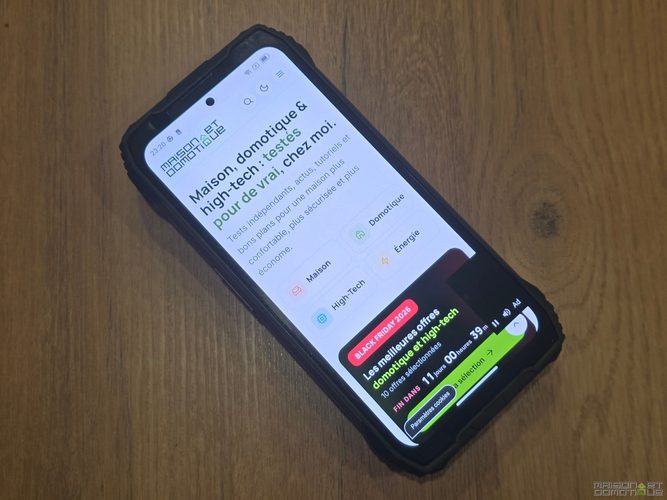
The first pleasant surprise is the sharpness. Text is perfectly crisp, photos show an excellent level of detail, and watching videos is enjoyable. The panel easily meets everyday needs, but it becomes genuinely interesting when you use the built-in projector, which we’ll come back to later.
LTPO technology also automatically varies the refresh rate between 1 and 120 Hz, depending on what you’re doing. When reading a document or webpage, the screen lowers its refresh rate to save power. In menus or games, it ramps up to 120 Hz for smooth performance. This dynamic adjustment directly contributes to the overall sense of responsiveness.
Another pleasant surprise is the brightness. Blackview claims up to 2600 nits, an exceptionally high figure that’s immediately noticeable outdoors. The screen remains perfectly readable in direct sunlight, an area where many rugged smartphones had previously fallen short.
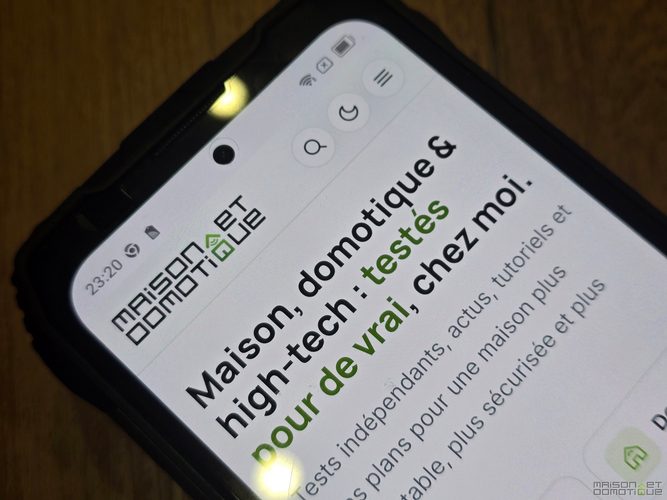
The screen has several eye-comfort certifications and features: blue-light reduction, a reading mode, and a very low-brightness mode for comfortable use in the dark.
The fingerprint reader is now built into the screen, whereas most rugged smartphones still use a sensor located on the power button. It works correctly, but doesn’t match the best Samsung or OnePlus smartphones. For those who prioritize speed, facial recognition is available and works well in good lighting conditions.
Blackview has probably created one of the best screens currently available on an ultra-rugged smartphone. That’s good news: a device designed to be used outdoors all day needs to remain readable in all conditions. On that front, the manufacturer has understood what its users expect.
The built-in video projector: much more than a gimmick
This is obviously what immediately sets the Blackview Xplore 2 Projector apart from every other smartphone on the market. Putting a video projector in a phone might seem like a marketing gimmick. But when you look at its capabilities, and especially the uses it enables, the picture is different.
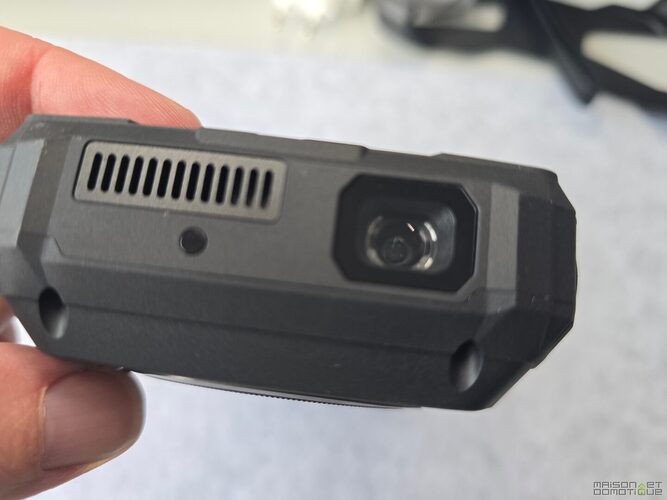
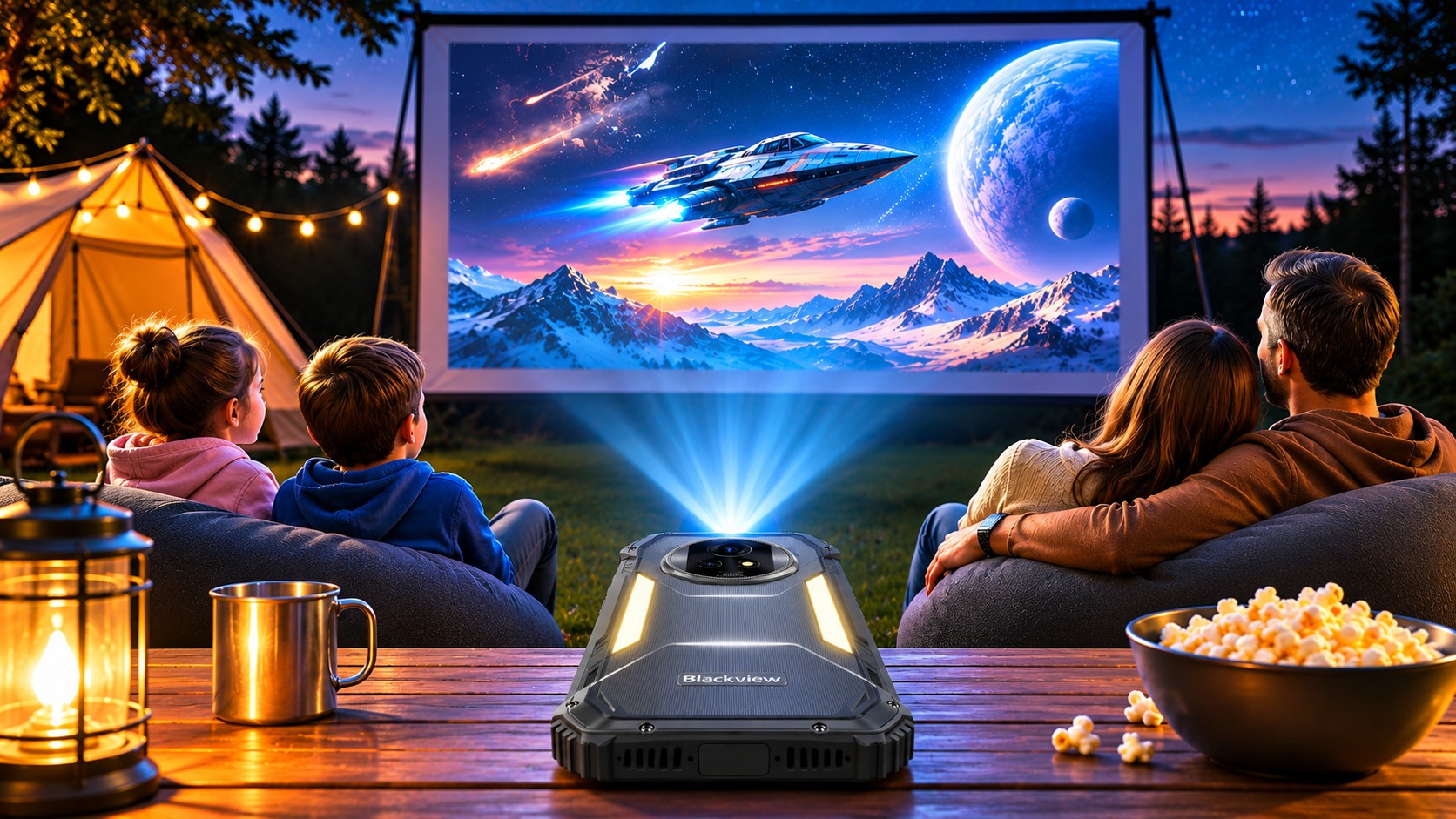
Blackview hasn’t simply added an LED that can project a rough image. The manufacturer has integrated a proper DLP pico projector, capable of displaying an image up to 100 inches diagonally (around 2.50 meters), at a native resolution of 480p.
Obviously, it’s a long way from a 4K home theater projector. That isn’t the point. The idea is to have a system that’s always available, with no cables, no extra battery, and no dedicated device to carry around. For an impromptu movie under a tent, a presentation at a client’s premises, an instructional video on a construction site, or an evening with friends at a campsite, the concept immediately makes sense.
Incredibly easy to set up
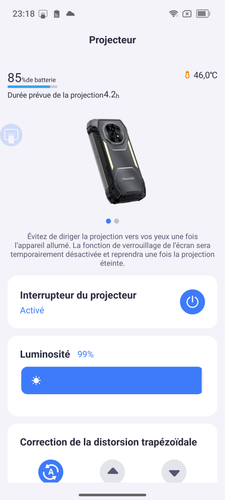
It’s extremely easy to use. Simply activate the projector from the Android shortcuts or the dedicated app, then point the phone at a light-colored surface.
A small dial on the edge lets you manually adjust the focus.
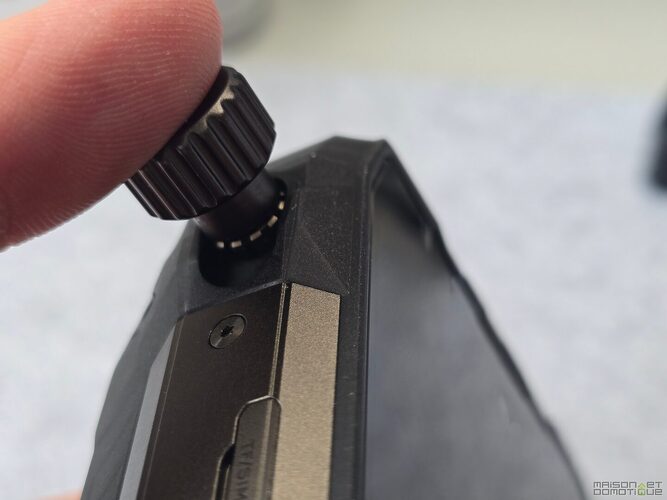
Some people would probably have preferred autofocus, but this mechanical solution has several advantages: it’s quick, silent, precise, and, above all, reliable.
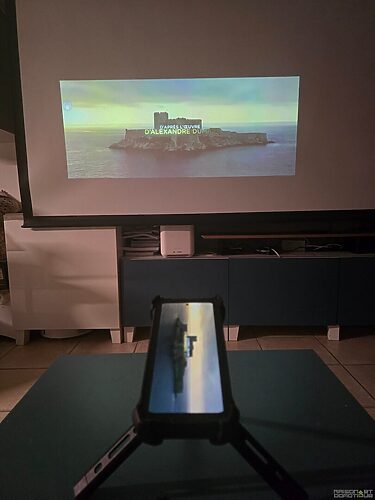
Once the image is in focus, everything on the smartphone screen is projected. Netflix, YouTube, Prime Video, Disney+, VLC, PowerPoint, PDFs, photo gallery: everything works naturally, since it’s simply a second display.
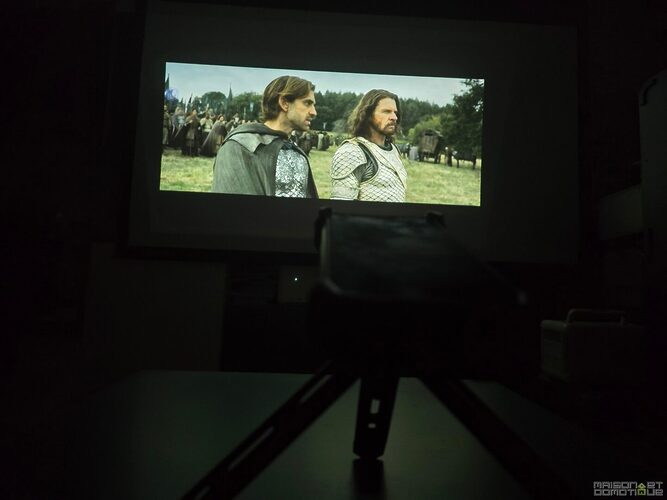
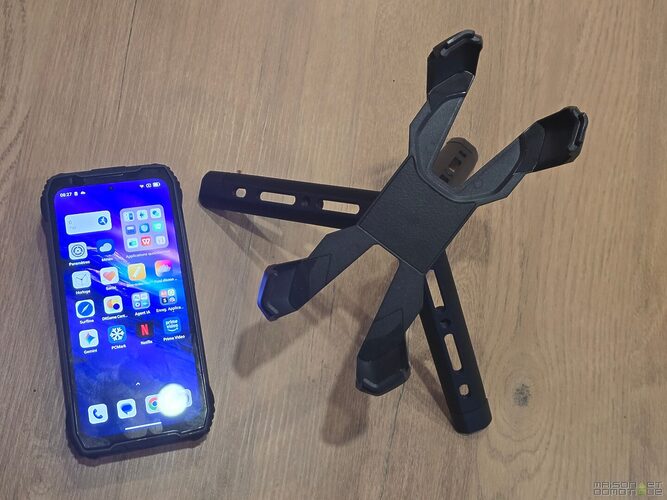
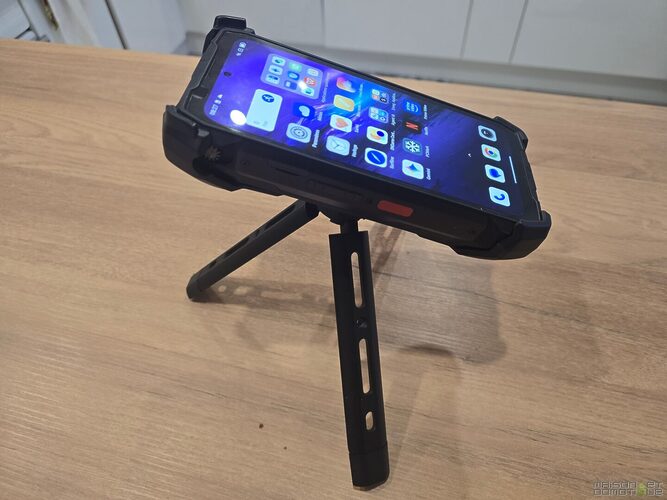
The active cooling system kicks in automatically when the projector is in use. A small internal fan dissipates the heat produced to maintain consistent performance, even over several hours. The noise is very quiet and quickly fades into the background once a video starts playing.
Surprisingly good image quality
Let’s be honest: the technical specifications suggest an average result. 480p in 2026 seems almost anachronistic. And yet.
My tests show a surprisingly clean image when conditions are right. The colors are pleasing, the contrast is convincing, and the sharpness is more than enough to watch a movie or series, or share vacation photos.
Brightness does impose some limitations, however. In broad daylight or a brightly lit room, the image naturally lacks punch. But once you dim the lights, the picture becomes much more convincing: in a bedroom, under a camping awning, in a cabin or caravan, or simply after nightfall.
Here’s an example, with ambient light on the left and in the dark on the right:
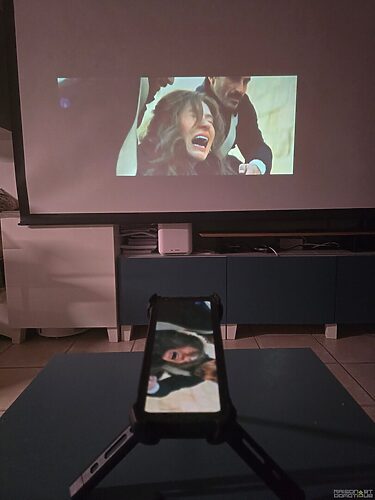
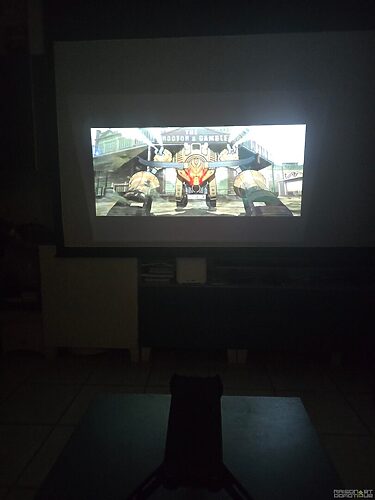
I was pleasantly surprised by the image quality when projecting onto a beige wall or a door, without a dedicated screen. With a real white screen, or even a sheet stretched tight, the results improve further.
Battery life that transforms the experience
A portable video projector is usually limited by its battery. The ones I’ve had the opportunity to test could barely last through a two-hour movie. That’s clearly not the case here. Thanks to its 20,000 mAh battery, the Xplore 2 Projector can play video continuously through its projector for nearly 8 hours! Some of my tests achieved more than 7 hours and 30 minutes of projection, with around 15% battery still remaining. Blackview claims up to 10 hours under ideal conditions, an estimate that ultimately seems credible. In other words, watching two or three movies back to back is no problem. I had a movie night with 3 episodes of “The Rings of Power” without any issues.
This battery life also opens the door to professional uses: a salesperson presenting a catalog at a client’s premises, a trainer projecting a document in an improvised meeting room, or a tradesperson showing a video tutorial on a construction site without having to bring along a separate video projector.
Uses you might not immediately think of
It’s when you think about how you’d use it day to day that this projector becomes really interesting.
In a motorhome, when evening comes, simply set the phone on a table to turn the vehicle’s interior wall into a movie screen. No need for a TV, antenna, or extra screen.
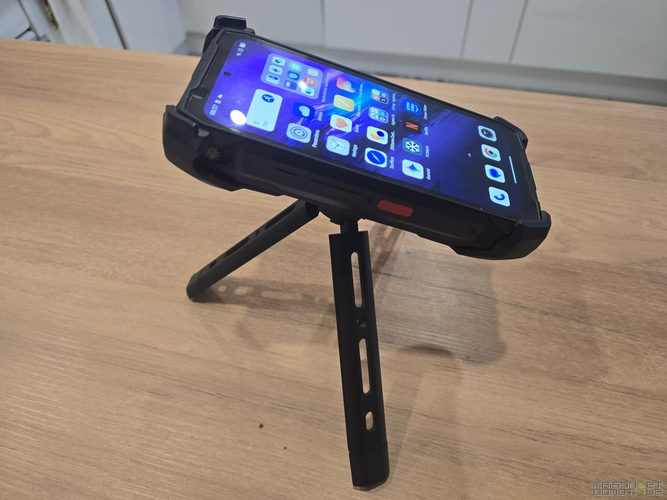
The same goes for a family tent during the holidays: the kids can watch a cartoon before bed without monopolizing a tablet.
A tradesperson visiting a client to install smart home equipment can project a manual, wiring diagram, or explanatory video directly onto a wall to quickly demonstrate how the installation works.
Photographers and videographers on the go can immediately show their images to several people, without everyone having to crowd around a 6.7-inch screen.
And when traveling with friends, it’s easy to improvise a movie night in a vacation rental without a TV.
These are precisely the little use cases that make the projector much more interesting than it might seem at first.
Solid performance for an unconventional smartphone
You might think that such an unusual smartphone would sacrifice performance for the projector or its huge battery. That’s not the case.
The Blackview Xplore 2 Projector is powered by a MediaTek Dimensity 8300, a 4 nm chip usually found in mid-to-high-end smartphones. The processor is paired with 12 or 16 GB of LPDDR5X memory, depending on the version, as well as 256 GB or 1 TB of UFS 4.0 storage. You can also add a microSD card of up to 2 TB, a feature that has become rare on modern smartphones.
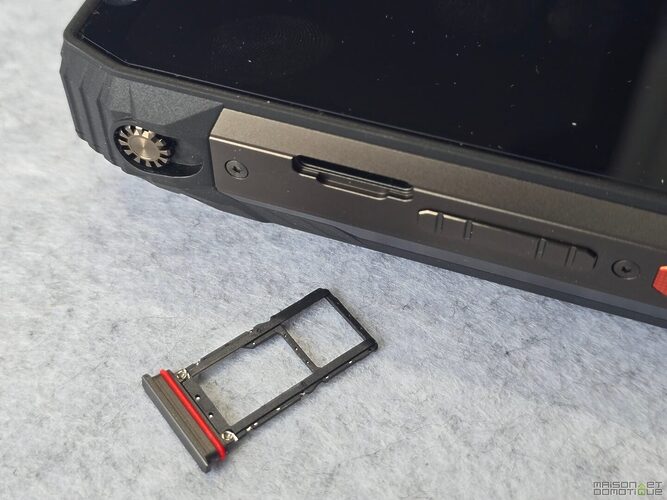
In everyday use, the whole package feels particularly smooth. Navigating Android, multitasking, streaming video, editing photos, AI-powered retouching, or intensive GPS navigation all work without any noticeable slowdown.
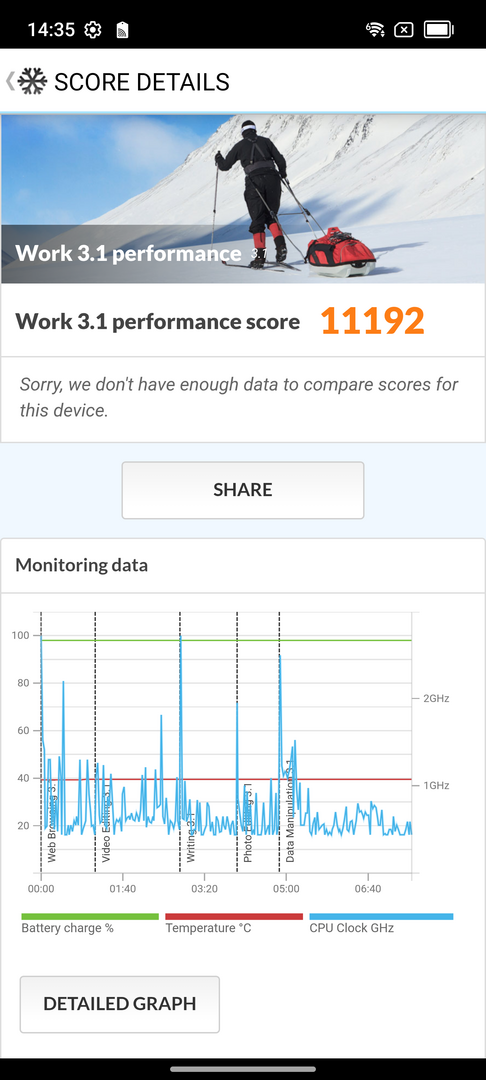
Benchmarks confirm this impression. The Dimensity 8300 sits somewhere between a true high-end chip and today’s mid-range processors. There’s enough power for several years of comfortable use. Tests also show that it handles heat well: the phone rarely exceeds 38 °C, even under heavy load, thanks to its internal cooling system.
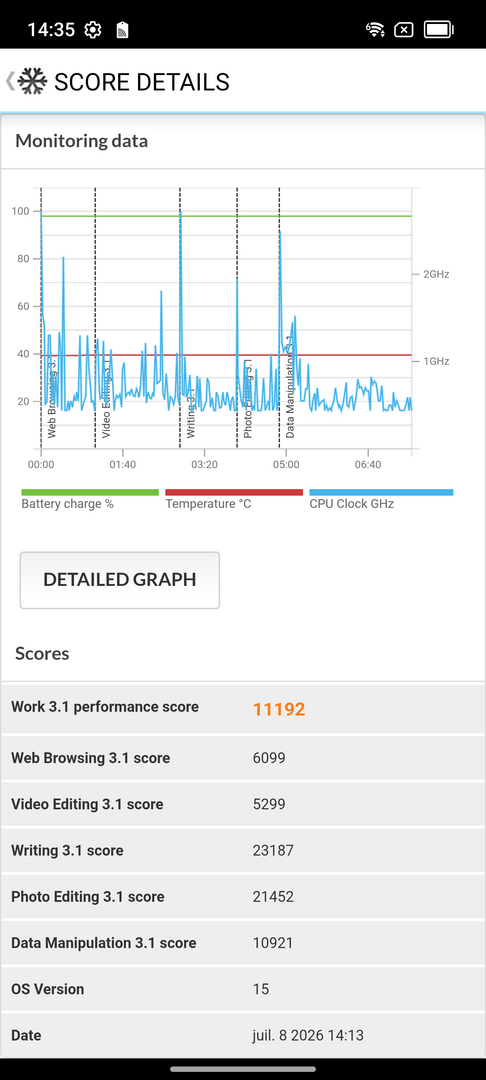
Gamers can run most current games with a good level of detail. It’s not a gaming phone, but it has plenty of power in reserve.
Android 15 comes with DokeOS 4.2, a relatively unobtrusive interface. It remains close to stock Android, making it easy to get started. The menus are well organized, with a few Blackview-specific features: tools for field activities, advanced management of the programmable button, and various AI-powered functions.
Blackview promises three years of Android updates, a welcome commitment from a manufacturer in this category, even if it falls well short of the seven years now offered by Samsung or Google.
Ultimately, you quickly forget that you’re using such an unusual smartphone. Apart from its weight, its overall performance is comparable to that of a good modern Android phone, which was no foregone conclusion for a device that packs so many features into a single chassis.
Exceptional battery life that changes how you use your smartphone
The specifications list a 20,000 mAh battery. The figure is so unusual that it’s hard to imagine what it really means.
For context, most current high-end smartphones have batteries between 4,500 and 5,500 mAh. The Blackview Xplore 2 Projector therefore has almost four times the capacity.
In practice, this reserve of power changes your relationship with the phone. You no longer need to keep an eye on the remaining percentage. A demanding day of GPS, calls, photos, videos, hotspot use, and web browsing is no longer a challenge.
Blackview claims up to 36 hours of heavy use, 166 hours of talk time, or 75 days on standby. These figures apply to specific scenarios, but give you a good idea of the device’s potential. In reality, many users will be able to go several days without looking for a power outlet. My tests with Works 3.1, which simulates typical use, resulted in more than 34 hours of continuous use!
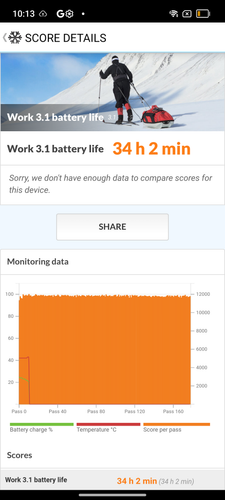
For a tradesperson who spends the day on the road, a photographer at a festival, a motorhome owner, a boater, or a hiker camping out for several days, that peace of mind is a real comfort. You even end up forgetting your charger.
A huge battery, but not an all-night charge
A battery this size might make you worry about recharging it: filling up 20,000 mAh could seem like it would take several hours. Blackview gets around the problem by including a 120 W charger in the box. That’s a welcome surprise, given that most manufacturers no longer include any charger at all.
My tests show a full charge in less than two hours, which is remarkable given the battery’s capacity. Around 30 minutes is enough to recover approximately 40% of the battery, more than enough to get through another long day.
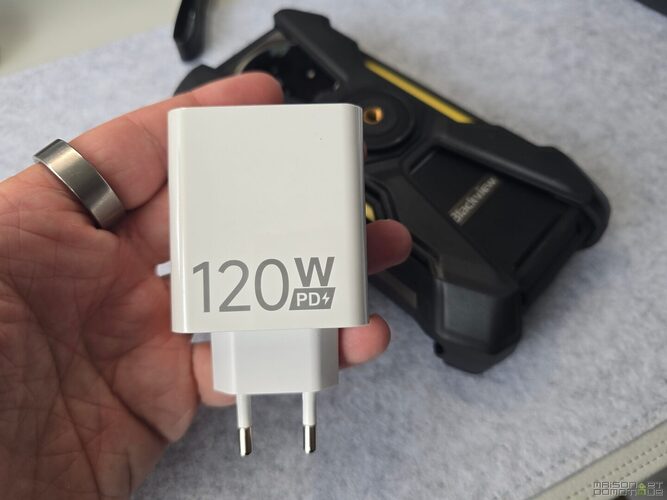
The charger is also worth mentioning: it’s Power Delivery-compatible and can power a laptop or other compatible USB-C devices. I was able to use it without any problems to charge my Lenovo Yoga laptop, which can save you from carrying several chargers when traveling.
A built-in power bank
The battery isn’t just for the smartphone. Thanks to wired reverse charging, the Xplore 2 Projector can charge other devices: a smartwatch, Bluetooth earbuds, a colleague’s smartphone, an action camera, a drone, or a hiking GPS. The phone becomes a power bank that’s always available.
Output power is limited to 10 W, so it’s not the fastest charger on the market, but that’s not the point. When you’re on the move, being able to give a critical device several dozen percent of its battery back can save a day’s work. It’s details like this that show Blackview has considered professional use as much as recreational use.
Photo and video: good performance without trying to compete with camera phones
With the Xplore 2 Projector, you could almost forget that it’s a smartphone first and foremost. Yet it has a fairly capable camera setup.
On the back, a 50-megapixel Samsung main sensor is paired with a 20-megapixel Sony night-vision sensor. On the front, Blackview has included a 50-megapixel selfie camera, an unusual figure for this category of product.
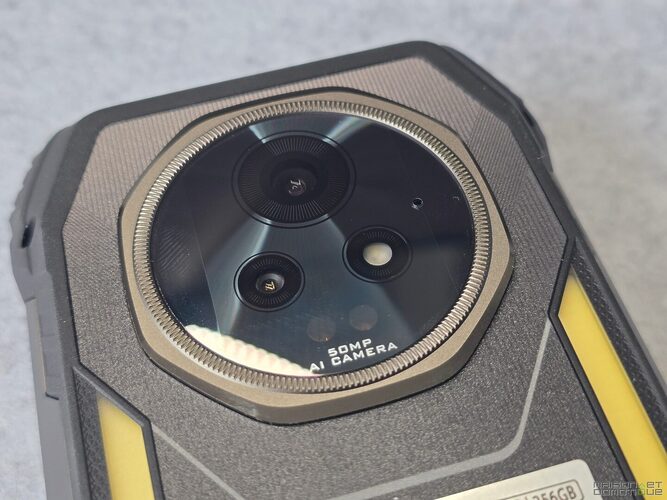
Unlike premium smartphones that offer a range of focal lengths (ultra-wide, telephoto, macro), Blackview has kept things simple. That makes sense: the target users generally prioritize durability, battery life, and reliability over absolute photography performance.
Convincing photos in daylight
In good light, the main sensor produces pleasing shots. Colors look natural, the level of detail is satisfying, and the dynamic range does a good job of preserving both highlights and shadows.
It doesn’t match the best camera phones on the market, but the results are more than good enough for documenting a construction site, recording a service call, photographing a landscape on a hike, or sharing vacation memories. The image processing is subtle, avoiding the artificially oversaturated images sometimes found on certain Chinese smartphones. HDR mode does its job well, and the various shooting modes (portrait, panorama, Pro mode, slow motion, high-resolution photos) offer plenty of versatility.
Surprisingly good video quality
This is probably the most surprising part. The Blackview Xplore 2 Projector records in 4K at up to 60 frames per second. In the field, videos show good detail and pleasing colors, provided there’s enough light.
Stabilization falls short of the best camera phones currently available: when moving quickly, you’ll notice more movement in the image. For filming a landscape, a product demonstration, or technical work, the results are perfectly usable. In short, the video quality is a pleasant surprise, and better than what you usually find on rugged smartphones.
A real night-vision camera
The second sensor immediately catches your attention. It’s not a telephoto or an ultra-wide camera, but an infrared night-vision camera. Combined with its infrared illuminators, it lets you see in complete darkness.
For example, here it is in “normal” mode on the left, completely dark, and in night mode on the right:
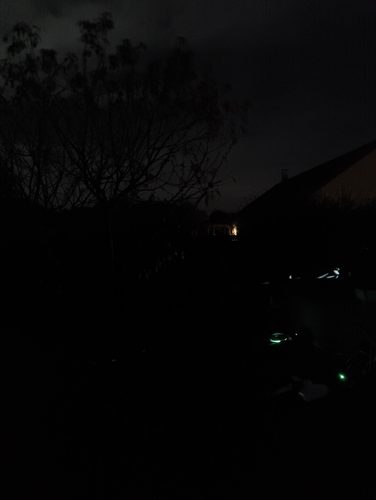
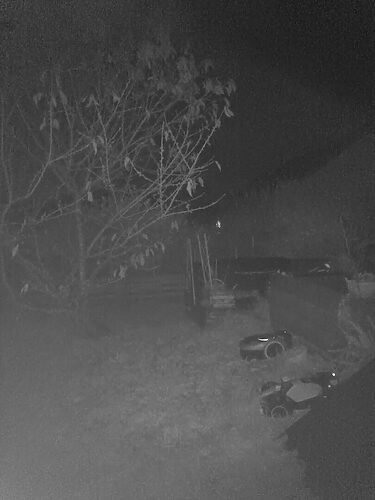
It might seem like a minor novelty at first, but it quickly becomes useful in certain situations: inspecting a crawl space, looking for an animal, checking a construction site at night, monitoring a property, or exploring a poorly lit building. The quality is obviously inferior to that of a conventional camera, but the level of detail is more than sufficient for these uses.
AI comes to the gallery, too
Like most recent smartphones, the Xplore 2 includes several artificial intelligence features: removing an unwanted object from a photo, automatic enhancement, content generation, and various creative tools built into the gallery app. Not all of them are essential, and some require a subscription to be used to their full potential. They’re in keeping with the times and may appeal to users who appreciate this kind of assistance.
Photography is clearly not the Blackview Xplore 2 Projector’s main selling point, but it gets the job done. This smartphone isn’t trying to replace a Galaxy S25 Ultra or an iPhone 17 Pro Max for photography, but it offers more than enough for its target audience, with a few original features, such as night vision, that reinforce its “field-ready” design.
Extra features that make it a Swiss Army knife
The manufacturer has taken advantage of this larger-than-life form factor to include a host of additional features that, taken together, make the device particularly versatile. Some are novelties, while others prove surprisingly useful in everyday life.
Let’s start with the lighting. The two large LED strips on the back of the phone aren’t just for show: they form a 467-lumen camping light, much more powerful than a simple smartphone flashlight. The dedicated app offers several modes: white light, warm light, SOS mode, and emergency flashing. In a utility room, under a vehicle’s hood, or when looking for something in a tent in the middle of the night, this light can genuinely illuminate an entire room. A detail that seems minor until the day you need it.
On the left, lighting with the phone’s flash, as you’d usually use it in a pinch. On the right, the “camping” light:
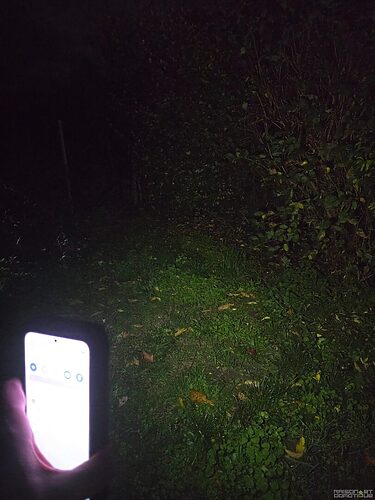
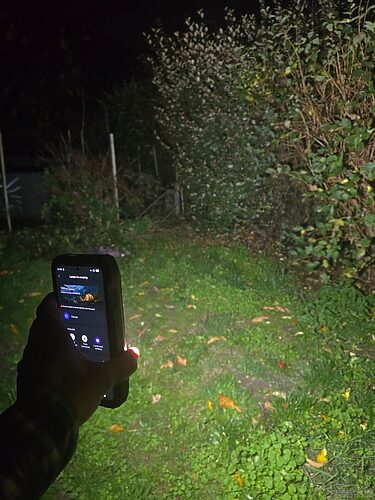
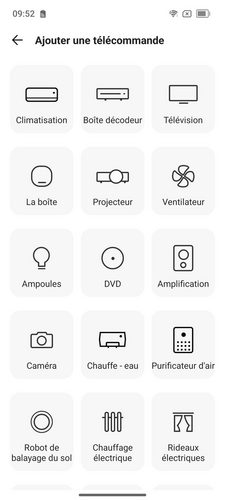
The phone also has an infrared emitter. This feature is disappearing from major manufacturers’ devices, even though it remains very handy: the Xplore 2 can control a TV, air conditioner, video projector, or many other compatible devices. During testing, setting up TVs and air conditioners was straightforward, with the phone automatically recognizing many brands. For a field technician or installer, this often saves the trouble of searching for a misplaced remote.
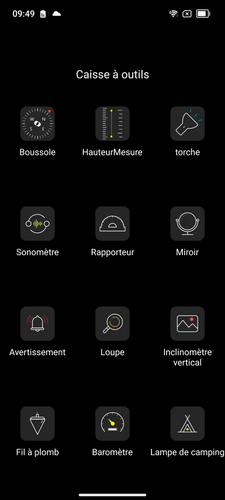
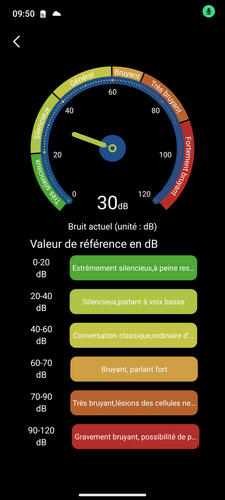
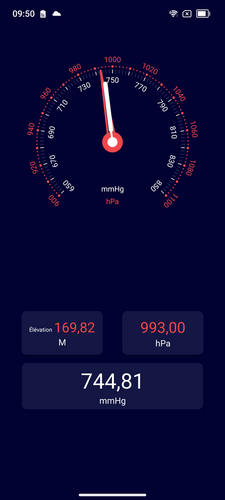
Blackview also adds a whole digital toolbox: compass, spirit level, plumb line, inclinometer, protractor, barometer, sound level meter, magnifier using the camera, digital mirror using the front camera, and underwater mode for taking photos with the touchscreen disabled underwater. These features won’t replace professional equipment when precision is critical, but they can come in handy on a construction site or out in the wilderness.
The phone also has a capable voice recorder, a feature that cleans the speaker using sound vibrations after immersion, and several shortcuts for quick tasks.
Who is the Blackview Xplore 2 Projector really for?
This is probably the most important question in this review, because it would be easy to conclude that this smartphone is “too big,” “too heavy,” or “not practical.” That would completely miss the point.
The Blackview Xplore 2 Projector was never designed to replace the smartphone you slip into your pocket before heading out for a coffee on a terrace. Its natural habitat is elsewhere.
I’m thinking of tradespeople who move between several job sites in a single day. They get a device that can last several days without recharging, serve as a work light, project a plan or technical documentation at a client’s premises, and withstand the tough conditions they face every day.
Motorhome owners are another good fit. At a remote campsite, when evening comes, the phone becomes a pocket-sized cinema. There’s no need to bring along a separate video projector or an external battery to power it.
The same goes for boaters: on a sailboat or barge, where every device needs to be versatile and self-sufficient, the Xplore 2 naturally fits right in.
Fans of long-distance hiking, wild camping, or outdoor expeditions will also appreciate the huge battery life. Setting off for several days without worrying about the battery dying is a real luxury, especially when the smartphone also serves as a GPS, camera, and communication device.
Photographers and videographers may also find it useful—not to replace their equipment, but as a monitor, backup battery, or tool for showing an edit or raw footage to several people using the built-in projector.
I’m also thinking of tour guides, trainers, traveling salespeople, and summer camp leaders, who can all use the projector to quickly display content without carrying an additional device.
Conversely, some users would be better off looking elsewhere. If your phone mostly lives in your jeans pocket, if you check social media on public transport, or if you’re looking for a discreet and elegant device, the Xplore 2 will probably become a burden before long. That isn’t a flaw: it’s the price of packing so many features into a single device.
And that’s precisely where Blackview made the right choice: rather than trying to appeal to everyone, the manufacturer fully embraces this very specific positioning.
My verdict after several months of use
The Blackview Xplore 2 Projector is probably one of the most unusual smartphones I’ve had the opportunity to review.
Its weight makes an impression from the first few minutes. So does its size. To be honest, I can’t see myself using it as my main everyday smartphone. It’s simply too bulky for my personal needs. It quickly becomes cumbersome in a trouser pocket, and after holding it for a few minutes, you’re bound to feel its almost 700 grams.
But it would be unfair to stop there. The more you discover about this phone, the more you understand that it was never designed for users like me. Blackview hasn’t tried to make an iPhone or Galaxy S competitor. The manufacturer has created a field tool capable of replacing several devices on its own.
The built-in projector works much better than I expected. It won’t replace a living-room video projector, but it opens up interesting possibilities on the go. The battery is simply impressive, the AMOLED screen is on a par with much more conventional smartphones, performance is more than sufficient, and the ruggedness inspires real confidence.
Add to that a powerful camping light, night vision, an infrared emitter, a complete digital toolbox, a power-bank function, and excellent battery life, and you get a device with practically no direct competitors.
The Blackview Xplore 2 Projector is a bit like the Leatherman multitool of smartphones. It’s not something everyone carries in their pocket. But those who genuinely need it wouldn’t want to be without it.
If you’re simply looking for a powerful Android smartphone, there are lighter, thinner, and often cheaper models available. But if your work or lifestyle regularly takes you far from a power outlet and into harsh environments, or you like having a device that can do everything, the Xplore 2 Projector is definitely worth your attention.
It won’t appeal to everyone. But those it’s designed for may well find there’s nothing like it once they’ve tried it.