
Résumer cet article :
In the ever-changing world of home automation, communication protocols play a crucial role. Among them, Z-Wave has long been a major player, adopted by many home automation solutions over the past 15 years. However, in recent years, ZigBee seems to be gaining momentum, as does the new Matter protocol, intended to unify all home automation systems, and from which Z-Wave seems to be completely absent. Many are wondering about its future, especially after its notable absence from CES. And rightly so.
Principle of the Z-Wave protocol
Originally developed by the Danish company Zensys in the early 2000s, Z-Wave was one of the first protocols dedicated to home automation. Its popularity grew thanks to its ease of integration and its broad compatibility with various devices. In 2005, the Z-Wave specification was finalized, marking the beginning of an international expansion. Over the years, Z-Wave has undergone several updates, incorporating improvements in terms of security, range and diversity of compatible devices. The creation of theZ-Wave Alliance also helped to standardize and promote this protocol in the industry.
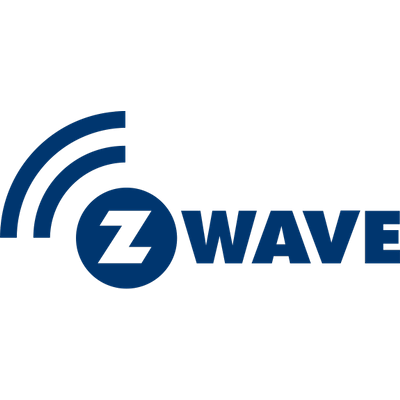
Z-Wave is a wireless communication protocol specifically designed for home automation. It operates at a low frequency (around 900 MHz), which allows it to minimize interference with other home devices. Its strength lies in its mesh network where each connected device can act as a signal repeater, thus increasing the range and reliability of the network. Designed to be both secure and energy efficient, Z-Wave presents itself as an optimal solution for the management of smart home devices, ranging from lighting to security systems.
Z-Wave faces new challenges: Matter and other protocols
Today, the home automation landscape is more competitive than ever, with the introduction of competing protocols.
Although technically very similar, Z-Wave has long had the advantage over ZigBee. When Z-Wave had several thousand compatible products, ZigBee was still only offering chipsets. But it is clear that in recent years ZigBee has considerably caught up, probably thanks to a lower manufacturing cost and greater flexibility on its protocol. Indeed, Z-wave requires the use of a Z-Wave chip, manufactured by a single manufacturer, and the devices must meet very strict standardization. Today, the ZigBee ecosystem is very large and very popular, thanks in particular to manufacturers such as Aqara, for example, who have managed to democratize this protocol by offering peripherals for less than €10, whereas it is very rare to find the same type of solution for less than €30 in Z-Wave. In addition, solutions such as Amazon’s Echo speakers directly integrate ZigBee compatibility, thus facilitating its use by completely eliminating the need for a home automation box.
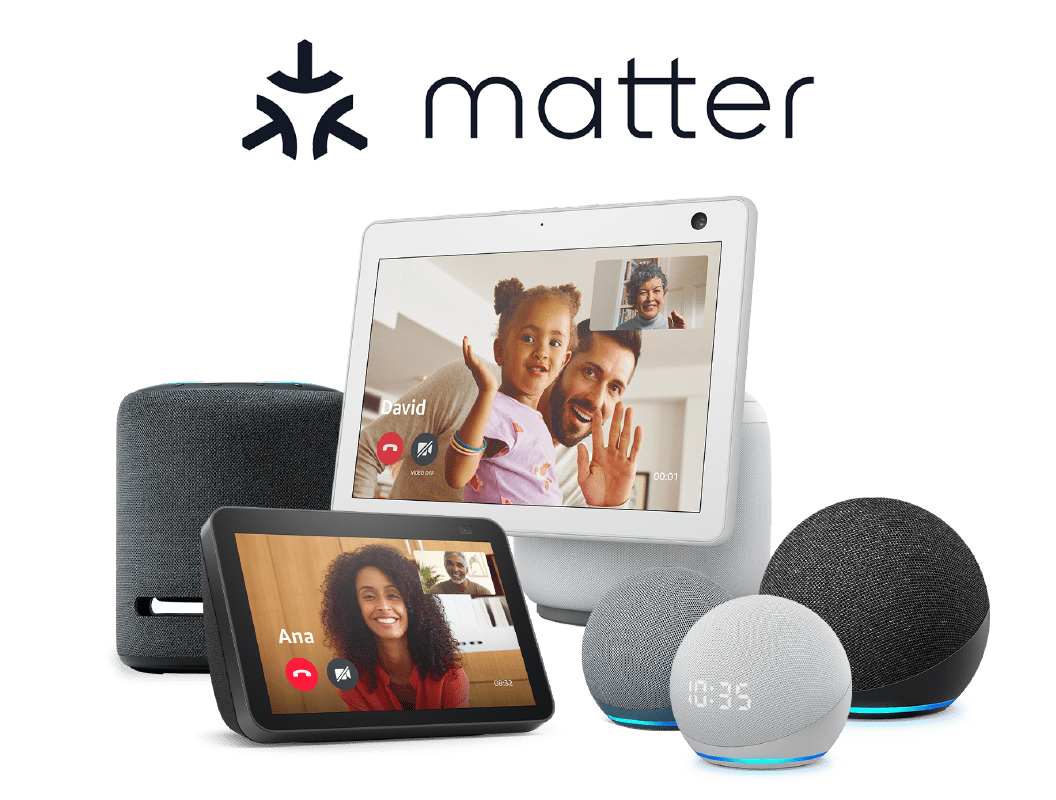
We should also note the emergence of universal protocols such as Matter. Matter aims to create an open and unified standard for connected devices, regardless of manufacturers. This initiative, supported by technology giants such as Google, Apple and Amazon, poses a direct challenge to older protocols such as Z-Wave.
The future of Z-Wave in the world of home automation
So, does Z-Wave still have a future in this changing context? The question arises all the more when the Z-Wave Alliance, previously very well represented at trade shows like CES, is now striking by its absence. By digging a little deeper, it was possible to meet the Z-Wave Alliance in a private suite in Las Vegas. But no more “public” visibility in the Smart Home section of CES, where it previously hosted several manufacturers like Fibaro or Aeotec for example. The presence of Z-Wave was limited this year to a few rare manufacturers displaying their small sign announcing their participation in the Z-Wave Alliance. A very discreet presence, therefore.
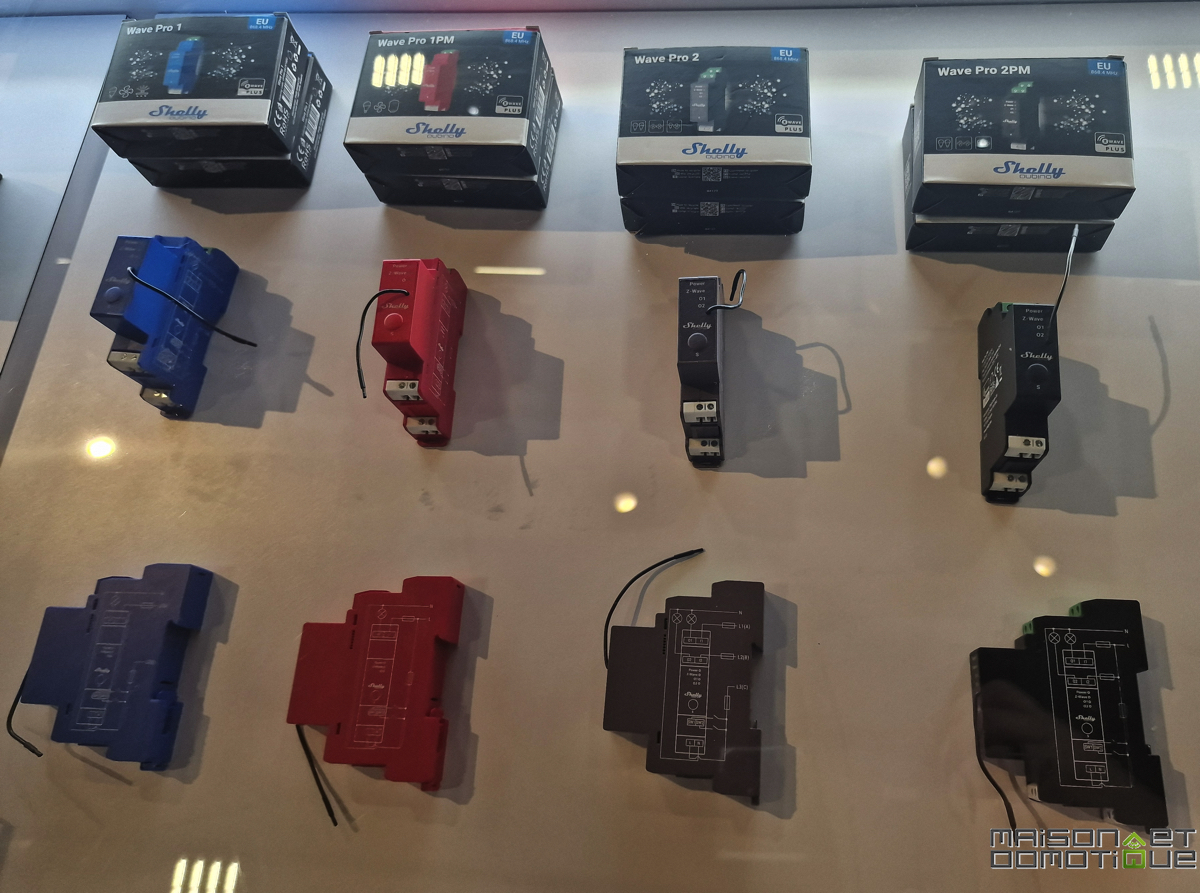
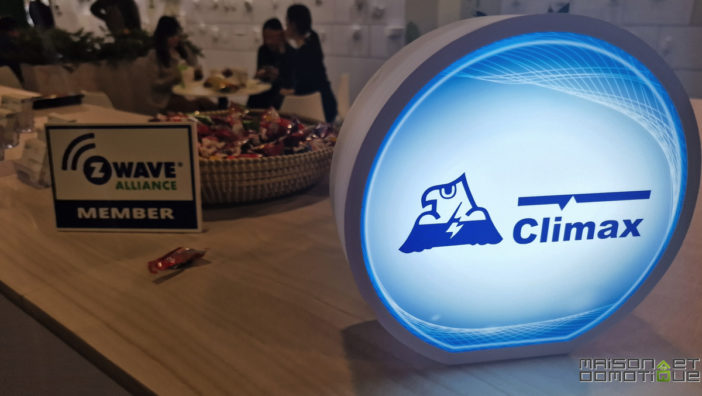
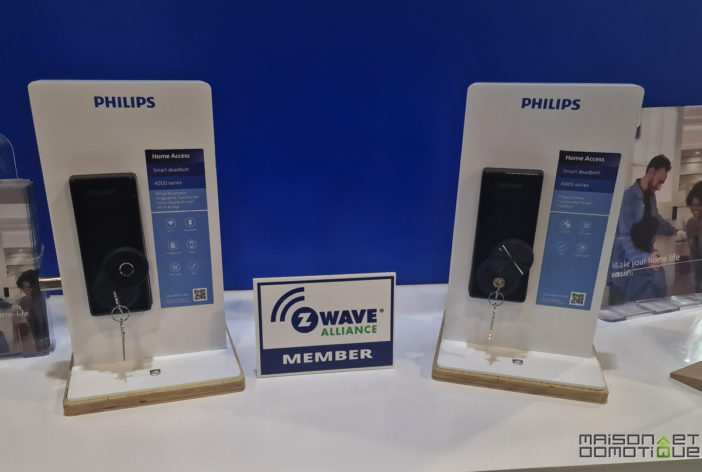
Is the future of Z-Wave in question? The answer lies in its ability to adapt. Z-Wave has the advantage of an established network with a large user base and extensive compatibility of more than 4,300 products. Additionally, it continues to evolve, with updates aimed at improving security and performance. However, to remain relevant, Z-Wave may need to consider integration or interoperability with protocols like Matter. The future of Z-Wave will depend on its ability to evolve with the demands of a constantly changing market, while preserving the features that have made it successful.
Conclusion
Z-Wave, with its rich history and proven technology, remains a significant player in the home automation space. Its future, while challenged by the emergence of universal protocols like Matter, is not necessarily bleak. By embracing evolution and adapting to new market standards, Z-Wave can continue to play an important role in the smart homes of tomorrow. And while it had a small presence at CES, the Z-Wave Alliance has already announced its presence at Integrated Systems Europe (ISE) in Barcelona in a few days, a show really dedicated to home automation.
And you, what do you think?