


Résumer cet article :
After more than twenty years of leadership in the robot vacuum market, iRobot, creator of the famous Roomba range, is facing one of the most significant turning points in its history: the declaration of bankruptcy under Chapter 11. For millions of users, this upheaval raises many questions: service continuity, the future of products and warranties, and more broadly, the industrial fate of a giant that has greatly influenced American domestic innovation. In a context of heightened global competition, particularly from Chinese giants such as Ecovacs, Roborock, or Dreame, the journey of the American pioneer illustrates the fragility of current economic and strategic balances. While the acquisition by Amazon failed under regulatory pressure in Europe, it is now the Chinese company Picea Robotics that enters the scene, crystallizing the geopolitical and industrial stakes of a U.S. technological icon. The future of the supply chain, customer service, and American research and development is thus suspended on the choices of the new shareholders and the success of the ongoing restructuring.
In brief
- iRobot, a pioneer in the robot vacuum market, files for bankruptcy after a prolonged decline in its finances following the failed acquisition by Amazon and fierce Chinese competition.
- The bankruptcy proceedings under Chapter 11 allow the continuation of operations, ensuring Roomba users the continuity of the application and warranties, at least in the short term.
- The company Picea Robotics, a Chinese subcontractor and creditor, announces its acquisition of iRobot, marking a major industrial shift for the United States.
- Strategic issues arise, particularly regarding the maintenance of innovation, the availability of spare parts, and the stability of the supply chain.
- The future of connected services will depend on the success of the restructuring and the ability to counter the growing dominance of brands such as Ecovacs, Roborock, and Dreame in the market.
Roomba (iRobot) Bankruptcy: Historical Context and Analysis of Major Causes
iRobot, born in Massachusetts in the late 90s, established itself in the 2000s as the leader in the robot vacuum market. Its flagship product, the Roomba range, has radically transformed the daily lives of millions of households, gaining worldwide notoriety through its communication campaigns and the reliability of its robots. A pioneer in the integration of software and hardware innovation, iRobot long controlled the majority of the sector, both through its technological lead and its ability to offer models suited to all usage profiles. Commercial successes piled up, buoyed by a strong commitment to research and development and an optimized production capacity that extends to factories in Vietnam.
But starting in 2021, the dynamic began to wane. Warning signals intensified as direct competition emerged, particularly from Chinese brands such as Ecovacs, Roborock, or Dreame. These new players are investing massively and continuously in technology, multiplying innovations such as advanced AI navigation and dynamic mapping. With products often more sophisticated and offered at considerably lower prices, they gradually detach iRobot from its pedestal, significantly eroding its market share. The company then faces a double constraint: declining sale prices and constant pressure on its profit margin.
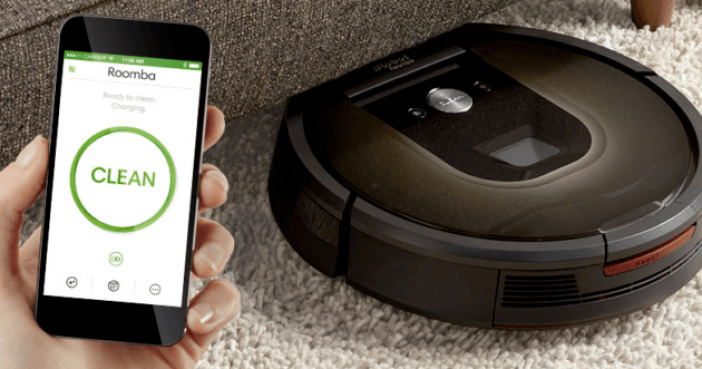
The international environment exacerbates the situation. Tariffs imposed by the United States on products manufactured in Asia lead to a significant increase in costs, which iRobot struggles to pass on to its customers. Meanwhile, the failure of the highly publicized acquisition by Amazon in 2024, blocked by competition authorities in Europe, deprives the brand of an ally and a vital influx of capital for its recovery. This setback deals a decisive blow to its hopes of a rebound: “We did everything we could to secure our future, without success,” then stated Gary Cohen, CEO of iRobot.
Financially, the degradation is rapid. Figures indicate a drop of over 35% in revenue between 2021 and 2025, compounded by accumulated debt that reaches several hundred million dollars. Consecutive losses force iRobot to halve its workforce and reduce its investments, including in the supply chain. By early 2025, the company finds itself in a state of technical insolvency, unable to meet its deadlines and obligations to its main partners and creditors.
The Chapter 11 bankruptcy filing is then initiated. More specifically, it offers iRobot the possibility of maintaining its current operations – production, customer service, marketing of products – while being placed under the supervision of the U.S. bankruptcy court. The objective: to carry out a deep financial and operational restructuring to clean up liabilities, renegotiate debt with creditors, and attract new partners or investors, as provided by bankruptcy legislation.
This sequence highlights the intensity of the competitive shock brought about by Asian giants, as well as the persistent fragility of certain sectors of American tech, even among its pioneers. The emergence of Picea Robotics, a Chinese creditor and former industrial subcontractor, fits into this upheaval and foreshadows an unprecedented transfer of influence over the future of the Roomba brand and the maintenance of industrial anchoring in the United States. The next step naturally follows: what practical consequences will there be for users and employees, and what prospects does this restructuring open for the coming years?
Consequences of iRobot’s Bankruptcy for Users and Recovery Prospects
For a Roomba user, the essential issue lies in the continuity of service and the sustainability of the application that controls the robot remotely. Officially, upon filing for bankruptcy, iRobot reassures its customers: “Our robots will continue to operate normally, updates, customer service, and the availability of spare parts will be assured,” explains management in a statement. Existing commercial warranties are currently maintained, reflecting a commitment to secure the investment of households that have chosen the Roomba range. In the immediate term, no interruption of the application is planned, nor any significant disruption in the global supply chain of replacement parts.
However, caution remains essential in the medium and long term. The success of the restructuring becomes the keystone of the sustainability of customer service, the proper functioning of connected services, and the development of new products. Many informed users are questioning the group’s ability to sustain innovation or to guarantee the future compatibility of existing equipment, given that budget cuts have already slowed the pace of research and development. If, in the worst-case scenarios, cloud services and updates were to weaken, the user would still retain the manual operation of their robot, an autonomous mode of operation remaining possible without a remote server.
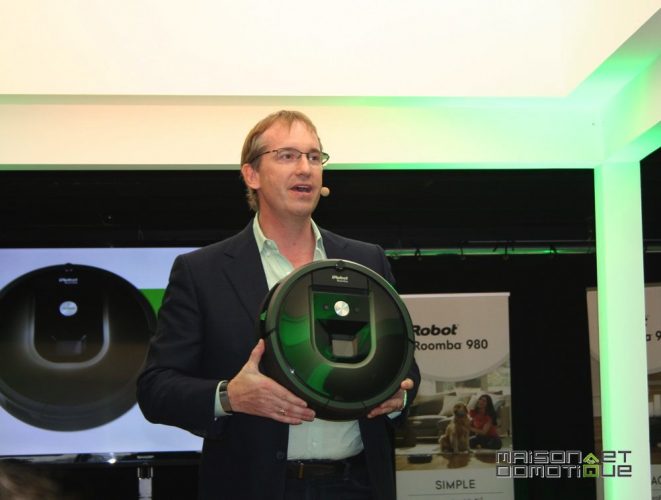
The handover of the industrial-financial baton to Picea Robotics marks the entry into a new era for the American brand. A historic subcontractor of iRobot in the Asian segment and a major creditor, Picea Robotics formalizes the acquisition with the intent to preserve the value of patents and the global distribution network. This rapprochement is viewed within the industry as an attempt to save what can be salvaged from the Roomba product portfolio, while injecting the necessary means to clear the debt and relaunch the brand. Symbolically, the takeover by a Chinese giant of a historic American reference stirs the debate on industrial strategies and technological sovereignty, particularly in the United States, where the deindustrialization of strategic sectors raises serious concerns.
The trajectory of iRobot is also enlightening regarding the mutations of the global market. In less than a decade, Chinese manufacturers such as Ecovacs, Roborock, and Dreame have invested massively in innovation, sometimes surpassing their Western competitors in intelligent navigation or spatial recognition. The ability to offer competitive products at reduced prices has relegated iRobot to the role of challenger, inflicting pressure on its margins to the point of pushing it to streamline its range – which is why some Roomba models are already disappearing from certain sales channels. In this context, restructuring appears to be an unavoidable passage if the brand wishes to maintain a sustainable presence in the already saturated robot vacuum sector.
Finally, on the regulatory front, the failure of the acquisition by Amazon, due to the boundaries set by European competition authorities, constitutes a significant precedent. It illustrates the importance of international arbitration in the tech sector, capable of fundamentally disrupting the industrial balances of a historically strong company. This episode thus marks a double fragility: on one side, that of a historic champion challenged by Asian dynamism; on the other, that of the American industry now dependent on new capital from Picea Robotics.
Each step taken in the recovery or adaptation process will shape not only the daily customer experience but also define the place of innovation in the constant mutation of a globalized market. Under the watchful eye of its new shareholders and the attentive monitoring of its users, iRobot finds itself at a crossroads, between technological legacy and industrial recomposition under foreign influence.

Please remain courteous: a hello and a thank you cost nothing! We're here to exchange ideas in a constructive way. Trolls will be deleted.