


Résumer cet article :
In response to the rapidly evolving needs and offerings in the world of home automation, Nabu Casa announces the end of the production of the Home Assistant Yellow, a device that has made a mark on the minds of DIY enthusiasts and supporters of open modular solutions. This strategic turn, officially announced by co-founder Carl Albertsson, confirms the publisher’s intention to refocus its range and prepare for the arrival of new hardware intended to offer more power and simplicity. But what about the numerous users who chose this box designed as a true technological showcase? The company guarantees the maintenance of solid software support, faithful to its open-source philosophy and commitments to the community.
The Home Assistant Yellow bows out not due to obsolescence but rather as a result of technical evolutions, supply constraints for components, and a repositioning of its range. Its design based on the Raspberry Pi Compute Module has allowed thousands of users to explore scalable setups combining power, energy efficiency, and advanced connectivity, notably through native management of Zigbee and Thread. The actual performance of the Yellow, its stability, and its commitment to privacy remain examples for all players in the open-source home automation sector today. In the face of this change, what prospects are there for the pioneers of home automation? What choices for those who wish to start or optimize their experience? An overview of the end of one cycle and the beginning of a new phase for the Home Assistant ecosystem.
In brief :
• Nabu Casa stops the production of the Home Assistant Yellow while ensuring the continuity of dedicated software support.
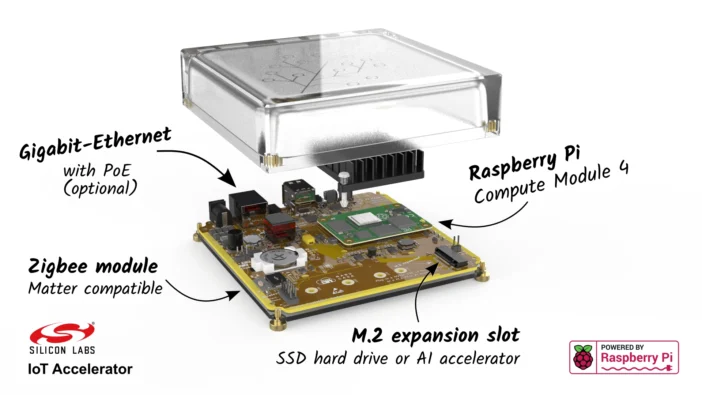
• An iconic model, the Yellow has democratized scalable home automation thanks to the native Zigbee/Thread integration and modularity via the Raspberry Pi Compute Module.
• Stable performance, measured consumption, and NVMe SSD storage enhance its appeal to power users.
• A transition is taking place towards the Home Assistant Green, more accessible, and towards mini PCs for users seeking advanced power.
• The end of the Yellow does not mark the end of innovation : Nabu Casa is preparing new, enhanced hardware, involving the open-source community.
Official Announcement : End of Production of Home Assistant Yellow by Nabu Casa
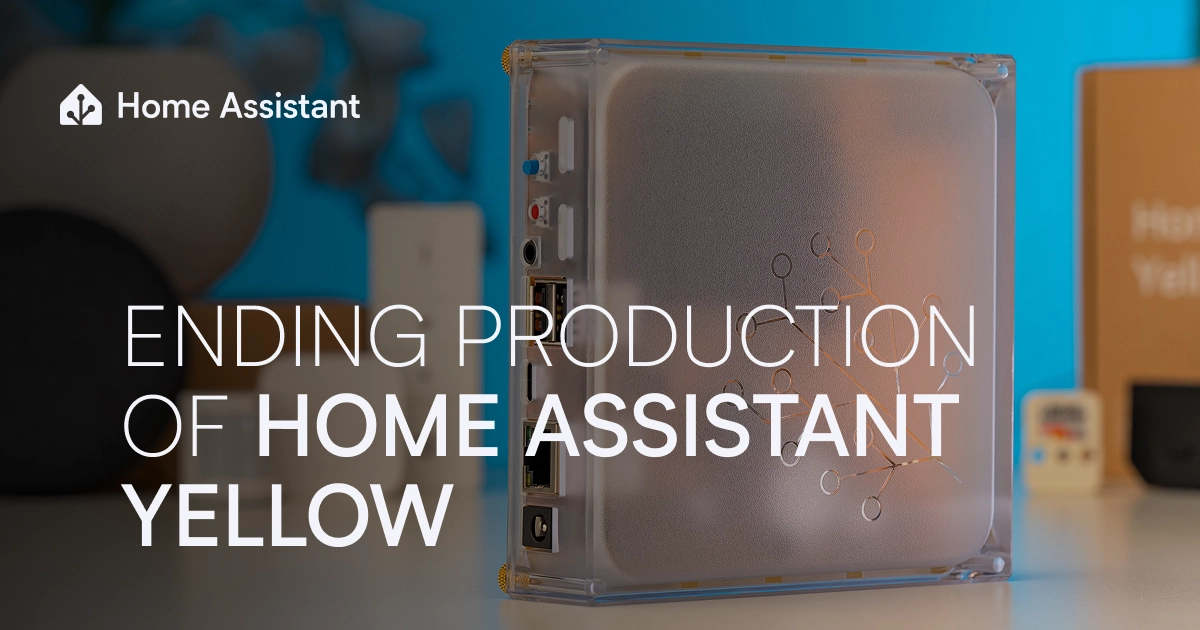
The news broke a few days ago: Nabu Casa officially ends the production of the Home Assistant Yellow. This box, praised for its modularity and unique position in the Home Assistant ecosystem, sees its industrial career closing after several years of success among home automation enthusiasts. According to Carl Albertsson, this choice is part of a strategic transition and adaptation to current technological and commercial challenges. Supply constraints affecting Raspberry Pi modules and some key components have further accelerated the reflection around the long-term viability of the Yellow.
The decision, far from being improvised, comes as the market sees new needs emerging from users : demand for more simplicity, the necessity of increased performance, and the expectation of more accessible interfaces. Nabu Casa already affirms it is dedicating its resources to preparing a future box that is even more powerful, in consultation with the community. The halt in production does not call into question its strong commitment to the open-source philosophy nor the desire to offer a sovereign alternative to cloud solutions in the mass market of home automation. For many, this event marks the end of a chapter but also prepares for a promising evolution for the entire ecosystem.
Why Nabu Casa is Stopping the Home Assistant Yellow : Technical and Commercial Context
The context that hastened the cessation of the production of the Home Assistant Yellow reflects a collision between industrial constraints, market evolutions, and increasing technological demands. The difficult supply of Raspberry Pi Compute Modules since the pandemic has disrupted value chains. Faced with stock volatility and inflation on components, maintaining production of the Yellow became a headache, leading to waiting lists and price increases.
Moreover, the positioning of the Home Assistant Yellow is rooted in the legacy of the Blue model but now suffers from internal competition with new products like the Home Assistant Green or compatible mini PCs. Customer expectations are evolving : ease of installation, immediate configuration, and simplified updates are becoming the new standard. Nabu Casa has thus preferred to redeploy its resources towards a future generation of hardware to meet the demand for power, flexibility, and a reimagined user experience.
Maintenance of Home Assistant Yellow Software Support : What’s the Real Situation?
For users who have invested time and energy into their Home Assistant Yellow, the end of production may raise concerns. However, Nabu Casa reassures : the software support for Home Assistant on the Yellow is fully maintained. Updates, security patches, and new features will continue to be offered in line with the open-source ethos and the inclusive philosophy of the company.
In practice, software longevity is assured as long as the hardware ecosystem allows. Regular feedback from the community proves the stability and reliability of the Yellow, which is not abandoned but enters a maturity phase. This sustainability responds to the historical commitment of the team while preparing the ground for the future evolution of home automation through new hardware.
Home Assistant Yellow : Key Technical Features and Remarkable Innovations
If the Home Assistant Yellow has captivated a demanding segment of users, it is not by chance. Its technical features reflect a desire to bridge the gap between simplicity, scalability, and power – a philosophy that has marked the Home Assistant community. Let’s explore what distinguished this model in the landscape of modern home automation.
Advanced Modularity Based on Raspberry Pi Compute Module
At the heart of the Home Assistant Yellow is an architecture designed for modularity, made possible through the Raspberry Pi Compute Module. This solution has allowed users to adapt their configuration according to their needs, simply by swapping modules to benefit from more power or memory. A remarkable asset in contrast to the closed all-in-one solutions that dominate the market.
This modularity has nurtured the DIY spirit, a strong characteristic of the Home Assistant community. It has enabled technical profiles, not necessarily experts, to juggle between different versions of the Raspberry Pi, thus ensuring scalability and better resilience against planned obsolescence.
Expandable NVMe SSD Storage : Performance and Constraints
One of the major technical cornerstones of the Home Assistant Yellow lies in its native support for NVMe SSD storage. This option offered a significant leap in reading and writing speed, a critical point for the responsiveness of the Home Assistant platform itself. Advanced users, looking to store large event histories or to integrate multiple add-ons, have benefited from a real boost in performance.
However, this technical advancement had its limits : some models of NVMe SSDs exhibited variable compatibility, necessitating a minimal level of technical vigilance or exchanges in community forums. Despite these constraints, the Yellow has been praised for this forward-looking choice, while remaining energy efficient and quiet, even when equipped with powerful SSDs.
Native Zigbee/Thread Integration : Advantages for Connected Home Automation
With native integration of Zigbee technology as well as Thread, the Home Assistant Yellow has established itself as a universal gateway for connected home automation. This choice to integrate a Zigbee chip directly onto the Yellow’s circuit offered management without the need for additional accessories, reducing latency and improving compatibility with the Matter ecosystem, which is now essential in the world of connected devices.
The ability to control many Zigbee devices right away, without requiring an additional USB key, has been a deciding argument for many users. Thread, in parallel, opens the door to emerging home automation uses, particularly multi-protocol management within the same installation. This native integration, combined with PoE (Power over Ethernet) management for power supply, positioned the Yellow as a top platform for an uncompromised home automation experience.
Positioning of the Home Assistant Yellow in the Nabu Casa Ecosystem
Much more than a product, the Home Assistant Yellow has embodied a mindset oriented towards mastery, intelligent tinkering, and robustness. Its launch was based on a promise : to democratize powerful home automation, but under the user’s control. This marriage between freedom, modularity, and security quickly captivated an audience of enthusiasts, but also curious newcomers.
Power Users and DIY Enthusiasts : The Target of the Home Assistant Yellow
The historical target of the Yellow primarily encompasses power users, those profiles who know the Home Assistant ecosystem inside and out and are ready to invest time to customize their installation. Its interface provides complete access to advanced settings, fine management of integrations, and scripts, thus satisfying an audience in search of a tailored technical experience.
DIY enthusiasts, for their part, were attracted by the potential for evolution offered by replacing the Raspberry Pi module, connecting new SSDs, or integrating exotic home automation solutions like Node-RED. It’s a box designed as a personal laboratory, where one can test, fail, and learn… A stance that explains the enthusiastic feedback, despite the complexity of a handling that could disorient novices.
Comparison Home Assistant Yellow vs Home Assistant Green : Which User Profile?
Although sharing the same Home Assistant software base, the Yellow and the Home Assistant Green do not target the same audiences. The Green primarily targets those looking for a first plug-and-play experience: quick installation, zero hardware configuration, and hassle-free updates. It sacrifices some of the Yellow’s modularity, offering instead an instant handling and a more affordable entry ticket.
In contrast, the Yellow, despite its versatility, requires a certain familiarity with hardware and DIY principles from the user. This distinction is crucial when seeking to choose the ideal solution : the plug-and-play approach for a serene discovery or the scalable modularity for those willing to invest in customization and performance.
What Alternatives After the Home Assistant Yellow ? Perspectives and Expected Evolutions
The gradual disappearance of the Home Assistant Yellow from the catalog raises the question : what to replace it with? Users today have concrete paths that correspond to different profiles, while Nabu Casa is already anticipating the launch of a new generation of boxes.
Home Assistant Green and Mini PCs : Recommended Choices for Home Automation
For newcomers, the Home Assistant Green stands as the natural successor to the Yellow, relying on simplicity and an improved user experience. Its robustness, native support for PoE, and automatic updates make it an ideal entry point into the Home Assistant universe. It installs in just a few minutes and offers a streamlined interface without sacrificing essential home automation management.
Advanced users or those wishing to virtualize Home Assistant can opt for compact small PCs, like NUC or mini PCs, capable of delivering higher power, advanced virtualization, or hosting multiple services simultaneously. This migration offers unmatched software flexibility at the cost of slightly higher energy consumption.
New Hardware in Preparation and Involvement of the Open-Source Community
The story doesn’t end here : the Home Assistant community remains one of the engines of innovation, and Nabu Casa has understood this well. Initial announcements suggest the development of new, more powerful hardware, oriented towards advanced uses and integrating the latest connectivity standards for Zigbee, Thread, and Matter from the outset.
This participative approach rekindles a collective momentum : feedback, tests, and scenarios proposed by the DIY community will directly influence the design of this future product. The dialogue remains open, allowing the Home Assistant ecosystem to evolve according to concrete needs, far from the obsolescence imposed by the market. The vision : to offer, tomorrow, a box as open and scalable as the Yellow, but ready to meet the new challenges of modern home automation.



Please remain courteous: a hello and a thank you cost nothing! We're here to exchange ideas in a constructive way. Trolls will be deleted.