


Résumer cet article :
In 2025, France is embarking on an unprecedented shift in its energy management model, with the overhaul of the emblematic off-peak hours system. Inherited from the 1960s, this mechanism aimed to smooth out the demand for electricity, aligning the uses of households and businesses with the production capacities of the national grid, primarily nuclear at the time. Today, the massive influx of renewable energies and changes in lifestyles necessitate a modification of the time slots: starting from November 2025, 12 million consumers will need to adapt their domestic and professional uses, sometimes to their detriment, but with the promise of a more balanced energy transition. Aiming as much at reducing carbon footprints as controlling costs, this reform orchestrated by the Energy Regulatory Commission is shaking up habits: it is no longer just a matter of shifting the operation of the water heater to night time, but also of adjusting the programming of energy-intensive equipment, sometimes several times a year and depending on the seasonality. The revolution of off-peak hours is underway, driven by the technology of Linky meters, and the agility of the renewed energy mix, working towards a more responsible energy consumption.
Origin, functioning, and historical stakes of the peak/off-peak system in France
The peak/off-peak system, or HP/HC, has its roots in the profound industrial and technological transformations of France in the 1960s. At that time, the rapid expansion of the nuclear fleet required precise organization of electricity consumption to ensure the stability of the power grid. The model, then simple and effective, divided the day into peak hours (16 hours) and off-peak hours (8 hours, mainly at night). The principle was clear: encourage, through reduced rates, the deferral of energy-intensive uses like the washing machine or water heating outside of peak demand periods, thereby smoothing peaks and optimizing production plants.
This mechanism, almost universal at EDF and later with the support of Enedis, has durably changed the habits of households and businesses. In practice, it was enough to take advantage of the day/night contactor associated with the meter to automate the operation of devices during the appropriate slot, generating substantial savings: the difference in cost between peak hours and off-peak hours could justify the investment in a new domestic organization. This measure proved decisive to support the ramp-up of the nuclear mix, ensuring continuous consumption even when excess capacity was available at night.
For nearly sixty years, the stability and predictability of this system have allowed both households and professionals to anticipate their electricity demand. However, this historical model is now reaching its limits: the gradual integration of renewable energies, particularly solar production and wind turbines, is causing unprecedented fluctuations in production. In 2025, the need to align consumption with the actual offer curve becomes central, necessitating a profound revision of the off-peak hours.
Explanation of the HP/HC system and its effectiveness on electricity consumption management
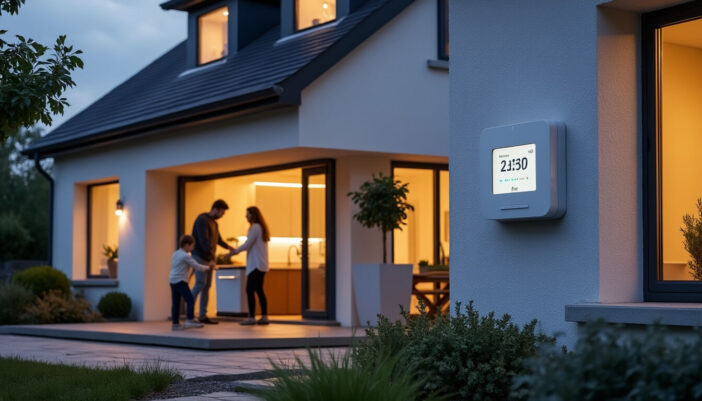
The HP/HC system is based on a duality of timings that assigns a rate distinct to each type of time slot. The off-peak hours, generally occurring at night, allow users to benefit from cheaper electricity. The automatic triggering of devices via the day/night contactor involves intentionally shifting the consumption. The effectiveness of this system has been demonstrated in optimizing the work of power plants: by avoiding peaks of consumption, the overall efficiency of the grid was improved.
This has also fostered, in the long term, a true awareness of the issues related to the adaptation of habits: families and small businesses learned to reschedule their daily routines. This model, praised for its simplicity, symbolizes the French desire to combine energy performance and budget control.
However, the transformation of the energy mix, particularly the skyrocketing solar production (especially in the afternoon during summer), now demands an adaptation of these time slots to ensure grid cohesion and encourage flexibility. Hence the announcement of the drastic modification planned for November 2025.
Reform of the off-peak hours 2025: new time slots, context, and implementation modalities
The decision by the Energy Regulatory Commission of February 6, 2025 marks a profound break: within the framework of TURPE 7, the time slots of the off-peak hours will evolve to better adapt to the new reality of French electricity production. The objective: to more finely align the pricing incentives with the actual availability of renewable electricity, notably solar and its peak daytime production. The reform concerns 11 million households subscribed to the HP/HC option (out of 14.5 million), representing a major part of domestic and professional consumers.
From November 2025, the time slots will be structured according to two major blocks. A first block of five consecutive hours at night, from 11 PM to 7 AM, will guarantee continuity with the previous system. The major new feature lies in the arrangement, in the afternoon, of 1 to 3 hours of off-peak hours, between 11 AM and 5 PM. This transition aligns with the logic of solar production, which is particularly abundant and competitive during long summer days.
A seasonal differentiation is also necessary: from April 1 to October 31, the daytime fraction of off-peak hours will extend to capture the maximum of the solar production peak, while between November 1 and March 31, the focus shifts back to nighttime, a period when demand is traditionally higher and production is more stable. It is important to highlight that the distribution of time slots remains in the hands of Enedis, responsible for distribution and local arbitrations while considering the constraints of the power grid: thus, depending on the location, the time slots may vary significantly, with no possibility for individual choice for clients.
The implementation will be gradual, staggered until the end of 2027, with each modification needing to be preceded by notification from suppliers at least one month before the actual change. The change in time slots does not depend at all on the supplier (EDF or others), but on the national policy framed by the CRE and the Energy Regulatory Commission. This point raises many practical questions, particularly regarding the adaptation of equipment and user awareness.
Impact of the change in off-peak hours: concerned profiles, uses, adaptations, and the role of Linky meters
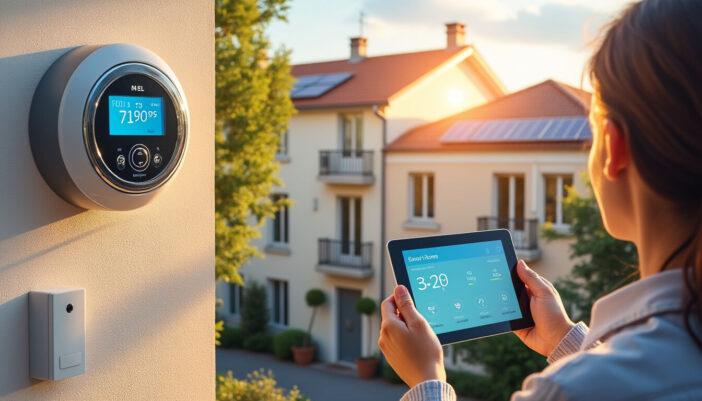
This upheaval primarily affects households that have opted for HP/HC, approximately 14.5 million subscribers in France. Of this number, the alteration of modalities will directly impact nearly 11 million clients. Households equipped with Linky meters benefit from some ease: the programming of off-peak hours will be adapted automatically, especially for equipment connected to the day/night contactor. However, for the water heater or large appliances not directly connected, manual intervention may sometimes be necessary: it will be necessary to adjust the programming or use home automation devices to follow the new schedules.
Seasonality adds to the complexity: the schedules will switch twice a year, with the rhythm of the seasons, requiring some users to reconfigure stoves, washing machines, or charging stations for electric vehicles. In fact, this last point draws attention: in many households, the car is absent from home during the day, which may limit the interest in daytime off-peak hours for charging. Therefore, reliance will have to be mainly on the remaining nighttime periods to continue optimizing consumption and the bills.
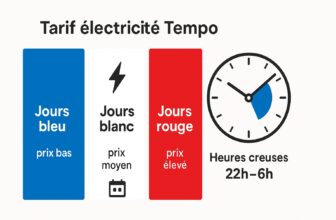
Some profiles remain outside the process. Subscribers to other options, such as Tempo, or those who have not chosen the off-peak hours option, are not affected. The modification does not open the possibility of changing slots on demand, nor of requesting an individual adjustment from Enedis: support comes through enhanced communication, technical assistance for vulnerable or poorly equipped groups, and, for advanced users (home automation, connected programming), through the automatic detection of new slots. The goal is to prevent any energy divide by guiding various groups in adapting to this significant national evolution.
Underneath, this reform injects a new dynamic into the management of uses, inviting every participant to rethink their habits: elderly individuals, less comfortable with technology, will need support to avoid suffering through the transition. Companies, for their part, will find the flexibility of daytime hours an asset for their operations, particularly concerning heating or air conditioning, aligning their activities with the solar production peak. Thus, behind the technical complexity, an opportunity for collective intelligence emerges that can be tailored for all.
Expected benefits and stakes of the off-peak hours reform for consumers and energy transition
The main advantage of this reform lies in its ability to generate savings for both individuals and professionals. By consuming more electricity during the slots where it is abundant, produced at low cost through solar production, each consumer can reduce their bills while contributing to the balance of the grid. For businesses, the new system allows planning of activities considering the daytime slots, optimizing their energy efficiency. This flexibility proves particularly decisive for industrial sectors or SMEs wishing to capitalize on the most advantageous slots.
Beyond financial considerations, the ecological stake emerges as a major motivation: by harmonizing consumption with the actual production capacities, notably those of renewable energies, France pursues its climate ambitions. The impact is also measured on a grid scale: the smoothing of consumption relieves infrastructures during peak demands, limiting heavy investments and anticipating a gradual increase in the share of renewables in the energy mix.
The technical tools, like the Linky meter, facilitate this transition: capable of communicating remotely, they allow for quick and uniform modifications of the slots. For informed users, automation via home automation presents an effective response to the changes in scheduling, maximizing benefits with minimal effort in daily life. As long as users are well-informed, any household can transform this new paradigm into an advantage, taking full advantage of the pricing offers renewed by the reform.
It is also essential not to overlook human support. Success depends on the ability to explain, educate, and provide technical support. The communication undertaken by suppliers, pedagogy, and assistance from actors like Selectra will help ensure that everyone finds a solution suitable for their constraints and vision of responsible consumption.
We now just have to wait for the official notification from the energy supplier to know the new time slots.
<!– wp:rank-math/faq-block {"questions":[{"id":"faq-question-1758874723896","title":"What are the new off-peak hours in 2025?","content":"Starting in 2025, each customer on the HP/HC option will still benefit from 8 off-peak hours per day. The major novelty lies in their distribution: 5 consecutive hours at night (between 11 PM and 7 AM) and up to 3 hours during the day, between 11 AM and 5 PM, more focused in the afternoon during summer. This organization will evolve with the seasons, with a predominance of daytime in summer, and nighttime in winter.”,”visible”:true},{“id”:”faq-question-1758874730233″,”title”:”How to adapt electrical equipment to the reform?”,”content”:”Devices connected to the day/night contactor and home automation solutions will automatically adapt via the Linky meter. For non-connected equipment, it will be necessary to manually reprogram the schedules (e.g., programmable socket), especially at changing seasons. Users should be attentive to their electricity supplier’s indications.”,”visible”:true},{“id”:”faq-question-1758874737202″,”title”:”What are the consequences for charging electric vehicles?”,”content”:”The daytime off-peak period, more prominent in summer, will not benefit everyone: most electric vehicles are absent from home during the day, making it necessary to prioritize the nighttime slot to optimize recharging at lower costs.”,”visible”:true},{“id”:”faq-question-1758874749639″,”title”:”Can one choose or individually modify their off-peak hours?”,”content”:”No, the determination of time slots is managed locally by Enedis, according to the needs of the grid. No individual choice is possible; the rule applies uniformly in each concerned sector.”,”visible”:true},{“id”:”faq-question-1758874755164″,”title”:”What benefits to expect from the reform in terms of energy transition?”,”content”:”The reform allows for aligning consumption with renewable production, particularly solar production, and reducing peaks of grid demand. This helps limit costs, reduce carbon footprints, and accelerate the increase of renewables within the national energy mix.”,”visible”:true}]} –>



Please remain courteous: a hello and a thank you cost nothing! We're here to exchange ideas in a constructive way. Trolls will be deleted.