


Résumer cet article :
Between advanced automation and remote control via smartphone, the smart home is becoming central to our daily lives. However, the choice between professional home automation and consumer-connected homes raises legitimate questions. Should we focus on the robustness of local networks, the precise programming of KNX systems, or the flexibility of voice-controlled connected devices? The proliferation of devices, ecosystems, and applications is redefining the contours of modern housing: enhanced security, personalized comfort, energy savings, and accessibility for all. Let’s highlight the uses, advantages, and limitations of each approach through concrete examples, analysis of current technologies, and practical advice from real-world experience. From urban families to seniors seeking autonomy, everyone can now build an adaptive, modular, and secure living space. But how do we make the right choice—or combine them? An overview of the best in home automation and connected homes.
Connected home or home automation: how to distinguish the two for your smart housing?
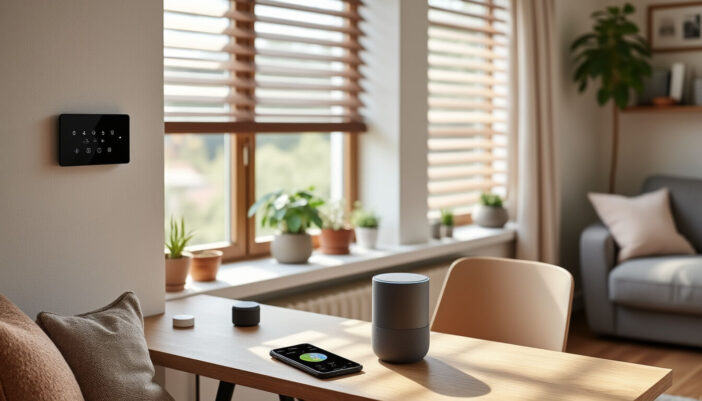
Definitions: home automation and connected home, two complementary approaches serving everyday life
The distinction between home automation and connected home lies primarily in the nature of the technologies used and their everyday applications. Home automation refers to all techniques for automating the home: from centralized control of devices to the programming of living scenarios, it relies on a installation that is often professional, integrating robust local networks. In contrast, the connected home refers to an intelligent home consisting of mainstream connected devices (light bulbs, thermostats, cameras…) that interact via the Internet and can be controlled remotely, notably through mobile applications, hubs, or voice assistants like Alexa, Google Home, or Siri.
Specifically, a home automation network, such as those based on the KNX or Z-Wave protocols, integrates lighting, shutters, heating, security, or alarms through a coherent system designed to last. In contrast, the dynamics of a connected home allow for the addition of a new device – for example, an Aqara camera or a smart socket from Somfy – in a few minutes, with great flexibility, but sometimes at the expense of overall integration.
- Home Automation: professional systems, local automation, reliability, deep integration of the home
- Connected Home: consumer devices, Internet connectivity, remote control, rapid scalability
- Technologies: KNX, Zigbee, and Z-Wave now coexist with Wi-Fi, Bluetooth, and open-source platforms like Home Assistant or Jeedom
- Complementarity: each solution has its advantages; their association opens the way to an intelligent, scalable, and personalized habitat
This distinction structures the choice of equipment, as well as the way to approach the layout of a modern home, between complementarity of tools and adaptation to each user profile.
| Aspect | Home Automation | Connected Home |
|---|---|---|
| Installation | Professional, local networks | Do-it-yourself, easy addition of devices |
| Control | Centralized (wall panel, tablet) | Mobile (smartphone, voice assistant) |
| Security | Increased reliability, Internet independence | Notifications, remote access |
| Scalability | More complex, but enduring systems | Easy, often limited by compatibility |
Key technologies of intelligent habitats: from the KNX protocol to consumer IoT platforms
The choice of technologies shapes the user experience. Home automation favors robust protocols, such as KNX, Z-Wave, Zigbee, or powerline communication (PLC), allowing devices to connect on secure networks suitable for large real estate developments. KNX, used for years, encourages stability and compatibility among brands.
By contrast, the connected home thrives on the democratization of connected devices and consumer IoT platforms. Brands like Aqara or Homey, or open-source solutions such as Home Assistant, are capable of aggregating dozens of devices on a single dashboard. By 2025, the Matter standard, supported by technology giants, strengthens interoperability for an even more customizable habitat.
- Home automation protocols: KNX, Z-Wave, Zigbee, wired networks or PLC
- Connected home technologies: Wi-Fi, Bluetooth, Matter, Cloud
- Ecosystems: Home Assistant, Jeedom, HomeKit, SmartThings
- Notable brands: Somfy, Delta Dore, Nice, Aqara, Homey
The technological landscape has never been richer, creating a favorable ground for personalization and the creation of custom home scenarios suited to everyone’s needs.
Areas of application: automation, security, comfort, and optimized energy management
Whether aiming to enhance home security, optimize energy management, or improve comfort, the solutions offered by home automation and the connected home overlap but differ in how they operate. With automation, it becomes possible to program specific times for lighting, raising shutters, or activating heating. The addition of sensors (motion, temperature, water presence, smoke) allows for anticipation of incidents and occupant needs.
- Automate tasks: turning lights on/off, automatically adjusting heating based on occupancy
- Enhance security: video surveillance, alarms, smartphone notifications in case of intrusion or smoke detection
- Facilitate daily routines: motorized opening/closing of doors, scenarios tailored to return from work or waking up in the morning
- Monitor and reduce consumption: usage reports for devices, tips for energy savings
| Area of application | Home Automation Example | Connected Home Example |
|---|---|---|
| Security | Centralized alarm with wired sensors | Wi-Fi cameras, real-time notifications |
| Thermal comfort | Radiator regulation via geolocalized scenarios | Connected thermostat controllable remotely |
| Lighting | Centralized lighting scenario based on brightness | Connected bulbs changing color based on ambiance |
The tangible impact is measured every day: from increased security to precise energy management, housing gradually adapts to everyone’s habits.
Focus on home automation: automation and professional integration for absolute comfort
Automating the home: lighting, heating, shutters, alarms, and life scenarios
The heart of home automation lies in its ability to orchestrate all household equipment in service of comfort and security. Through advanced automation, each element—from lighting to alarms—can follow programmed scenarios, limiting human intervention while ensuring a comfortable and stress-free environment.
- Centralized control: all devices are managed from a single interface
- Advanced programming: time slots, automatic detections, fine energy management
- Integration: roller shutters, motorized blinds, air conditioning, and even garden irrigation
- Enhanced security: simultaneous triggering of an alarm, gas shut-off, or presence simulation while on vacation
Examples of home automation uses in a modern home
In the Martin family home, the lighting adjusts to the exterior brightness, the heating automatically lowers during absences, while security is ensured by a network of sensors: intrusion, smoke, water leak. In the countryside, seniors benefit from the automatic opening of shutters at dawn, making daily life safer and more comfortable while minimizing physical effort.
- Centralized alarm management for total home security
- Personalized scenarios “Leaving Home”: complete shutdown of lighting, lowering of heating, activation of cameras
- Energy savings: automatic water shut-off in case of detected leak
The advantages of a local, reliable home automation network
One of the greatest strengths of home automation lies in the robustness of its local network: disconnected from the Internet, it continues to function even if the network goes down. The devices are designed for sustainable integration, limiting obsolescence. This reliability inspires confidence, especially for managing critical equipment such as alarms or motorized shutters.
- Stability, even without Internet
- Durability of investments
- Less dependence on a third-party application, as can be the case with certain consumer solutions
In this context, home automation is often favored in primary residences, upscale housing, or collective buildings where security and continuity are essential.
The benefits of home automation: enhanced security and customized energy savings
Home automation expertly meets crucial challenges: security, comfort, and economy on energy bills. Intelligent management makes it possible to program “vacation scenarios” (presence simulation, automatic lighting), regulate heating room by room, or activate alarms based on predefined situations. This provides unparalleled peace of mind, especially for families, seniors, or people with reduced mobility.
- Infallible system for security: alarms, switches, and integrated sensors
- Energy savings: optimization of heating, management of lighting
- Fine adaptation to the needs of each user
The expertise of certified professionals, such as those installing KNX networks, allows for reliable deployment, thought out for the future. Home automation also provides real added value to housing when it comes time to sell.
Limitations of home automation: installation, cost, and scalability
Despite its advantages, home automation has some limitations. The initial cost can be high, especially for a renovation installation. The involvement of a professional and sometimes the use of proprietary protocols raises questions about the future compatibility of devices. Some systems may become complex to evolve or require regular updates to accommodate new equipment.
- Significant initial investment
- Technical installation, difficult to perform alone
- Possible limitations on expansion or openness to new devices
The integration of the latest standards, such as Matter, is gradually addressing these barriers, opening home automation to new uses and greater openness.
The world of the connected home: flexibility, remote control, and an intuitive user experience
Connected devices and intelligent ecosystem: voice assistants, applications, and centralized hubs
The rise of the connected home has been fueled by the popularity of connected devices: smart bulbs, Alexa-compatible speakers, Somfy thermostats, or Aqara cameras. These devices are added and configured in a few steps. Users control their homes through applications like Google Home, Siri, or platforms such as Homey or Home Assistant, which serve as central hubs aggregating different product universes.
- Ease of addition: plug & play, no heavy work necessary
- Mobile control: supervision and action from anywhere
- Intuitive user experience: commands, scenarios, and management of personalized routines
The integration of voice control adds an extra dimension of comfort, especially for those with mobility challenges. Voice control and customization via assistants like Google Home or Alexa transform the relationship with the home.
Concrete scenarios: monitor your home, control the heating or lighting from your smartphone
A revealing example: Paul, a young professional, monitors his home via his smartphone; he receives a notification in case of suspicious movement detected by an Aqara connected camera. Remotely, he controls the heating in the morning via an application and adjusts the lighting according to his desires. For a family, this allows for centralized management of the household: each member controls devices from their smartphone or by voice.
- Activate/deactivate alarms and surveillance remotely
- Adjust heating according to the weather or time of day
- Create scenarios for waking up: soft light, music playlist, ideal temperature
Managing your connected home: advantages of interconnection and modularity of devices
The main advantage of the connected home lies in modularity and rapid evolution. Installing a connected bulb from one brand, adding a socket or camera from another, and having them interact is now possible thanks to growing interoperability supported by platforms like Home Assistant.
- Interconnection of varied devices: Aqara, SonOff, Shelly, Nice, Homey…
- System adaptation over time: very easy addition, removal, or replacement
- Personalized and evolving experience, accessible to all household members
This approach allows for a gradual transformation of the residence into a smart home, without the burden of heavy installation.
Benefits and limitations of the connected home: accessibility, scalability… and vigilance on security
The simplicity and accessibility of the connected home are appealing: immediate remote control, easy scalability, compatibility with voice assistants—all at a lower cost compared to home automation. But one must remain vigilant regarding security and data privacy issues. The risks of cyberattacks and reliance on a stable Internet connection demand the adoption of good practices: strong passwords, regular updates, and the choice of reputable devices.
- Advantages: flexibility, rapid deployment, intuitive interface
- Limitations: digital security, more rapid obsolescence, potential ecosystem fragmentation
- Advice: prefer reputable brands and monitor compatibility when adding devices
By anticipating network security, everyone can fully enjoy the benefits of the connected home without sacrificing peace of mind.
Trends: interoperability, artificial intelligence, and user-friendliness for all
The year 2025 promises to be decisive with the rise of the Matter standard, the widespread adoption of voice assistants, and the increasing integration of artificial intelligence to anticipate needs and preferences. Modern hubs, capable of communicating with all devices (Zigbee, Z-Wave, Wi-Fi…), simplify the initial installation. Artificial intelligence predicts usage, offers suggestions, and adjusts heating and lighting based on schedules or weather conditions.
- Enhanced interoperability: mixed packs of home automation / connected devices
- Ubiquitous voice assistants, adapting to specific needs (families, seniors, PMR)
- User-friendliness: 1 click, 1 phrase, or 1 gesture to control the entire household
The smart home thus becomes more accessible and inclusive, anticipating changes in lifestyle and society.
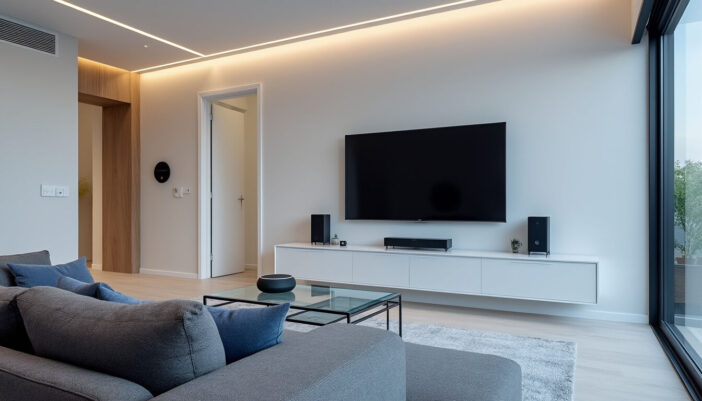
Home automation or connected home: comparison, practical tips, and choices suited to your needs
Selection criteria: local automation or remote control, budget, security, and comfort
To choose between home automation and connected home, it is essential to identify your priorities: do you want to emphasize automation and the reliability of local networks, or remote control on the go? Are you looking for a scalable system on a small budget, or a professional integration tailored to the needs of children, seniors, or people with reduced mobility? The question of comfort and the security of each household member remains central.
- Budget available for installation
- Priority given to comfort or energy optimization
- Degree of desired personalization
- Possibility of maintenance or evolution
- Compatibility criterion with existing devices
The key is not to abruptly oppose these two worlds but to consider their complementarity, a source of richness for the end user.
Towards a hybrid solution: integrate connected home and home automation for an evolving habitat
Many families and professionals today are opting for a hybrid approach: home automation manages critical functions (security, heating, shutters), while the connected home enriches the experience with new devices and evolving services. For example, linking the central Jeedom system with Matter-compatible connected devices ensures security while benefiting from the evolving flexibility of recent technologies.
- Secure vital functions: alarms, access, central automation
- Fine and evolving control of other elements: lighting games, multiroom audio, analysis of energy consumption
- Progressive evolution without programmed obsolescence
This approach allows for a system that adapts to the real needs of the household over the years, in a logic of sustainability and efficiency.
Scalability, compatibility, and open standards: preparing the future of your smart housing
The scalability of installations and the search for compatibility play a fundamental role in 2025: anticipating future additions, favoring open brands (Aqara, Delta Dore, Homey…) and standards like Zigbee or Matter ensures the harmonious evolution of the housing. Modularity enables everyone to evolve their system without having to change everything or depend on a single brand.
- Favor recognized standards (Z-Wave, Zigbee, Wi-Fi, Matter)
- Monitor compatibility between systems and applications
- Prepare for equipment maintenance and monitoring
Relying on the advice of professionals and maintaining regular vigilance ensures a smart habitat that withstands the test of time and technological disruptions.
Best practices: data security, maintenance, planning, and expert advice
Data security and installation reliability are major issues. An initial audit, precise planning (zoning, priorities, budget), and regular updates limit risks related to cyberattacks or device failures. It is strongly advised to adopt security practices: change default passwords, isolate Wi-Fi networks, backup configurations.
- Engage certified experts for complex installations
- Plan for future developments from the start
- Keep devices and applications updated
- Educate all household members about security
Finally, documentation, maintenance tracking, and setting up alert routines (failure notifications) ensure the sustainability of the adopted solution.
Real examples: choosing the best solution according to your lifestyle (family, seniors, PMR)
User profiles vary: in a large family, professional home automation ensures centralized management of security, heating, and lighting, while everyone can also use a mobile application to control music or temperature. For a couple of seniors, the connected home allows for remote video surveillance, automation of certain tasks, and voice command to simplify daily life.
- Families: centralized home automation + fun connected objects, easy to add
- Seniors or PMR: automated access, emergency alarm, intuitive voice control
- Renters: flexible connected home without heavy installation, evolving according to needs
| Profile | Recommendation | Major Benefit |
|---|---|---|
| Family | Centralized home automation + modular connected objects | Comfort, security, versatility |
| Senior | Home automation for automation + voice command | Security, autonomy |
| PMR | Connected home compatible with voice assistants | Accessibility, simplicity |
The goal is to build a smart home that aligns with your habits, evolves according to your needs, without ever sacrificing ease of use, security, or the system’s longevity.

Please remain courteous: a hello and a thank you cost nothing! We're here to exchange ideas in a constructive way. Trolls will be deleted.