'/%3E%3Cpath%20fill='%23b2b2b2'%20d='M241%20382q0%2016%2017%2026%2017%2011%2042%2011t42-11q16-11%2017-26V269H241'/%3E%3Cpath%20fill='%239f7e00'%20d='M241%20379q0%2014%208%2023%209%209%2021%209%2014%200%2021-9%209-9%209-23V269h-59'/%3E%3Cpath%20d='M241%20339v-70h59v110q0%2014-9%2023l-6%205v-68h-15v72q-8%200-14-4v-68zm59%2040c0%2022%2015%2032%2029%2032%2021%200%2030-18%2030-32v-40h-59'/%3E%3Cpath%20fill='%239f7e00'%20d='M266%20277v5h2v12h-3v-5h2v-5h-9v5h2v5h-4v9h3v18h-5v10h34v-10h-5v-18h3v-9h-4v-5h2v-5h-9v5h2v5h-3v-12h2v-5zm42%20101q0%2010%206%2017%206%206%2015%207%2010-1%2016-7%206-7%206-17v-29h-43'/%3E%3Ccircle%20fill='%230044ad'%20cx='329.5'%20cy='372'%20r='6'/%3E%3Cellipse%20fill='%230044ad'%20cx='300'%20cy='340'%20rx='16'%20ry='21'/%3E%3C/svg%3E)

'/%3E%3C/g%3E%3Cuse%20href='%23c'%20transform='matrix(-1%200%200%201%20720%200)'/%3E%3C/svg%3E)


'%3E%3Cpath%20stroke='%23000'%20stroke-width='4'%20d='m-35-37-13%2020m5%203%2013-20m5%203-13%2020m63%2042%206-9m1-2%206-9m5%203-6%209m-1%202-6%209m5%203%206-9m1-2%206-9m-96%200%2013%2020m5-3-6-9m-1-2-6-9m5-3%2013%2020m63-42-6-9m-1-2-6-9m5-3%2013%2020m5-3-6-9m-1-2-6-9'/%3E%3Ccircle%20r='24'%20fill='%23cd2e3a'/%3E%3Cpath%20fill='%230047a0'%20d='M0%200a12%2012%200%201%201%2020%2013%2024%2024%200%201%201-40-26A12%2012%200%201%200%200%200'/%3E%3C/g%3E%3C/svg%3E)


Résumer cet article :
Wenn man in Frankreich von einem Heimnetzwerk spricht, denkt man zuerst an die Router der Anbieter. Freebox, Livebox, Bbox, SFR Box… sie leisten ihre Arbeit, manchmal sehr gut. Aber sobald man die Kontrolle über sein Netzwerk zurückgewinnen, das WLAN verbessern, ein echtes Mesh-Netzwerk erstellen, die Gästezugänge, das VPN, die Telefonie oder sogar einige Smart-Home-Funktionen verwalten möchte, sind die Grenzen schnell erreicht. Dort habe ich die FRITZ!Box 7690 installiert. Ein High-End-WLAN-Router der Generation WLAN 7, ursprünglich für DSL-Verbindungen konzipiert, aber hervorragend geeignet, hinter einem Glasfaser-Modem oder einem Anbieter-Router mit seinem 2,5 Gbit/s WAN-Port zu funktionieren. Ich habe ihn in dieser Konfiguration getestet: hinter einer Freebox Pop, die mit 5 Gbit/s Glasfaser verbunden ist, wobei der Ethernet-Ausgang der Freebox auf 2,5 Gbit/s gedrosselt ist.
Eine sehr realistische Konfiguration für viele französische Nutzer: man behält den Router des Anbieters für den Internetzugang und übergibt das echte Heimnetzwerk einem umfassenderen und konfigurierbareren Router. Das ermöglicht eine echte Netzwerkverwaltung und man muss nicht alles neu konfigurieren, wenn man den Anbieter wechselt, um von den besten Tarifen zu profitieren :)
Aber die FRITZ!Box 7690 bietet nicht nur schnelles WLAN. Sie hat auch eine Smart-Home-Schicht mit DECT ULE und Zigbee, eine umfassende integrierte Telefonie, WireGuard/IPSec VPN, umfassende Kindersicherungsfunktionen, Mesh, mobile Apps, regelmäßige Updates und 5 Jahre Garantie. Das offizielle Datenblatt kündigt WLAN 7 mit bis zu 7,1 Gbit/s an, ein DSL-Modem mit bis zu 300 Mbit/s, zwei 2,5 Gbit/s Ports, Zigbee, DECT, VPN, Telefonie und Smart-Home-Automatisierungen. Lassen Sie uns ohne Verzögerung eintauchen.
FRITZ!, ein in Deutschland sehr bekannter Hersteller, in Frankreich hingegen weit weniger
Die Marke FRITZ!, früher AVM, ist in Deutschland sehr bekannt, wo eine FRITZ!Box fast zu einer Institution geworden ist. Das Unternehmen entwirft seine Produkte in Berlin und stellt sie seit 1986 in Europa her. Im Jahr 2025 beschäftigte sie 925 Mitarbeiter und erzielte einen Umsatz von 630 Millionen Euro, was ziemlich beeindruckend ist. Dennoch bleibt die Marke in Frankreich eher unbekannt, da man sehr an die Router der Anbieter gewöhnt ist. Doch sobald man etwas tiefer gräbt, versteht man, warum die Deutschen sie so schätzen: sie ist stabil, vollständig, zeitlich verfolgt und darauf ausgelegt, lange zu halten.
In Deutschland sind die FRITZ!Boxen nicht nur Router. Sie sind echte Netzwerkzentralen. Sie ersetzen oder ergänzen den Router des Anbieters, verwalten DECT-Telefone, Anrufbeantworter, Gästezugänge, VPNs, USB-NAS, Mesh-Repeater, Smart Plugs, Thermostate und mittlerweile auch Zigbee-Geräte.
Dieser Ansatz steht im Gegensatz zum französischen Markt, wo der Router des Anbieters lange Zeit alles verwaltet hat. Aber mit der Zunahme vernetzter Geräte (Kameras, Solarbatterien, Mähroboter, NAS, Smart-Home-Server) wird das Netzwerk zu einem echten Thema. Die FRITZ!Box 7690 reagiert auf diese Entwicklung.
Unboxing und Vorstellung der FRITZ!Box 7690
Die FRITZ!Box 7690 behält das typische Design der Marke: weißes und rotes Gehäuse, relativ flach, abgerundete Formen, seriöse Verarbeitung. Man mag diesen sofort erkennbaren Stil oder nicht. Es ist kein schwarzer Router mit gamertypischen Antennen, und ehrlich gesagt, das ist mal etwas anderes!

Im Karton: der Router, sein Netzteil, ein 4 m DSL-Kabel, ein 1,5 m Ethernet-Kabel und das Schnellstart-Handbuch.

Auf der Rückseite ist die Anschlussvielfalt eines der Stärken des Produkts. DSL ADSL2+/VDSL-Port bis zu 300 Mbit/s, WAN/LAN-Port 2,5 Gbit/s, LAN-Port 2,5 Gbit/s, zwei Gigabit-LAN-Ports, zwei analoge Telefonports sowie eine DECT-Basis, eine Zigbee-Basis und ein USB 2.0-Port an der Seite.
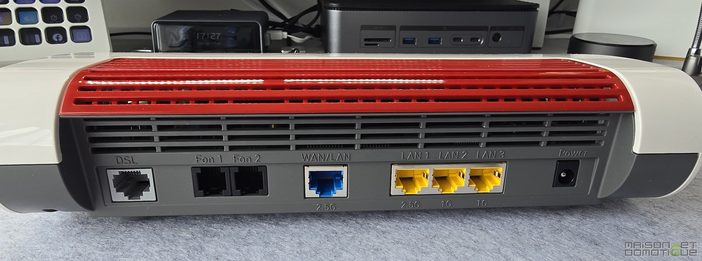
Die beiden 2,5 Gbit/s Ports sind ein echtes Argument. Der erste verbindet die FRITZ!Box 7690 mit der Freebox Pop. Der zweite kann einen 2,5 Gbit/s Switch, ein NAS, einen Mini-PC, einen Home Assistant-Server oder ein beliebiges anderes anspruchsvolles Gerät versorgen. In der Praxis verhindert das, dass alles auf 1 Gbit/s gedrosselt wird und die Vorteile einer schnellen Glasfaserverbindung verloren gehen.

Der Nachteil ist, dass es insgesamt vier Ethernet-Ports gibt. Für eine moderne Installation mit NAS, Desktop-PC, Smart-Home-Gateway, Hue-Bridge, Konsole, Fernseher und Switch ist man schnell am Ende. In meinem Fall ist ein Switch unverzichtbar. Aber seien wir ehrlich: in einer etwas fortgeschritteneren Installation ist ein Switch oft bereits vorhanden.

Der USB-Port ist nur 2.0. Für einen Drucker, einen Ersatz-4G/5G-Stick oder gelegentlichen Speicher reicht das aus. Um ihn als leistungsstarkes Mini-NAS zu nutzen, reicht das nicht. Das ist ein wenig enttäuschend im Vergleich zu den sonst umfangreichen Anschlüssen.
Installation hinter einer Freebox Pop Glasfaser
Meine Testinstallation: die Glasfaser kommt auf die Freebox Pop, theoretische Geschwindigkeit bis zu 5 Gbit/s geteilt. Um einen externen Router anzuschließen, nutzen wir den 2,5 Gbit/s Ethernet-Port der Freebox. Die FRITZ!Box 7690 kommt dahinter, über ihren 2,5 Gbit/s WAN-Port.
Die Konfiguration erfolgt über die Weboberfläche (fritz.box) oder die mobile App. FRITZ!OS bietet einen geführten Assistenten. Man gibt an, dass man ein externes Modem oder einen Router für den Internetzugang verwendet, und wählt den Betriebsmodus aus. Das war’s.
In meinem Fall behält die Freebox die Internetverbindung, und die FRITZ!Box 7690 übernimmt das lokale Netzwerk. Man kann die Freebox für bestimmte Anwendungen aktiv lassen oder alle Geräte ins FRITZ!-Netzwerk umschalten. Mein Vorschlag: ein eigenes WLAN erstellen, die wichtigen Geräte dort anschließen und dann nach und nach die vernetzten Objekte migrieren.

FRITZ!OS verdient ein echtes Lob. Dicht, aber lesbar. Man spürt jahrelange Entwicklung dahinter. Die Einstellungen sind zahlreich und selten in unverständlichen Menüs verloren. IP-Bereiche, DHCP, Portweiterleitungen, Gäste-WLAN, VPN, Benutzerprofile, Zugriffszeiten, verbundene Geräte, Mesh-Repeaters, Telefone, Smart-Home-Geräte: alles ist da, ohne das Gefühl zu haben, einen frustrierenden professionellen Router zu steuern. Ich hatte vor kurzem noch einen Netgear-Router, dessen Benutzeroberfläche ziemlich nüchtern war. Hier ist dieser frische Wind sehr angenehm!

Die Benutzeroberfläche ist auch schnell. Wenn man sein Netzwerk oft verwaltet, ist das wichtig.
Ein sehr leistungsstarkes WLAN 7, auch ohne 6 GHz-Band
Die FRITZ!Box 7690 ist ein Dual-Band WLAN-7-Router. Sie nutzt die Bänder 2,4 GHz und 5 GHz, nicht das 6 GHz-Band. Das ist wahrscheinlich der Punkt, der die Technikbegeisterten am meisten diskutieren wird. Ist WLAN 7 ohne 6 GHz wirklich WLAN 7? Ja, denn WLAN 7 bringt auch Verbesserungen für die bestehenden Bänder: MLO, bessere Effizienz, reduzierte Latenz, höhere Geschwindigkeiten. FRITZ! erklärt, dass die 7690 das WLAN 7 in einer Dual-Band-Architektur mit intelligentem Mesh nutzt und dabei mit WLAN 6, WLAN 5/AC und WLAN N kompatibel bleibt.

In der Praxis ist das 5 GHz WLAN hervorragend. In der Nähe erreicht man mühelos sehr hohe Datenraten mit modernen Geräten. Mit einem lokalen Netzwerk von 2,5 Gbit/s im Hintergrund gibt es kein künstliches Limit von 900 Mbit/s, das man oft bei Routern mit Gigabit-Ethernet-Ausschlüssen antrifft.
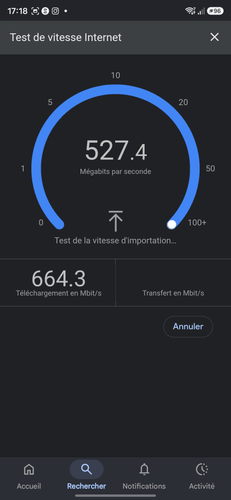
Die Reichweite ist ebenfalls sehr gut, und das ist einer der Punkte, die ich am meisten geschätzt habe. WLAN dient nicht dazu, eine hohe Geschwindigkeit auf einem Speedtest direkt am Router anzuzeigen. Was zählt, ist, was im Wohnzimmer, Schlafzimmer, Büro, Garage oder am Ende des Gartens ankommt. In dieser Hinsicht schneidet die FRITZ!Box 7690 gut ab.
Im 2,4 GHz-Bereich sind die Leistungen bescheidener, aber dieses Band bleibt für vernetzte Geräte unverzichtbar. WLAN-Lampen, Smart-Plugs, kleine Sensoren, ältere Peripheriegeräte, Garten-Equipment: nicht alles lebt bereits in 5 GHz, weit gefehlt. Die FRITZ!Box bewältigt diese Koexistenz gut.
Das Fehlen von 6 GHz bleibt eine Einschränkung in einem stark überlasteten städtischen Apartment, wo dieses Band den Unterschied machen kann. In einem Haus, besonders in weniger dicht besiedelten Gebieten wie meinem auf dem Land, ist es im Alltag oft relevanter, auf ein sehr gutes 5 GHz zu setzen. Das habe ich in meinem Fall auch so erlebt.
Das FRITZ! Mesh, einfach und effektiv
Das Mesh ist eines der großen Argumente des FRITZ!-Ökosystems. Anstatt Repeater zu stapeln, die jeweils für sich konfiguriert sind, erstellt man ein einheitliches Netzwerk, das von der FRITZ!Box gesteuert wird. Die Repeater übernehmen automatisch den Netzwerkname, den WLAN-Schlüssel und die wichtigen Einstellungen. Die Geräte wechseln automatisch zum besten Zugangspunkt, abhängig von ihrem Standort.
Die FRITZ!Box 7690 übernimmt diese Rolle gut. Man sieht die Geräte auf einer klaren Netzwerk-Karte, kann ihren Verbindungsmodus, ihren Durchsatz, das verwendete Band und ihre Zugehörigkeit zum Mesh überprüfen. Um ein Gerät zu diagnostizieren, das schlecht mit dem Netzwerk verbunden ist, ist das praktisch.
Der FRITZ!Repeater 1610 Outdoor war Teil des Tests und adressiert ein Problem, das wir bei Maison et Domotique gut kennen: das WLAN im Freien.
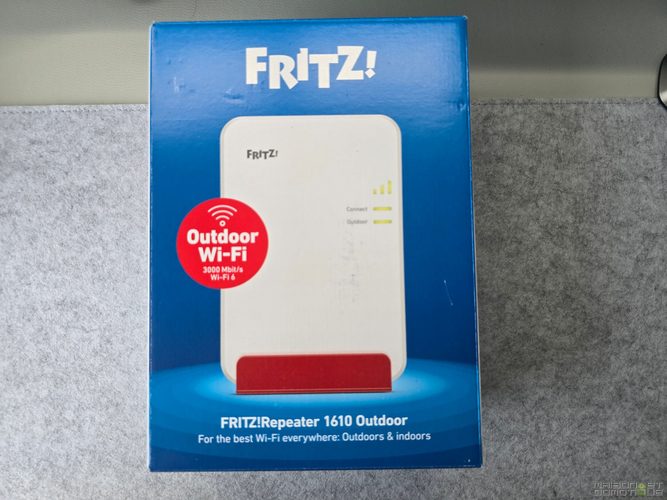
Wir sprechen oft von WLAN im Haus, aber viele vernetzte Geräte leben draußen. Mähroboter, Außenkameras, Torantriebe, Terrassenbeleuchtung, Bewässerungsmodul, vernetzte Pools, Solarwechselrichter, Solar-batterien wie Zendure in der Garage oder in der Nähe von Solarpanels. Wenn das WLAN nicht aus dem Haus kommt, werden all diese Produkte wählerisch.
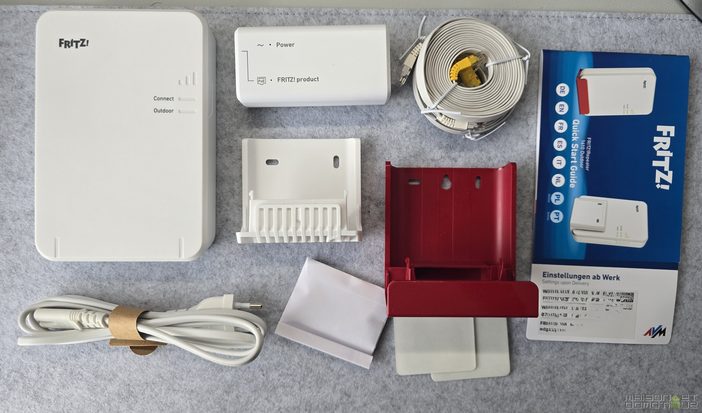
Der FRITZ!Repeater 1610 Outdoor bietet WLAN 6 Dual-Band mit bis zu 3000 Mbit/s, ein IP54-Gehäuse, eine Mesh-Integration und einen Gigabit-LAN-Port mit PoE+. Das PoE ermöglicht es, alles über ein einziges Ethernet-Kabel zu verlegen: Daten und Stromversorgung. Unter einem Dachüberstand, in einer Garage oder nahe einer Terrasse ist dieses einzelne Kabel, das alles ändert.

In meinem Fall ist der Nutzen sofort spürbar: den Garten, das Mähgebiet, die Energiegeräte abzudecken, die nicht direkt am Haus sind. Keine Verbindungsabbrüche mehr vom Mähroboter am Ende des Grundstücks, keine träge Solar-Batterie-App, die die Daten nicht überträgt.

Kabelnetz: die beiden 2,5 Gbit/s Ports machen den Unterschied
Der WAN/LAN 2,5 Gbit/s Port erhält eine hohe Geschwindigkeit von einem Glasfaser-Router, einem ONT, einem Kabelmodem oder einem anderen Router. Der zweite LAN 2,5 Gbit/s Port verteilt diese Geschwindigkeit ins lokale Netzwerk.
In meiner Freebox Pop-Konfiguration war das genau das, was ich brauchte. Die Freebox liefert 2,5 Gbit/s über Ethernet. Die FRITZ!Box 7690 nimmt diese Geschwindigkeit an, ohne sie auf 1 Gbit/s zu drosseln, und gibt sie dann an ein schnelles Gerät weiter.
Für einen durchschnittlichen Haushalt erscheinen 2,5 Gbit/s als riesig. Aber mit einem NAS, einem Proxmox-Server, einem Smart-Home-Mini-PC, einer lokalen Sicherung, 4K-Streaming, mehreren PCs und Dutzenden von vernetzten Geräten wird der Nutzen offensichtlich. Es geht um den internen Datenverkehr im Haus, nicht nur um die Internetgeschwindigkeit.
Die einzige Frustration: zwei zusätzliche Gigabit-Ports sind knapp bemessen. Für eine ernsthafte Installation wird oft ein Switch erforderlich sein. Das ist nicht weiter schlimm, aber das sollte man einplanen.
VPN, Sicherheit und Kindersicherung
Die FRITZ!Box 7690 verwaltet auch die Sicherheit des Netzwerks, nicht nur dessen Verteilung.
Das integrierte VPN unterstützt WireGuard und IPSec. Praktisch, um von außen auf das Heimnetzwerk zuzugreifen, um ein NAS zu consult, Home Assistant zu verwalten, eine Datei abzurufen oder eine Verbindung von außen zu sichern.

WireGuard ist eine gute Wahl: schnell, modern und relativ einfach einzurichten. Für fortgeschrittene Benutzer ist das ein starkes Argument. Für einen Installateur ermöglicht es den Fernzugriff auf bestimmte Geräte, ohne sensible Schnittstellen im Internet auszusetzen.
Die Kindersicherung ist sehr umfassend: Profile, Zeitfenster, Einschränkungen pro Gerät, Gästezugänge, Nutzungsverfolgung. Für eine Familie ist das nützlich. Für ein Haus voller vernetzter Geräte hilft es auch, bestimmte Geräte besser zu isolieren.

Es ist sogar möglich, „Tickets“ auszustellen, die 45 Minuten zusätzliche WLAN-Zeit gewähren :p

Das Gäste-WLAN sollte ebenfalls erwähnt werden. Sauberer Zugang für Gäste, ohne das Passwort des Hauptnetzwerks weiterzugeben, mit QR-Code: man scannt, ist verbunden, und alle sind zufrieden.

Smart-Home: Zigbee, DECT ULE und einfache Szenarien
Die FRITZ!Box 7690 integriert eine DECT-Basis für Telefone und FRITZ!DECT-Geräte sowie eine Zigbee-Basis. Sie kann bestimmte Smart-Home-Geräte ohne zusätzliche Bridge steuern. DECT- und Zigbee-Geräte können in Automatisierungen, Zeitprogramme und Wenn-Dann-Routinen integriert werden, die über die FRITZ!App Smart Home, die Weboberfläche, die Smart Switches oder ein FRITZ!Fon steuerbar sind.

Man kann Smart Plugs, Zigbee-Lampen, Thermostate, einige Sensoren oder FRITZ!DECT-Geräte steuern. Die Idee ist nicht, eine vollständige Home Assistant zu ersetzen, sondern eine zugängliche, stabile und direkt in den Router integrierte Smart-Home-Lösung anzubieten. Die Kompatibilität ist zwar eingeschränkter als bei einer „echten“ Smart-Home-Box, aber ich konnte problemlos Zigbee-Lampen und -Smart Plugs von Philips Hue, Lidl oder Ikea koppeln. Komplexere Geräte wie einige Multi-Sensoren von Aqara könnten jedoch nicht unterstützt werden.

Viele Nutzer möchten kein Home Assistant, Zigbee2MQTT, MQTT, USB-Dongles, Backups, Add-Ons und Dashboards einrichten. Sie möchten eine Lampe einschalten, eine Heizung programmieren, einen Smart Plug auslösen, während des Urlaubs Anwesenheit simulieren oder Geräte nachts abschalten. Für diese Anwendungen funktioniert FRITZ!OS gut.

Einige konkrete Beispiele:
- Ein FRITZ!DECT-Stecker schaltet nachts automatisch eine TV-Steckdose aus, um unnötige Standby-Verbrauch zu vermeiden.
- Eine Zigbee-Lampe wird abends in der Eingangshalle gemäß einem Zeitfenster eingeschaltet.
- Ein FRITZ!DECT-Thermostat senkt die Temperatur, wenn niemand anwesend ist, und heizt dann vor der Rückkehr wieder auf.
- Ein Smartsocket misst den Verbrauch eines Netzwerk- oder Multimedia-Geräts.
- Eine Routine simuliert während des Urlaubs eine Anwesenheit, indem sie Lampen zu variablen Zeiten einschaltet.
Ein interessanter Punkt ist, dass einige Funktionen der FRITZ!Box sogar in die Szenarien einfließen: Zum Beispiel im Szenario „Ich gehe“, kann man alle Lampen ausschalten, alle Smart Plugs abbauen, das Thermostat auf den Eco-Modus umschalten und auch das Gäste-WLAN deaktivieren und den Anrufbeantworter für den Telefonschalter aktivieren!
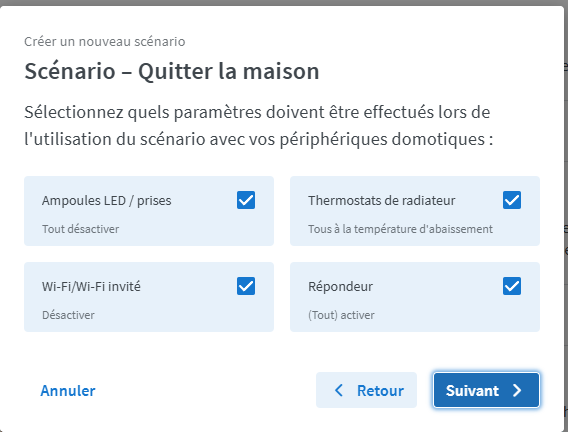
Eine weitere interessante Möglichkeit: Eine Lampe in einer bestimmten Farbe aufleuchten lassen, wenn ein Anruf eingeht. Sehr praktisch zum Beispiel für Menschen mit Hörbehinderungen.

Etwas komplexere Routinen können mit Bedingungen entwickelt werden:

Für ein leicht vernetztes Haus ist das ausreichend. Für eine fortgeschrittene Installation bleibt Home Assistant leistungsstärker, aber die FRITZ!Box kann eine interessante Ergänzung sein (darüber sprechen wir weiter unten).

FRITZ!Smart Gateway: für eine intensivere Smart-Home-Nutzung
Ich habe auch ein FRITZ!Smart Gateway erhalten. Seine Rolle: die Smart-Home-Funktionen des FRITZ!-Ökosystems zu erweitern, insbesondere im Bereich Zigbee und DECT ULE. Es verbindet sich über WLAN oder Ethernet mit der FRITZ!Box und erleichtert das Hinzufügen von Zigbee- oder DECT ULE-Geräten. Es erweitert das FRITZ! Smart Home für Zigbee-Geräte und erhöht die Anzahl der nutzbaren DECT ULE-Geräte.
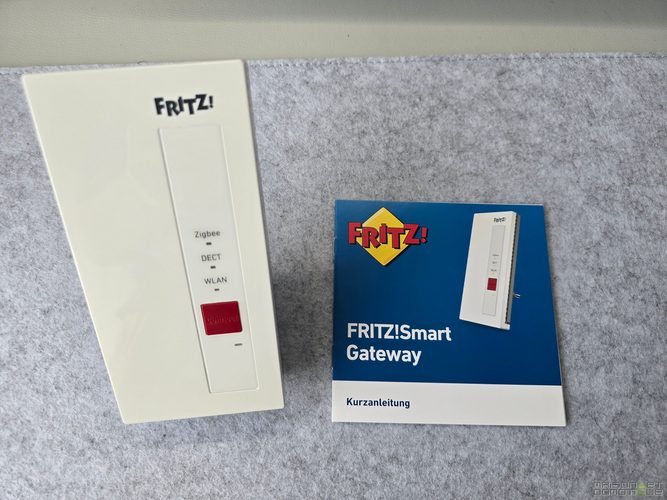
Mit der FRITZ!Box 7690, die bereits Zigbee integriert hat, mag das Gateway weniger unverzichtbar erscheinen als bei früheren FRITZ!Boxen. Es bleibt jedoch interessant in einem großen Haus oder um den Smart-Home-Radio-Punkt besser zu positionieren. Man kann es in einer zentraleren Zone platzieren, um die Zigbee/DECT-Reichweite zu verbessern, während die FRITZ!Box in der Nähe des Glasfaseranschlusses bleibt.
In der Smart-Home-Technik zählt der Standort des Gateways. Eine Netzwerkkonsole findet sich oft in einem Schrank, Büro, einer Garage oder in der Nähe des Glasfaseranschlusses. Das muss nicht unbedingt der beste Ort sein, um mit in der gesamten Wohnung verteilten Lampen, Sensoren oder Thermostaten zu kommunizieren. Ein dediziertes Gateway ermöglicht mehr Flexibilität.
Telekommunikation: ein echter integrierter Zentralen
Die Telefonie ist weniger trendy als WLAN 7, aber sie ist ein echtes Highlight des FRITZ!-Ökosystems. Die FRITZ!Box 7690 integriert eine vollständige Telefonzentrale. Sie verwaltet analoge, IP-, SIP- und DECT-Telefone, Anrufbeantworter, Adressbücher und die Synchronisierung von Kontakten mit bestimmten Diensten. Man kann zwei analoge Telefone anschließen, IP- oder DECT-Telefone nutzen und sich auf den integrierten Anrufbeantworter verlassen.

Für viele französische Haushalte ist die Festnetzleitung sekundär geworden (ich selbst nutze seit Jahren keine Festnetzleitung mehr). Aber für ein Home Office, einen Handwerker, ein kleines Unternehmen, ein Büro oder ein Haus mit einer Festnetztelefonverbindung ist das sehr praktisch.

DECT-Geräte direkt am Router, mehrere Nummern, Anrufbeantworter, Prüfung von Nachrichten, Anrufverlauf mit FRITZ! Smartphone-Apps. Dieses Niveau der Tiefe findet man sehr selten bei Anbieterroutern.
FRITZ!OS: dicht, klar und sehr vollständig
FRITZ!OS ist eines der großen Highlights des Produkts. Die Benutzeroberfläche ist reichhaltig, ohne einschüchternd zu sein. Die Menüs sind logisch, die Assistenten leiten durch gängige Aufgaben, und erfahrene Benutzer können in die Einstellungen sehr tiefgehend.
Liste der verbundenen Geräte, Bandbreite, IP-Adresse, Verbindungstyp, Historie, Zugehörigkeit zum Mesh, Bandbreitenverbrauch usw. alles ist vorhanden. Zugriffsprofile, Gäste-WLAN, VPN, Telefonie, Smart-Home-Geräte, WLAN-Zeiten, Benachrichtigungen. Schwerer, vollständiger zu werden ist kaum möglich.

Das ist ein echter Unterschied zu den Routern der Anbieter, die die Anpassungen absichtlich einschränken. Hier hat man die Kontrolle. Für einen erfahrenen Benutzer ist das ein starkes Argument.

FRITZ! hebt die regelmäßigen, automatischen Updates, den Support und die 5-jährige Garantie hervor. Für ein Gerät, das 24/7 eingeschaltet ist und im Herzen des Hausnetzwerks arbeitet, ist das beruhigend.

Im täglichen Gebrauch
Nach der Installation wird die FRITZ!Box 7690 schnell zur Nebensache. Für einen Router ist das das beste Zeichen.
Stabiles WLAN, permanent verbundene Geräte, hohe Durchsatzraten, reaktive Benutzeroberfläche, Mesh, das das gesamte Haus abdeckt. Mit dem FRITZ!Repeater 1610 Outdoor ist der Vorteil auch im Freien noch deutlicher. Die Geräte im Garten und der vernetzten Energie haben eine verlässlichere Verbindung.
In einem vernetzten Haus ist die Netzwerkstabilität alles. Es ist eindeutig das Rückgrat des Hauses. Ein Sensor, der keine Daten mehr sendet, eine nicht erreichbare Solar-batterie, eine Kamera, die die Verbindung verliert, ein Mähroboter, der nicht mehr kommuniziert, eine Zigbee-Brücke, die ausfällt: normalerweise beschuldigt man das vernetzte Gerät. Das Netzwerk ist in unseren Köpfen selten schuld, aber oft ist es das, was zuerst ausfällt.
Mit der FRITZ!Box ist die Basis solide. Home Assistant, NAS, Kameras, Repeater, Zigbee-Geräte, VPN, Gästezugänge, Homeoffice, Multimedia, einfaches Smart-Home: alles kann coexistieren. Sie ersetzt nicht alles, bringt aber Ordnung.
Ein Punkt, den ich in meinem Fall beobachten muss: die Doppel-NAT, falls man die Freebox im Router-Modus vor der FRITZ!Box belässt. Für klassische Anwendungen ist das nicht hinderlich. Für fortgeschrittene Anwendungen (eingehendes VPN, Portweiterleitungen, Fernzugriff, selbstgehosteter Server) muss die gesamte Architektur ordentlich konfiguriert werden. Je nach Bedarf: DMZ, angepasste Weiterleitungen oder Überprüfung der Netzwerkarchitektur.
Kompatibilität mit Home Assistant: zwei sehr nützliche Integrationen
Die FRITZ!Box 7690 wird auch in Home Assistant über zwei offizielle Integrationen angezeigt.
Die erste, FRITZ!Box Tools, verbindet Home Assistant mit dem Router. Sie dient unter anderem dazu, die Verfügbarkeit der mit dem Netzwerk verbundenen Geräte zu erkennen, den Zustand der Box zu überwachen, die externe IP, die Uptime, die CPU-Temperatur, einige Netzwerkmonitore abzurufen, WLAN-Schalter zu verwalten, die Kindersicherung zu steuern oder Aktionen wie einen Neustart, eine Wiederverbindung oder die Verwaltung des Gäste-WLAN zu initiieren. Home Assistant gibt an, dass diese Integration mit den FRITZ!Box-Routern der Serien 4xx0, 5xx0, 6xx0 und 7xx0 sowie mit mehreren FRITZ!Repeatern funktioniert.
Was mich an dieser Integration am meisten interessiert, ist die Anwesenheitserkennung. Wenn das Smartphone eines Familienmitglieds mit dem WLAN verbunden ist, betrachtet Home Assistant die Person als eingetroffen. Wenn alle Telefone das Netzwerk verlassen, wird der Absenzenmodus aktiviert: Heizung runter, einige Steckdosen deaktiviert, Alarm eingeschaltet, Rollläden geschlossen. Einfach, lokal, ohne GPS.
Um dies zu aktivieren: Aktivieren Sie die Protokolle TR-064 und UPnP in den Netzwerkeinstellungen der FRITZ!Box und erstellen Sie dann einen dedizierten Benutzer mit den Rechten „FRITZ!Box Einstellungen“. Die Integration wird dann über Einstellungen > Geräte und Dienste in Home Assistant hinzugefügt.
Die zweite Integration, FRITZ!SmartHome, deckt den Bereich des Smart Homes ab. Sie integriert die FRITZ!SmartHome / FRITZ!DECT-Geräte (Steckdosen, Thermostate, Lampen, Rollladenmodule) sowie einige kompatible Geräte. Home Assistant gibt auch die Unterstützung der FRITZ!Smart Gateway an. Die Steckdosen werden als Schalter mit Messfunktionen angezeigt, je nach Modell: Verbrauch, Leistung, Spannung, Strom, Temperatur oder Gesamtenergie. Die Thermostate erscheinen als Klimageräte, die Lampen als Lichter, die Rollläden als Abdeckungen, und die FRITZ!-Routinen als Schalter oder Tasten, abhängig von ihrer Art.
Eine Einschränkung, die man beachten sollte: Die FRITZ!Box-API funktioniert nicht im Push-Modus. Home Assistant fragt die Box alle 30 Sekunden ab. Um einen Stecker, eine Temperatur oder eine Netzwerkpräsenz zu verfolgen, funktioniert das sehr gut. Für Schalter oder Sensoren, die eine sofortige Reaktion erfordern, ist das jedoch unzureichend.
In einer fortgeschrittenen Installation ergänzen sich die beiden Integrationen gut. Die FRITZ!Box verwaltet einfach bestimmte DECT/Zigbee-Geräte, während Home Assistant die umfangreicheren Szenarien mit anderen Protokollen im Haus zentralisiert. Das Gäste-WLAN nachts ausschalten, das Gäste-Passwort per Benachrichtigung senden, wenn es aktiviert ist, Internet für die Geräte der Kinder zu einer bestimmten Zeit blockieren, den Absenzenmodus basierend auf den mit dem Netzwerk verbundenen Smartphones auslösen usw.
Für diejenigen, die bereits Home Assistant nutzen, wird die 7690 zu einem nützlichen Netzwerkblock in den Automatisierungen, nicht nur zu einem einfachen WLAN-Zugangspunkt.
Die Grenzen, die man kennen sollte
Die 7690 ist ausgezeichnet, aber nicht perfekt.
Das Fehlen eines 6 GHz-Bands ist die Grenze, die am meisten diskutiert werden wird. In einer sehr dicht besiedelten urbanen Wohnung, mit Dutzenden von Nachbarnetzwerken, hätte ein Tri-Band 2,4/5/6 GHz wertvoll sein können. In einem Haus in weniger gesättigten Gebieten ist das diskutabel – aber in einem Pariser Gebäude könnte es den Unterschied ausgemacht haben.
USB 2.0 ist für ein Produkt dieser Kategorie schwerer zu verteidigen. Wenn Sie es für die tägliche gemeinsame Nutzung von Speicher verwenden möchten, sind die Geschwindigkeiten schnell enttäuschend. Ein Drucker oder ein Ersatz-4G-Stick, ja. Ein NAS als Ersatz, nein. Das ist in dieser Hinsicht ein wenig frustrierend.

Was die Ethernet-Ports betrifft, sind vier im Durchschnitt, darunter zwei mit 2,5 Gbit/s und zwei Gigabit, für ein gut ausgestattetes Haus etwas knapp. Ein Switch ist oft unerlässlich.
Und der Preis. Die Amazon-Seite listete sie zum Preis von 337 € zum Zeitpunkt des Zugriffs, mit einem empfohlenen Preis von 379 €. Das ist nicht billig, aber die eingebauten Funktionen rechtfertigen die Kosten.
Für wen ist die FRITZ!Box 7690 gedacht?
Die 7690 richtet sich an diejenigen, die die Kontrolle über ihr Heimnetzwerk zurückgewinnen möchten, ohne auf komplexe professionelle Geräte umzusteigen. Sie ist geeignet für ein vernetztes Haus, einen mit Glasfaser ausgestatteten Haushalt, ein kleines Unternehmen oder einen Remote-Worker, der einen stabilen, umfassenden Router möchte.
Sie ist auch sehr interessant hinter einem Anbieter-Router, wie in meinem Fall mit einer Freebox Pop. Man profitiert von der Glasfaserbandbreite, hat ein besseres WLAN, ein echtes Mesh, ein sauberes VPN, eine reichhaltigere Benutzeroberfläche und Smart-Home-Funktionen.
Für jemanden, der einfach nur „Internet haben will“, reicht der Anbieter-Router aus. Für diejenigen, die Kameras, ein NAS, einen Home Assistant, Solarpanels, eine Speicherbatterie, einen Mähroboter, Repeater, Kinder mit Zugriffprofilen verwalten und ein zuverlässiges WLAN im ganzen Haus benötigen – die FRITZ!Box 7690 ist wirklich lohnenswert.
Fazit
Die FRITZ!Box 7690 ist eine schöne Überraschung. Auf dem Papier hätte die Abwesenheit von WLAN 7 im 6 GHz-Band Bedenken hinsichtlich eines hybriden Produkts erwecken können. In der Anwendung ist es jedoch nicht so: hervorragendes WLAN im 5 GHz-Bereich, zwei wirklich nützliche 2,5 Gbit/s-Ports, effektives Mesh, umfassendes FRITZ!OS, Smart-Home-Funktionen, die durch Zigbee und DECT ULE an Bedeutung gewinnen.
Hinter einer Freebox Pop Glasfaser fügt sie sich perfekt ein. Sie versucht nicht, den Anbieter-Router in allen Fällen zu ersetzen, sondern hat das Ziel, die Kontrolle über das Heimnetzwerk zurückzugewinnen. In einem vernetzten Haus ist das oft das, was man benötigt.
Mit dem FRITZ!Repeater 1610 Outdoor verlässt das Netzwerk endlich die Wände des Hauses: Mähroboter, Kameras, Solargeräte, Heimbatterien, Nebengebäude.
Kein 6 GHz-Band, USB 2.0, nur vier Ethernet-Ports. Diese Einschränkungen schmälern nicht das Erlebnis. Die 7690 bleibt ein leistungsstarker, stabiler, vielseitiger und benutzerfreundlicher Router. Es ist ein Hersteller, der in Frankreich noch wenig bekannt ist, aber die Hardware ist solide und verdient es, bekannt zu werden!